

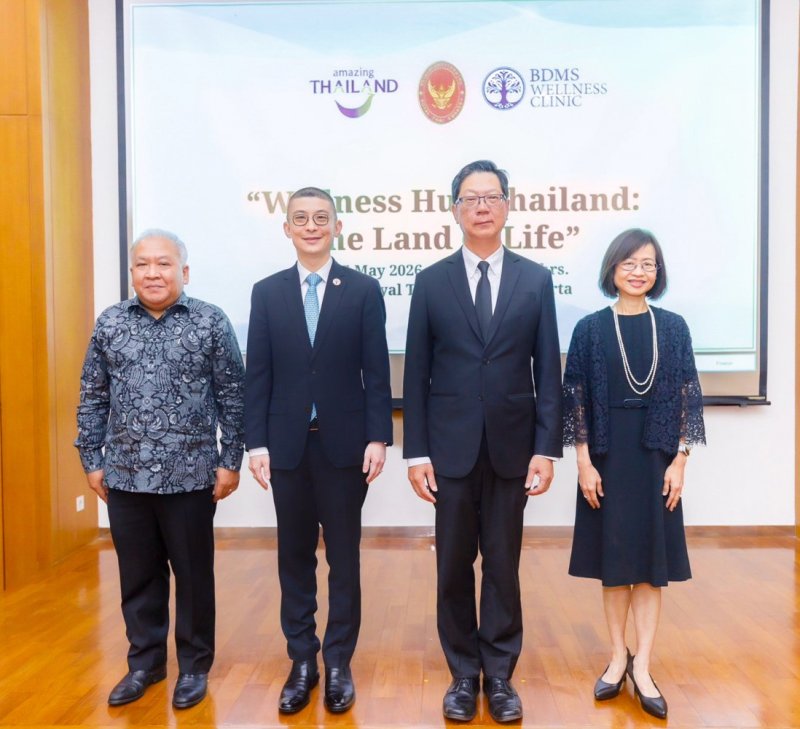
BDMS Wellness Clinic, the preventive healthcare centre of Bangkok Dusit Medical Services Plc (BDMS), is stepping up efforts to expand collaboration in Indonesia as Thailand seeks to strengthen its position as a regional and global wellness destination under the “Wellness Hub Thailand: The Land of Life” initiative.
The move comes amid rising health concerns across Southeast Asia, particularly the growing burden of non-communicable diseases (NCDs), which health experts increasingly link to lifestyle factors and ageing populations.
Dr Tanupol Virunhagarun, Chief Executive of BDMS Wellness Clinic and BDMS Wellness Resort, was invited by the Royal Thai Embassy in Jakarta to deliver a keynote address on Thailand’s wellness potential at an event held in collaboration with the Tourism Authority of Thailand (TAT).
The session, titled “Wellness Hub Thailand: The Land of Life”, highlighted Thailand’s ambition to position itself as a destination for preventive healthcare, wellness tourism and long-term well-being.
Among those attending were Prapan Disyatat, Thailand’s Ambassador to Indonesia, and Niti Vongvichasvadi, Director of the Tourism Authority of Thailand’s Jakarta office, along with representatives from Indonesia’s public and private sectors.
The event reflected growing interest in cross-border cooperation in healthcare and wellness tourism, particularly as countries in the region seek solutions to rising healthcare costs and lifestyle-related illnesses.
Indonesia’s growing health challenge
Indonesia, Southeast Asia’s largest economy, continues to post strong economic growth supported by its large domestic market, expanding middle class and abundant natural resources. However, alongside economic progress, the country faces mounting public health pressures, especially from non-communicable diseases.
According to data cited from the World Health Organization (WHO), more than 1.37 million Indonesians die annually from NCDs, accounting for more than half of all deaths nationwide. Major causes include stroke, ischaemic heart disease, diabetes, chronic respiratory disease and liver-related illnesses.
Healthcare experts say changing lifestyles have contributed significantly to the trend, with obesity and excess weight becoming increasingly common among Indonesians.
Dr Tanupol said the challenge extends beyond medical treatment and requires greater emphasis on prevention, lifestyle modification and long-term health management.
“Preventive healthcare is becoming increasingly important because many diseases today are linked to behaviour and lifestyle,” he said during the forum.
He noted that unbalanced diets, sedentary lifestyles, chronic stress and inadequate sleep have contributed to rising rates of obesity and metabolic disorders in many countries, including Indonesia.
Health and wellness have become increasingly prominent in Indonesia’s long-term development agenda. Under the country’s “Golden Indonesia 2045” vision, improving quality of life and strengthening public health systems are key priorities.
Mr Prapan said there are opportunities for Thailand and Indonesia to expand cooperation in healthcare, particularly in preventive medicine and wellness.
Such collaboration, he said, could involve knowledge-sharing and greater exchanges in areas such as lifestyle medicine, wellness services and healthcare innovation.
Thailand’s wellness ambitions
Thailand has long been recognised as a destination for medical tourism, supported by internationally accredited hospitals, skilled healthcare professionals and competitive treatment costs.
In recent years, policymakers and businesses have also sought to position the country as a broader wellness destination, expanding beyond conventional healthcare to preventive medicine, mental well-being and lifestyle-based services.
According to figures from the Global Wellness Institute cited at the event, Thailand’s wellness economy is valued at more than US$42.7 billion, ranking 24th globally and ninth in the Asia-Pacific region.
Supporters of the sector say Thailand’s competitive advantages include its healthcare infrastructure, hospitality industry, traditional medicine and natural attractions.
Dr Tanupol said Thailand’s wellness strengths lie not only in healthcare facilities but also in its broader ecosystem, ranging from nature and food to cultural traditions and hospitality.
“Thailand has the potential to offer a comprehensive wellness experience,” he said.
He pointed to the country’s natural landscapes, including beaches and mountain destinations, as well as Thai cuisine, traditional healing practices and wellness-oriented tourism.
Thailand’s long-standing expertise in traditional Thai medicine and herbal remedies has also gained wider international recognition, while modern healthcare facilities continue to attract overseas patients seeking treatment and preventive care.
Beyond physical health, mental well-being is increasingly becoming an important component of wellness tourism, according to industry participants.
Dr Tanupol said Thailand has favourable conditions to support mental wellness through activities such as meditation, yoga, breathing exercises, spa therapies and wellness retreats.
“Good health is not only physical health,” he said. “Mental well-being also plays an essential role in quality of life.”
He added that Thailand’s cultural characteristics — including hospitality, calmness and service-oriented traditions — could strengthen its appeal among wellness travellers seeking recovery, rest and balance in life.
Preventive healthcare gains momentum
The wellness sector has expanded rapidly worldwide as consumers become more health-conscious and healthcare systems shift towards prevention rather than treatment.
Demand has risen for services such as health screenings, nutrition planning, stress management and longevity-focused care, particularly among middle- and upper-income groups.
BDMS Wellness Clinic, part of the BDMS healthcare network, has increasingly focused on preventive healthcare and science-based wellness approaches aimed at reducing long-term health risks.
The clinic provides services in areas including early disease detection, lifestyle medicine and personalised health planning.
Dr Tanupol said partnerships between governments, healthcare providers and tourism stakeholders would be important in supporting the development of a sustainable wellness ecosystem.
He said stronger public-private cooperation could help promote Thailand’s health-related soft power while supporting economic opportunities linked to medical and wellness tourism.
As regional demand for healthcare services continues to rise, Thailand is expected to face increasing competition from neighbouring countries seeking to build their own wellness and medical tourism industries.
Still, industry executives believe Thailand’s established healthcare reputation, tourism appeal and integrated wellness offerings could help maintain its competitive position.
For Thailand, advocates say the challenge will be translating its existing strengths into long-term leadership in preventive healthcare and wellness while ensuring quality, accessibility and international trust.
The Jakarta forum marked one step in that effort, as Thai healthcare and tourism stakeholders seek to deepen regional partnerships and reinforce the country’s ambition to become a recognised centre for health and well-being in Asia.
