
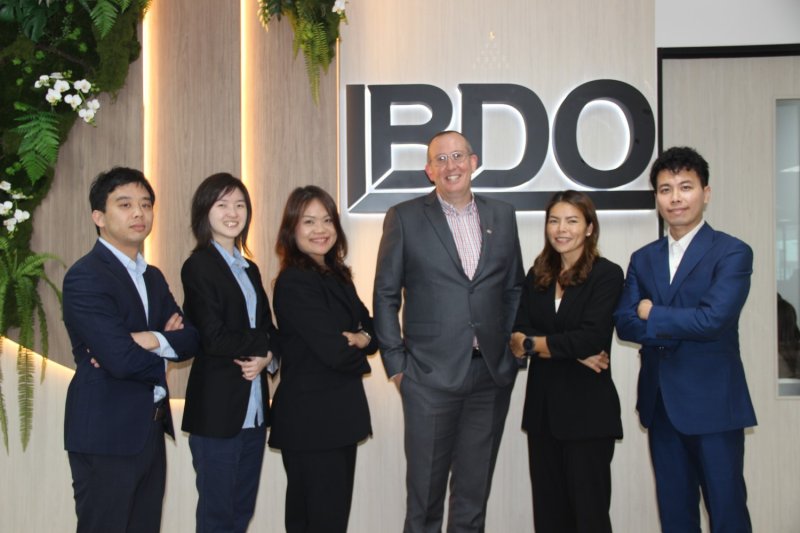
In this article, Matthew Cutt, Deal Advisory Partner, BDO in Thailand, shares insights in to how Thailand’s M&A market is evolving, shaped by potential geopolitical resolutions, selective investor sentiment, and the growing impact of AI on valuations and dealmaking.
Thailand’s M&A market has entered 2026 with an unusual mix of momentum and hesitation. First-quarter activity appeared buoyant—largely driven by foreign direct investment into data centres and digital infrastructure—but beyond this headline strength, much of the broader market remained on pause. Geopolitical tensions, particularly involving the Middle East and the United States, created a layer of uncertainty that led many transactions to be deferred rather than abandoned.
As those tensions begin to ease, a more telling shift will emerge. The deals that stalled will return to the table, but under a different set of expectations. Investors will be more selective, valuations will be under closer scrutiny, whilst the rapid rise of artificial intelligence is reshaping how businesses—and their future cash flows—are assessed. What lies ahead will not simply be a rebound in deal activity, but a deeper evolution in to how value is defined.
A strong start, but narrowly driven
The apparent strength in Q1 2026 tells only part of the story. Much of the activity has been concentrated in digital infrastructure, as global investors race to secure capacity for cloud computing and AI-driven demand. Thailand has benefited from this trend, supported by its strategic location and growing digital economy.
However, this concentration also highlights a divergence. Outside of technology-led segments, dealmaking has been comparatively subdued. Investors have remained active, but highly selective—prioritising sectors with clear structural tailwinds while taking a more cautious stance elsewhere.
Deferred, not derailed
The impact of geopolitical uncertainty over the past year has been less about lost deals and more about delayed decisions. Across Thailand’s M&A market, transactions already in progress were paused as buyers and sellers reassessed risk, financing conditions and valuation expectations.
Importantly, these deals have not disappeared. A backlog has quietly built, and with signs of stabilisation in global tensions, many will now being revisited. This creates the potential for a release of pent-up activity over the coming quarters, as confidence gradually returns.
A more supportive backdrop
Several domestic factors are reinforcing this improving outlook. The strong performance of the SET 50 has helped anchor investor sentiment and provided a degree of valuation consistency. In a global environment where capital is increasingly selective, visible market resilience matters.
At the same time, structural pressures within the Thai corporate landscape are becoming more pronounced. Many companies continue to carry relatively high debt levels, while certain sectors—particularly those exposed to tourism recovery or rising energy costs—have faced sustained earnings pressure.
Such conditions often accelerate M&A. For some businesses, raising capital or seeking strategic partners becomes a practical necessity. For others, it presents an opportunity to acquire assets at valuations that are more aligned with current realities than those seen during the post-pandemic surge.
The AI effect on valuation
Overlaying these cyclical dynamics is a more fundamental shift: the growing influence of artificial intelligence.
AI is no longer a future consideration; it is actively reshaping business models, cost structures and competitive dynamics across industries. This shift is forcing investors to reassess what they are willing to pay—and, more importantly, what they are paying for.
Valuation multiples that were accepted just two years ago are increasingly being tested. Historical growth is no longer sufficient; its durability in a rapidly changing technological landscape has become central.
This is also redefining the concept of “quality of earnings”. Traditionally, this focused on the repeatability and reliability of cash flows. Today, it extends further—into questions of resilience and adaptability.
Questions that are central to due diligence today would have been peripheral just a few years ago:
- How exposed is the business to AI-driven disintermediation?
- Can its operating model adapt to automation?
- Are its margins sustainable in a more digitised competitive landscape?
These considerations are not only influencing valuation—they are also shaping deal structures, with greater emphasis on contingent pricing and performance-linked mechanisms.
A more disciplined market
Taken together, these trends point to a Thai M&A market that will become more active, but also more disciplined. The anticipated recovery is unlikely to resemble the pace or pricing environment of previous cycles.
Instead, the market is moving towards a phase defined by careful capital allocation, deeper due diligence and a stronger emphasis on long-term value creation. Investors are returning—but with sharper questions and clearer expectations.
The road ahead
Thailand’s M&A market is not simply restarting—it is being reshaped. The easing of geopolitical uncertainty, combined with a pipeline of deferred transactions and ongoing investor interest, points to a more active period ahead. Yet the parameters of dealmaking have shifted.
Success in this next phase will depend less on timing and more on insight. Understanding the sustainability of earnings, the resilience of business models and the implications of technological change will be critical in determining where true value lies.
For investors and business leaders alike, the opportunity is clear—but so is the complexity. The market is reopening with a more focused and disciplined lens. Those who can align strategy with this evolving definition of value will be best positioned to shape—and benefit from—Thailand’s next wave of dealmaking.

About BDO in Thailand
BDO in Thailand is a member firm of BDO International, one of the world’s leading accounting and advisory networks. The firm provides audit and assurance, advisory, tax and legal, and business services and outsourcing to local and international organisations. With offices in Bangkok and Phuket, BDO in Thailand combines strong local expertise with global insight to support sustainable business growth.