

 Facebook
 Reddit
 Copy Link


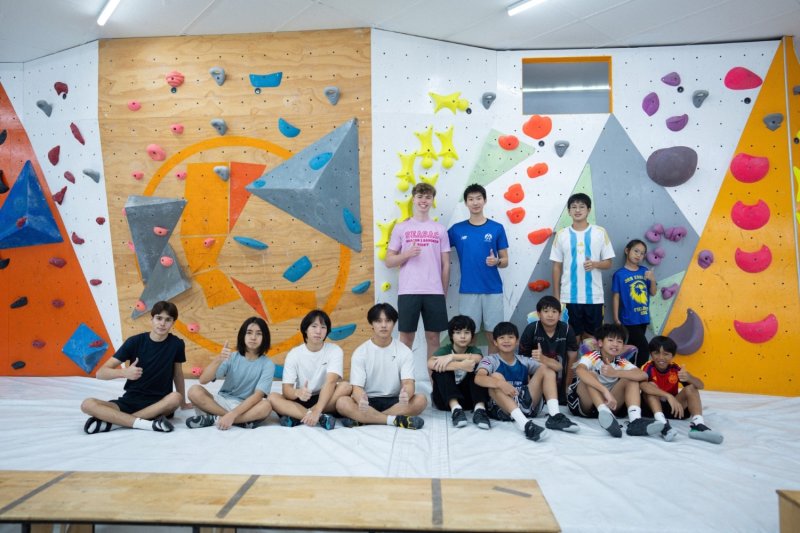
Young people today are taught to strive for achievement, but are perhaps given fewer opportunities to become comfortable with uncertainty. In highly competitive environments, where grades, university admissions and other visible measures of success carry enormous weight, the fear of getting something wrong can sometimes become a reason not to try at all.
Yet confidence is not built by knowing that everything will go according to plan. It comes from knowing that even when it doesn't, you have the capacity to recover, adapt and move forward.
This idea lies at the heart of The Art of Falling, a youth initiative created by Paro Phornprapha, a 17-year-old Year 12 student at Bangkok Patana School (BPS). Through climbing, reflection and shared experience, the project encourages young people to take risks, move beyond their comfort zones and develop the resilience to rebound when things don't go as expected.
For Paro, the objective is not to teach young people how to fail. It is to help them become less afraid of what might happen if they do — because that fear can prevent them from taking the very risks through which confidence, independence and growth are developed.
Building “Emotional Immunity”
Paro began thinking about the project after observing how much of teenage life is organised around outcomes: grades, awards, university admissions and other measures of achievement. Young people learn how to prepare, compete and perform, but there is far less attention given to what happens when effort doesn't produce the outcome they hoped for.
He describes the capacity to navigate these moments as a kind of “emotional immunity” — not the avoidance of disappointment, but the ability to experience it without allowing it to define what happens next.
“As human beings, aside from learning survival skills, we must also learn to face mistakes and life's disappointments,” Paro explains. “I've seen many of my peers put everything into achieving something, but when the outcome falls short of what they hoped for, they don't know how to cope with that disappointment. I think it's important to know that you can take a risk, things might not work out, and you can still recover and try again.”
The distinction is important. The Art of Falling does not celebrate failure for failure's sake. Instead, it asks a more interesting question: What might young people attempt if they trusted themselves to recover when things did not go according to plan?
Turning Risk int o Confidence
Paro brought the idea to life at an indoor climbing gym in Bangkok, where young people could experience risk and recovery in a safe, physical way. Climbing became the perfect metaphor: each new route requires the courage to reach beyond what feels certain, knowing that you may fall, reassess, and try again. The project's “Try. Fall. Recover.” framework is therefore not a celebration of failure, but of persistence — the understanding that success is often the result of multiple attempts, adjustments and the willingness to keep going. As basketball legend Michael Jordan famously put it, “I've failed over and over and over again in my life.
And that is why I succeed.” For Paro, that is the lesson he hopes young people will carry beyond the climbing wall: confidence is not knowing you will succeed the first time; it is knowing you are willing to keep trying until you do.
