

 Facebook
 Reddit
 Copy Link


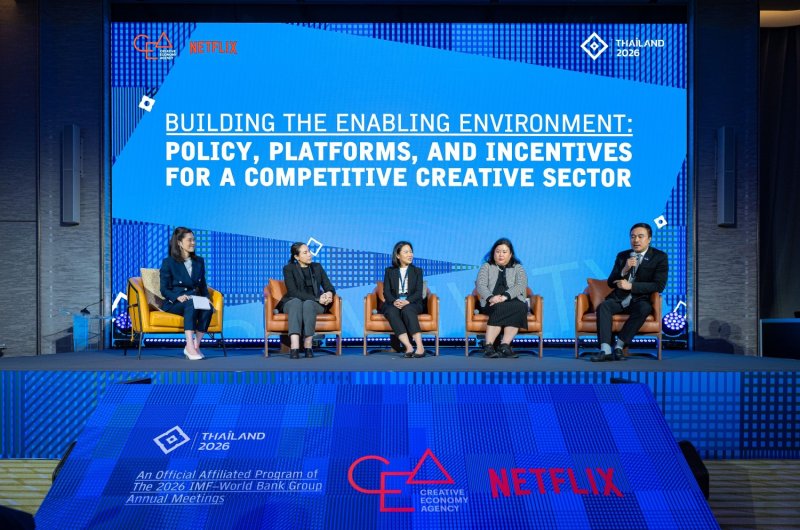
The Creative Economy Agency (Public Organization), or CEA, hosted “CREATIVITY AS CAPITAL: Driving the Next Growth Frontier”as an Official Affiliated Programme of the 2026 IMF–World Bank Group Annual Meetings. The programme featured a forum titled “Building the Enabling Environment: Policy Platforms and Intensives for a Competitive Creative Sector,” sharing perspectives for creating friendly ecosystem that facilitates Thailand’s creative industry. It has included other essential instruments such as financial system development, IP for asset, foreign investment promotion, paving a way for local content creators to connect with the global markets.
The forum has shown a new pathway for the country’s creative economy shifting from cultural capital-based creativity to Creative IP, which could develop high value economy, attract foreign investment, job creation and further business expansion to the global stage. The “Building the Enabling Environment: Policy Platforms and Intensives for a Competitive Creative Sector” forum featured Ms Monchanok Tanasanti, head of IP Commercialization Group, Department of Intellectual Property (DIP), Ministry of Commerce, Ms Nathareekon Saesubak, senior officer from Investment Promotion Officer, Office of the Board of Investment (BOI), Mr Chakrit Pichyangkul, executive director of Creative Economy Agency (CEA), and Mrs Sritala Sutapak, Head of Digital Content Software Business, Department of International Trade Promotion (DITP), Ministry of Commerce.
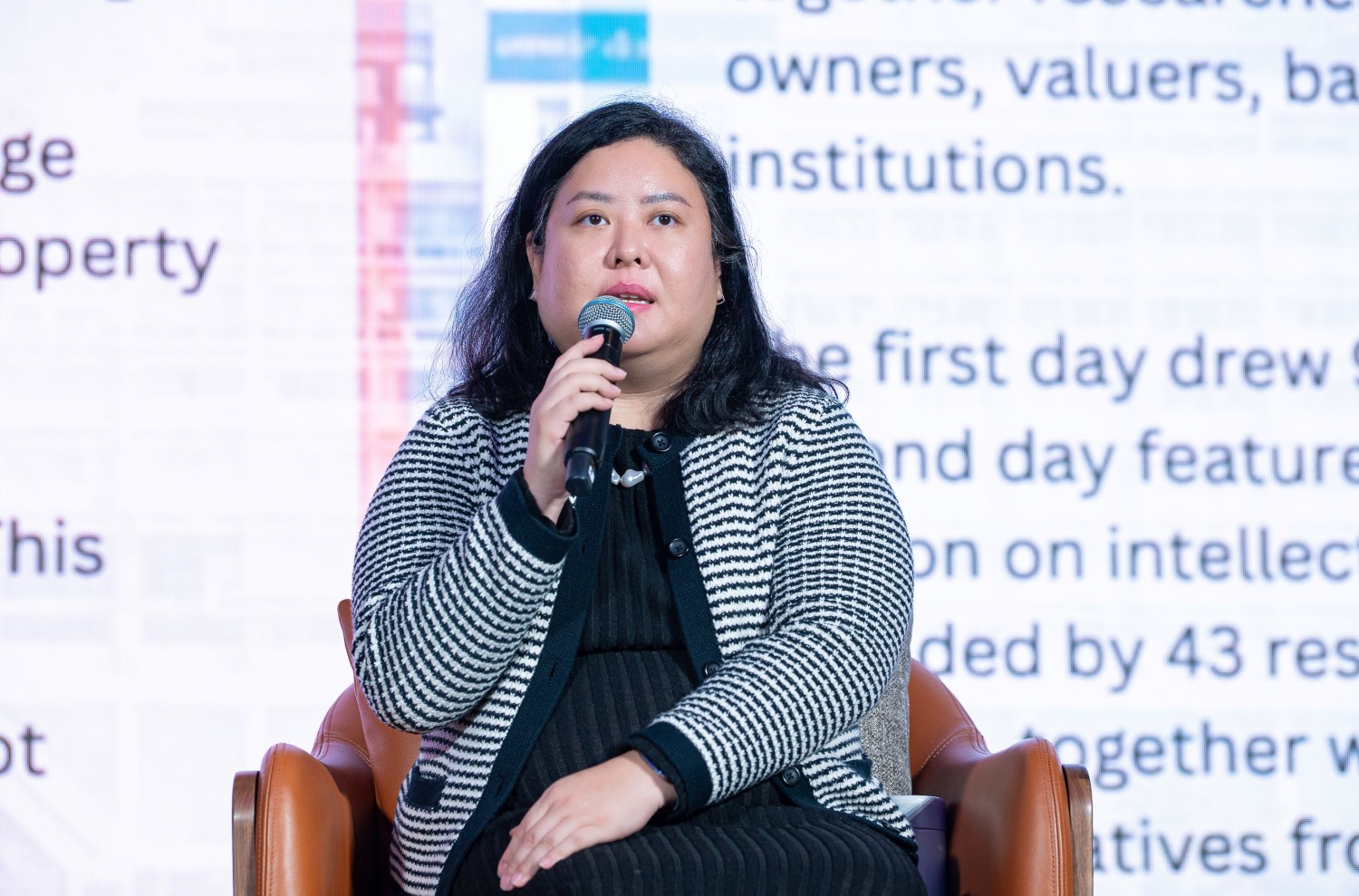
DIP heads to “IP Finance Ecosystem”
Ms. Monchanok Thanasanti, head of IP Commercialization Group, Department of Intellectual Property (DIP), Ministry of Commerce, explained that Intellectual Property (IP) has referred to intangible asset, which is protected by Business Security Act B.E 2558.
Hence, in collaboration with the European Union Intellectual Property Office (EUIPO), it helps develop Thailand’s IP Finance Ecosystem, and leveraging international knowledge to build upon existing operations and define activities under a framework of the Annual Meetings of the Boards of Governors of the World Bank Group and the International Monetary Fund. The draft is expected to complete by this year.
“We have seen positive development of having new financial source for the creativity business. For example, SET has agreed to offer token to content creator for one drama at the value of 200 million baht. But the case is not for the bank due to different perspectives so more details are needed to
discuss,” she said at the policy forum titled “Building the Enabling Environment: Policy, Platforms and Intensive for a Competitive Creative Sector”.
The event featured Thailand’s creative economy on the global economic stage, while communicating that creativity can do more than enhance cultural influence. It can be developed into Creative Capital and Creative IP that generate the economic value, attract investment, create jobs and expand business opportunity in international markets.
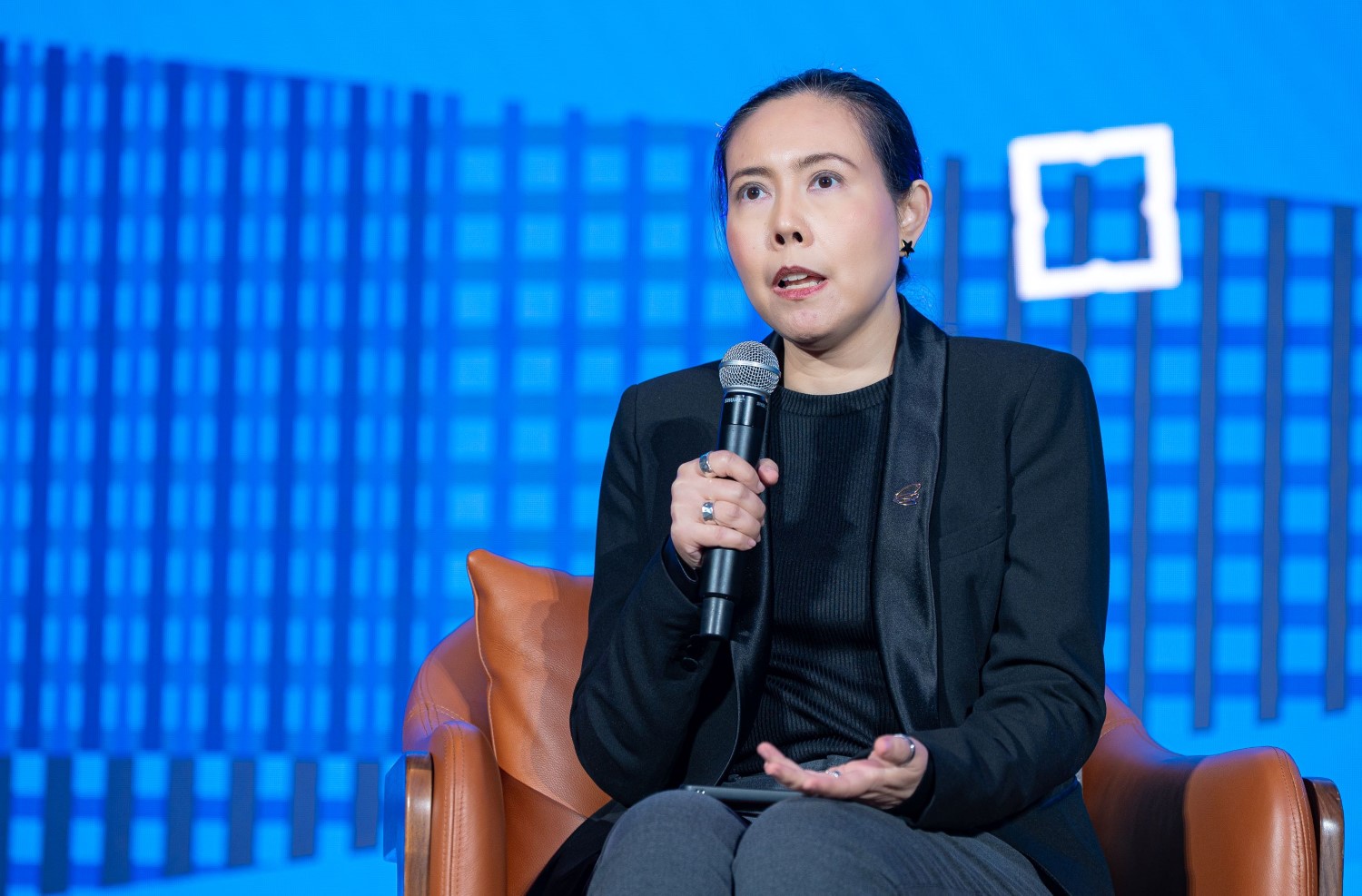
BOI’s lucrative packages for enhancing domestic creative economy
Ms. Nathareekon Saesubak, senior officer from Investment Promotion Officer, Office of the Board of Investment (BOI), said that BOI has worked closely with its partners for providing sufficient and qualified basis infrastructure to lure foreign investment on the creative business through both tariff and non-tariff intensive.
Regarding creative business, non-tariff intensive seems to be lucrative offer among foreign investors, with a special privilege to legally possess the land right if they make an investment in creative industry. Moreover,
they could register the company with no need to have Thai partners. All could be done under the BOI conditions, she added.
“BOI is not financial institution, but it will do the best to facilitate foreign investors on the creative industry. Our job is eliminating any obstacle that might delay the investment, together with promoting privileges to them. We are the gateway for foreign investors,” she said.
World Bank eyes double growth for the country’s creative product export
According to the World Bank Group, it has seen a potential for growing international market. Exports of creative goods more than doubled from approximately 105.44 billion baht in 2002 to 270 billion baht in 2024. This indicates that creative products are not limited to the domestic market, but have potential to generate oversea revenues and become part of global value change.
Additionally, World Bank Group has proposed several measures to strengthen Thailand’s creative economy, including stronger intellectual property protection and enforcement, developing licensing and IP markets, expanding access to financial and investment for creative professionals, increasing distribution channels and global partnership, investing in infrastructure and digital production tools, and strengthening Thailand’s global brand.
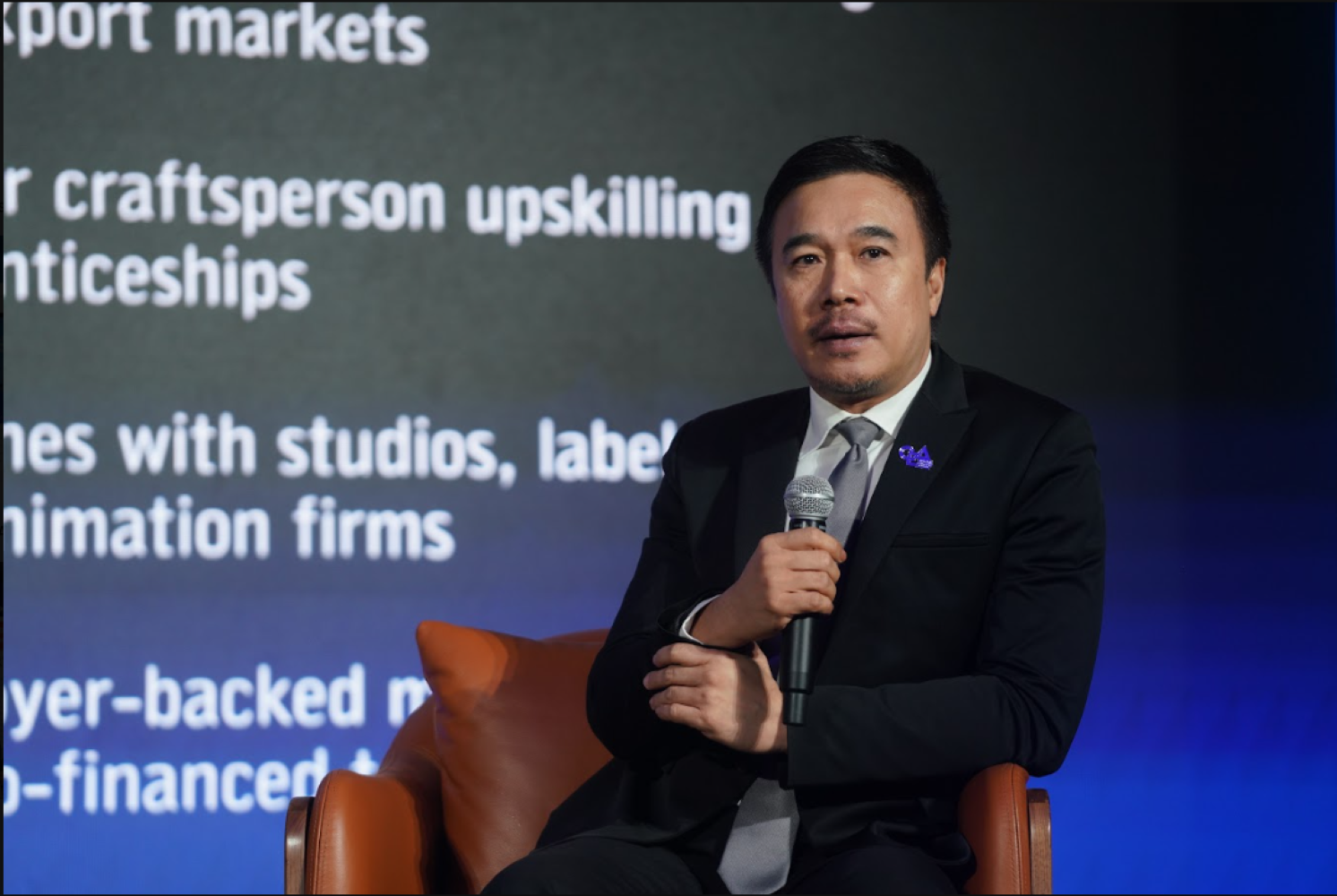
CEA lays down three-phase roadmap to promote domestic IP to the globe
Meanwhile, Dr. Chakrit Pichyangkul, executive director of the Creative Economy Agency (CEA), explained that driving the next step of creative economy, it has required to change supportive pattern from selective project into building up inclusive systems that would help business development, market expansion, fund raising and more. CEA has put a focus on three main topics. They are
Scale Creative Firms: Changing from selective projects to promote a whole business growth by developing financial instruments, especially Intangible-Asset-Baked Financing, together with setting up qualified standard, business matching, financial source linkage, co-investment fund development to draw more attention from private investors.
Strengthen IP Monetization: Earning long-term income from IP by highlighting an importance of developing rights management system, increasing a capacity for benefit collection through Blockchain and Smart Contracts system. It has also included the development of One –Stop Service for IP registration for both domestic and international markets.
Close Skills & Digital Gaps: Putting investment on human resources to pave a way for accessing the global markets, building up Talent Pipeline to work with studio, music company, game and animation company and upgrading Micro-credentials accredited by private sector.
He further added that CEA has prepared three-phase to drive the creative economy, which are
- Short-term plan: Cultivating a concept of IP to all creative-related industries, developing market, IP platform and financial system, together with elevating infrastructure for creative economy
- Middle-term plan: Increasing capacity for SME creators to connect with both domestic and international markets
- Long-term plan: Synchronizing creativity, technology and business through a value chain for creating competitive ecosystem
“Although the value of creative economy looks high, we have seen a lot of window of opportunity to gain more income. The government has put a lot of money to invest the project, but not for the business scaling. It should take part to support IP as the financial source, including human resource development,” he added.
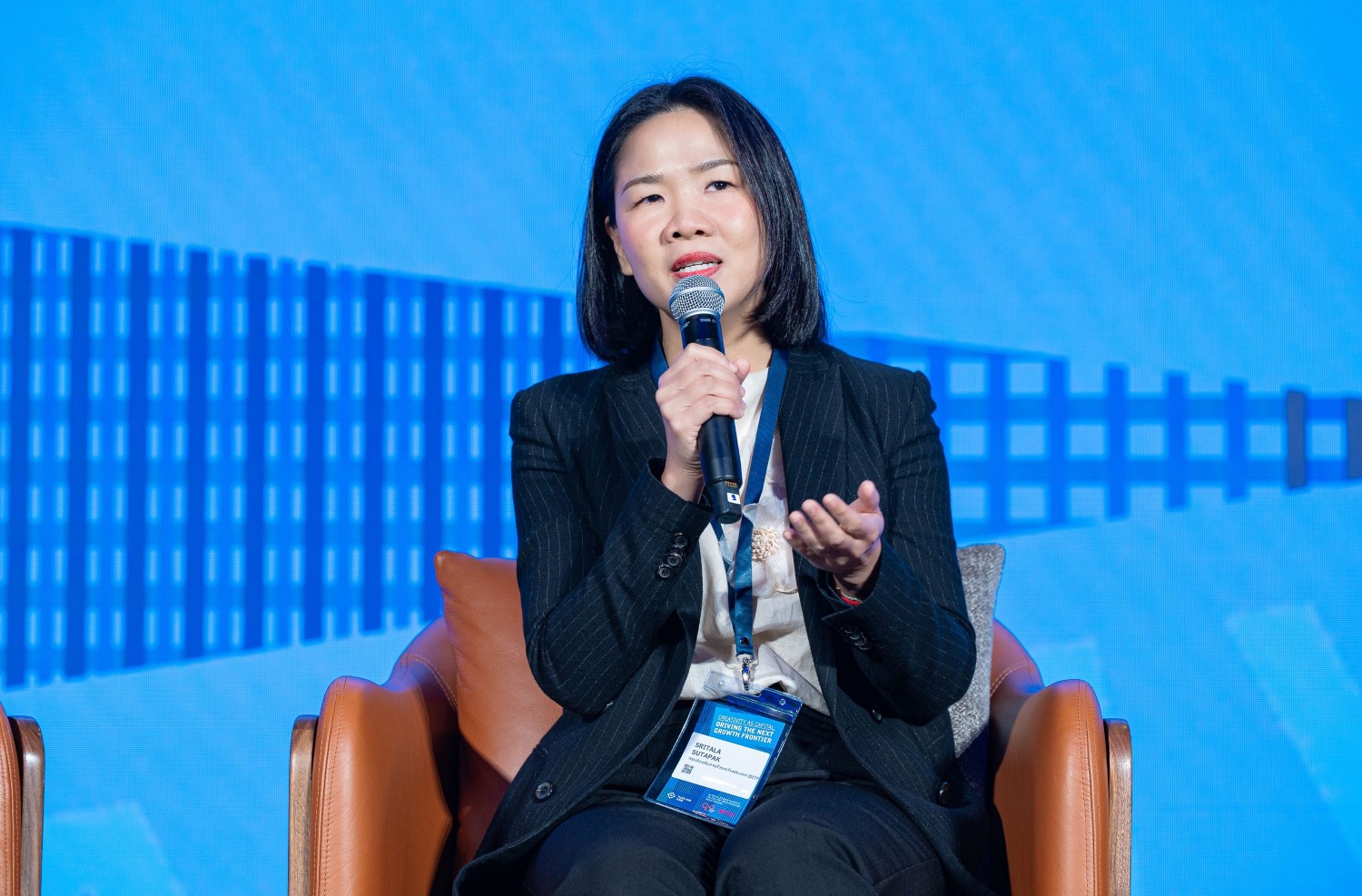
DITP says Thai content meets success in Asia market and IP income should be prioritized
Mrs. Sritala Sutapak, Head of Digital Content Software Business, Department of International Trade Promotion (DITP), Ministry of Commerce, said that Thai creative content has received warm welcome in international markets in China, South Korea and Japan, proving that the government is heading to a right pathway to promote the creative industries.
She further added that Thai SMEs could create and develop many excellent products, but a challenging issue is how to make money from them. So they could prepare and learn more the market to develop an appropriate business model. Importantly, they should extend their business from their own intellectual property, or establish new service for licensing to create income in a long run.
The forum of “Building the Enabling Environment: Policy Platforms and Intensives for a Competitive Creative Sector” has conveyed a challenge for the next step of the country’s creative economy, which the issue of Creative IP for asset should be elevated to empower its capacity for the global market’s competition.
