

 Facebook
 Reddit
 Copy Link


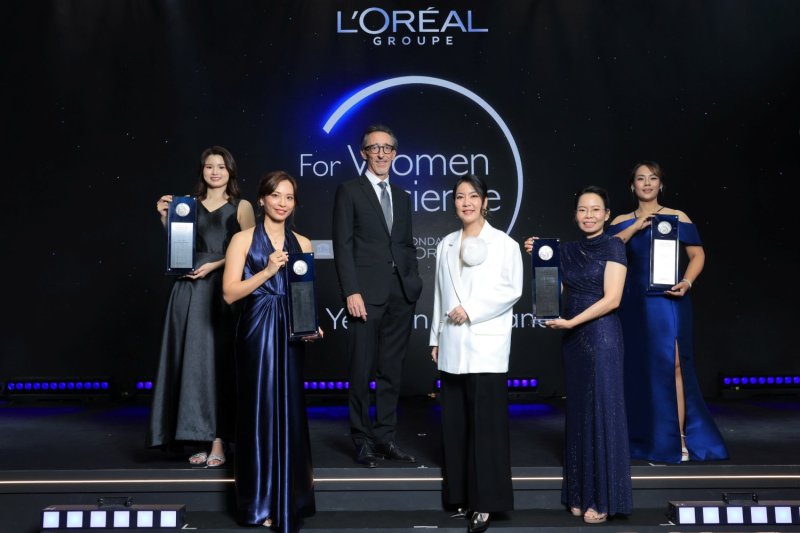
Bangkok, 6 November 2026 – L’Oréal Groupe in Thailand, a global leader in beauty, continues to champion the role of women researchers in science for its 24th consecutive year by awarding research fellowships worth 250,000 THB each and honorary plaques to four outstanding female researchers under the L’Oréal Thailand “For Women in Science” Fellowship Programme for 2026. This year marks the first time the programme has expanded the applicant age limit from 40 to 45 years old, broadening opportunities for female researchers to present high-potential research. Selected from more than 89 research submissions, the programme aims to recognise and empower women researchers while inspiring the next generation of young women in science who play a vital role in driving Thailand’s scientific progress in the fields of environment, health, and sustainability. This reflects L’Oréal’s purpose to “Create the Beauty that Moves the World,” supporting research and development with the potential to generate positive impact for society, while raising wider awareness of the achievements of Thai women researchers.
Mr. Patrick Girod, CEO of L’Oréal Thailand, Myanmar, Laos, and Cambodia, remarked: “Through the initiatives of the Fondation L’Oréal, we are committed to creating opportunities for Thai women researchers to realise their potential, generate new knowledge, and advance research that responds meaningfully to society’s challenges. This year, the programme attracted even greater interest, as reflected in the increase in research submissions compared to previous years and the diverse research topics spanning health, medicine, technology, and the environment. This demonstrates the potential of Thai women researchers to create innovations connected to people’s quality of life and the country’s development. The four projects selected this year are not only academically outstanding, but also possess strong potential to turn knowledge into practical solutions—from advancing cancer treatments and health technologies to utilising science to add value to resources and support a sustainable future. We firmly believe that sustained support for women researchers will help build a stronger scientific ecosystem, open up space for diverse perspectives, and inspire a new generation of women to see science as a field where they can grow, drive change, and help shape a better future for everyone.”
Four Fellowships Awarded to Four Women Researchers in Two Fields
Life Sciences (2 recipients)
-
Assoc. Prof. Dr. Aussara Panya, from Department of Biology, Faculty of Science, Chiang Mai University, for her research titled “Ex Vivo Evaluation of a CD47-Targeted Tri-specific Killer Engager (TriKE) for Enhancing Patient-Derived Natural Killer Cell-Mediated Eradication of Multiple Myeloma”
-
Assoc. Prof. Dr. Methichit Wattanapanitch, from Faculty of Medicine Siriraj Hospital, Mahidol University, for her research titled “Development of Off-the-Shelf iPSC-Derived Immune Cell Products for Cancer Immunotherapy”
Physical Sciences (2 recipients)
-
Assoc. Prof. Dr. Duangkamon Baowan, from Department of Mathematics, Faculty of Science, Mahidol University, for her research titled “Advanced Mathematical Modelling and Heuristic Optimisation for Maximising the Drug-Adsorption Efficiency of Carbon-Based Nanocarriers: A Combined Theoretical and Experimental Framework”
-
Assoc. Prof. Dr. Kamonwad Ngamchuea, from School of Chemistry, Institute of Science, Suranaree University of Technology, for her research titled “Electrochemistry for Well-being and a Sustainable Future”
The four outstanding female researchers awarded the 2026 fellowships shared insights into their projects:
Assoc. Prof. Dr. Aussara Panya, from the Department of Biology, Faculty of Science, Chiang Mai University, recipient in the field of Life Sciences, shared: “Multiple myeloma is a plasma cell cancer that remains incurable. Although several treatment options are currently available, a significant number of patients develop drug resistance or experience relapse. This research therefore focuses on developing the TriKE-CD47 protein to enhance the engagement between natural killer (NK) cells and cancer cells, while stimulating the activity and proliferation of NK cells and blocking signals that allow cancer cells to evade immune surveillance. In vitro studies demonstrated that this protein significantly enhances cancer cell clearance, while animal studies showed it can slow tumor growth and reduce tumor size without evidence of severe adverse effects. The next step is an ex vivo evaluation using patient-derived cancer cells to investigate the correlation between CD47 expression levels and therapeutic response. Identifying patient subgroups likely to respond will provide crucial data for developing more precise, safe, and personalised immunotherapy, establishing a vital foundation for preclinical studies and future biotherapeutic product development.”
Assoc. Prof. Dr. Methichit Wattanapanitch, from the Faculty of Medicine Siriraj Hospital, Mahidol University, recipient in the field of Life Sciences, stated: “Cancer immunotherapy using immune cells, such as CAR T cells, is an effective therapeutic approach, particularly for patients with certain hematological cancers. However, most current CAR T-cell therapies require harvesting immune cells from individual patients to engineer personalised cell therapies, a complex, time-consuming, and costly manufacturing process, with the quality of starting cells varying from patient to patient. Our research therefore aims to create ‘off-the-shelf’ immune cells from induced pluripotent stem cells, or iPSCs, which can expand continuously and differentiate into multiple immune cell types, including T cells, NK cells, and macrophages. The team has developed CRISPR/Cas9 technology to edit genes, enabling immune cells to recognise and eradicate cancer cells more specifically, reduce the likelihood of host rejection, and improve their function within the tumor microenvironment. Currently, we can generate immune cells from iPSCs that exhibit cancer-killing efficacy comparable to donor-derived cells. The next steps are to optimise performance, scale up cell production for animal studies, and establish appropriate manufacturing standards. Our long-term goal is to develop quality-controlled, off-the-shelf cell therapies produced at scale, allowing patients faster access to novel treatments, strengthening Thailand’s cell and gene therapy capabilities, and reducing reliance on imported technologies.”
Assoc. Prof. Dr. Duangkamon Baowan, from the Department of Mathematics, Faculty of Science, Mahidol University, recipient in the field of Physical Sciences, said: “One of the primary challenges in cancer therapy is delivering drugs precisely to target cells while minimising adverse effects on healthy tissues. Carbon nanomaterials, such as carbon nanotubes and graphene oxide, hold tremendous potential as nanocarriers. However, identifying optimal structures and conditions through laboratory experiments alone is costly, time-consuming, and provides limited insight into molecular interactions. This research integrates applied mathematics with nanotechnology, utilising mathematical models and heuristic algorithms to predict the most stable configurations for drug encapsulation or adsorption onto nanocarriers prior to laboratory validation. This approach identifies optimal structures and conditions far more rapidly than conventional methods, reducing trial-and-error, time, costs, and experimental waste, while laboratory experimental data is fed back to refine model accuracy. Our goal is to establish a computational platform that enables medical and pharmacological researchers to screen and compare promising drug-delivery systems before physical synthesis. Once established, this framework can be systematically applied to novel drug-carrier pairs, improving research efficiency and accelerating promising therapies toward safer, faster clinical trials.”
Assoc. Prof. Dr. Kamonwad Ngamchuea, from the School of Chemistry, Institute of Science, Suranaree University of Technology, recipient in the field of Physical Sciences, shared: “Transitioning into an ageing society alongside environmental challenges creates an urgent need for measurement technologies that are accurate, accessible, and sustainably produced. This research applies electrochemical knowledge to add value to Thai agricultural biomass—such as cassava starch, lignin, and cellulose—through mild processes to develop electrode materials and high-value compounds. These derived materials are utilised to fabricate portable sensors for detecting critical health biomarkers and environmental contaminants. The research team has successfully developed sensors capable of analysing blood, urine, sweat, and saliva samples, and is currently integrating artificial intelligence to interpret complex signals, increasing analytical precision and reducing detection time. The ultimate goal is to develop affordable, easy-to-use, non-invasive diagnostic devices and point-of-care testing systems to meet public health demands in an ageing society. Furthermore, converting agricultural waste into high-value materials and sensors promotes industrial technology transfer, supports the circular economy, reduces reliance on imported materials and equipment, and demonstrates how science can concurrently address health, economic, and environmental needs.”
The L’Oréal “For Women in Science” fellowship programme was initiated in 1998 by the Fondation L’Oréal in collaboration with UNESCO. Each year, the programme supports more than 250 young female researchers through national and regional projects worldwide and has awarded international honorary fellowships to over 100 women scientists at the Laureate level, with seven recipients going on to win Nobel Prizes. In Thailand, the programme has operated continuously for 24 years. In 2026, the applicant age limit was expanded to under 45 years of age for the first time to broaden access to support for female researchers at a crucial stage of their careers, awarding fellowships worth 250,000 THB each to female researchers across Life Sciences and Physical Sciences.
