

 Facebook
 Reddit
 Copy Link


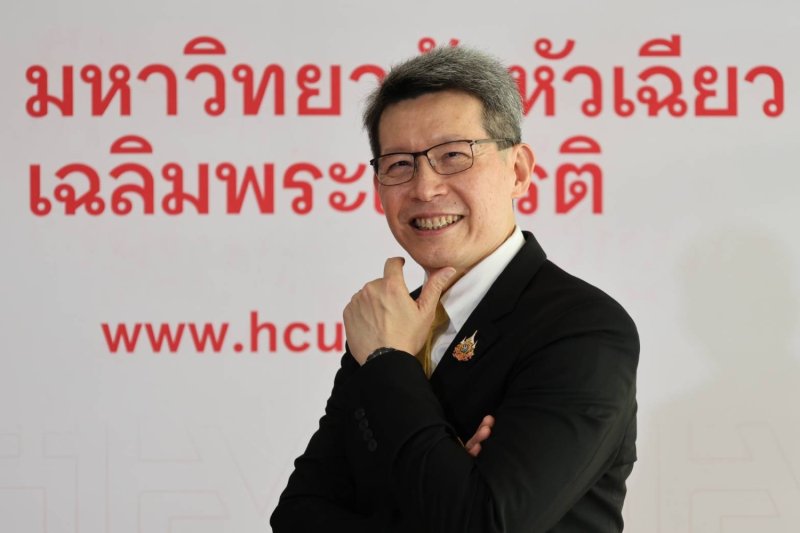
New leadership outlines strategic reforms in AI-integrated education, Thai–Chinese healthcare innovation, industry-oriented learning and lifelong education, reaffirming HCU's commitment to developing graduates who “Think Critically, Deliver in Practice, Create Value, and Serve Society.”
SAMUT PRAKAN, Thailand, Nov 6, 2026 — Huachiew Chalermprakiet University (HCU) introduced its seventh president, Prof Dr Supot Teachavorasinskun, at a press conference outlining the university's strategic direction in response to rapid technological advancement, demographic change and the evolving demands of higher education and the global workforce.
The new strategic agenda prioritises the integration of artificial intelligence (AI) into teaching, learning and assessment; the development of HCU as a regional hub for Traditional Chinese Medicine and health sciences; stronger collaboration between higher education and industry; and expanded opportunities for lifelong learning.
Prof Dr Supot emphasised that these developments would build upon HCU's established identity as a university committed to ethical values, academic excellence and service to society. The university aims to prepare graduates who possess not only disciplinary knowledge and technological competence but also critical thinking, practical capabilities, ethical judgment and a strong sense of social responsibility.
Transforming Education Through AI and Critical Thinking
A central priority of the new administration is to establish a foundation for the systematic integration of AI into education during its first year. Rather than focusing exclusively on the acquisition and reproduction of knowledge, HCU intends to strengthen students' ability to analyse information, critically evaluate AI-generated responses and exercise independent judgment.
Prof Dr Supot emphasised that meaningful AI integration requires more than proficiency in writing prompts or operating AI applications. Students must develop the disciplinary knowledge and intellectual capabilities necessary to formulate insightful questions, evaluate information critically and recognise the limitations of AI-generated outputs.
"Our AI policy doesn't stop at teaching people to give commands or write prompts. It is about building the skill of asking questions grounded in deep knowledge, and developing students who have imagination, insight and sound judgment, ready to embrace change," Prof Dr Supot said.
To support these educational reforms, the university plans to accelerate institutional change management by strengthening interdisciplinary collaboration and reducing organisational and curricular barriers between faculties. One proposed initiative is a centralised credit bank system that would provide students with greater flexibility to pursue courses across disciplines and develop competencies relevant to their academic and professional goals.
Strengthening Thai–Chinese Collaboration in Traditional Chinese Medicine and Health Sciences
Building on its academic strengths and established relationships with institutions in China, HCU aims to advance the development of a Thai–China Healthcare Innovation Hub. The initiative is intended to promote academic cooperation, research and innovation across Traditional Chinese Medicine, health sciences and Chinese studies.
The proposed hub will support interdisciplinary collaboration in clinical research, the study and application of Thai medicinal herbs, healthcare innovation and approaches to healthy ageing.
HCU's long-term ambition is to strengthen its position as a regional centre of expertise connecting Thailand, China and Asean in three priority areas: scientific and academic collaboration in healthcare and health systems management; the development and regional integration of Traditional Chinese Medicine; and clinical innovation focusing on health sciences, rehabilitation and older persons' well-being.
Complementing these initiatives, the university will emphasise multilingual and technological competencies, particularly proficiency in Thai, Chinese and English, together with AI literacy. These capabilities are intended to enhance graduates' professional mobility, cross-cultural communication and competitiveness in international labour markets, particularly in healthcare and related sectors.
Redesigning Curricula to Strengthen Graduate Employability
HCU also intends to redesign its curricula to ensure that graduates are equipped with the knowledge, technological capabilities and practical experience required for successful transitions into professional employment.
The proposed educational approach emphasises three complementary dimensions of graduate readiness: a sound foundation in disciplinary knowledge; the ability to use relevant technologies effectively and responsibly; and practical competence developed through authentic professional experience.
A key component is the progressive integration of industry-based projects throughout students' academic programmes. Rather than relying exclusively on internships or work placements during a single semester, the university intends to provide sustained opportunities for students to engage with real-world challenges, apply theoretical knowledge and develop solutions in collaboration with industry and professional partners.
This approach is designed to strengthen experiential learning, interdisciplinary problem-solving, professional adaptability and graduates' readiness to contribute effectively in the workplace.
Expanding Microcredentials and Lifelong Learning Opportunities
In response to Thailand's declining school-age population and changing workforce development needs, HCU plans to expand its educational services beyond conventional degree programmes through microcredentials, professional development courses and lifelong learning opportunities.
Priority areas include health promotion, preventive care, rehabilitation and services for older persons. Proposed programmes, such as Traditional Chinese Wellness & Preventive Care and Practical Rehabilitation & Elderly Care, would integrate relevant approaches from Traditional Chinese Medicine with contemporary rehabilitation and healthcare practices.
These programmes are intended to serve a diverse range of learners, including healthcare practitioners, caregivers, physical therapists, working professionals and families providing care for dependent older persons.
The university also plans to strengthen the role of its Thai–China Leadership Institute in developing professional and executive education programmes that enhance business capabilities, cross-cultural understanding and cooperation between Thailand and China.
Through these initiatives, HCU seeks to widen access to flexible, competency-oriented education while responding to the evolving needs of individuals, communities and the workforce.
Advancing an Engaged University Through Community Partnerships
Consistent with its founding principles and longstanding association with the Poh Teck Tung Foundation, HCU will continue to place ethical conduct, compassion and service to society at the centre of its educational mission.
The university intends to strengthen its role as an engaged university by moving beyond occasional corporate social responsibility (CSR) activities toward sustained, reciprocal partnerships with communities, particularly those in Samut Prakan province.
Under this approach, academic expertise, research, student engagement and appropriate technologies will be mobilised to address community priorities and develop practical solutions to local challenges.
The university aims to work collaboratively with community stakeholders to promote quality of life, public health, well-being, safety and sustainable development. This direction reflects HCU's commitment to integrating academic learning with meaningful social contribution.
Building an Adaptive, Transparent and Learning-Oriented University
In outlining his leadership philosophy, Prof Dr Supot compared the university to a large ship entering a new phase of its journey, with himself assuming the responsibility of its new captain.
He emphasised that successful institutional transformation would depend not only on strategic planning and technological innovation but also on humility, openness to diverse perspectives, transparency and the willingness to question established practices through informed and constructive dialogue.
Central to his vision is the development of HCU as a learning organization in which administrators, academic staff, students and other stakeholders continually reflect, collaborate, adapt and improve.
The university's transformation, he indicated, should be guided by the recognition that institutional progress does not require perfection, but rather a sustained commitment to learning, responsible leadership and collective development.
Through its renewed strategic direction, Huachiew Chalermprakiet University seeks to strengthen its position as a distinctive higher education institution that combines technological innovation, academic and professional excellence, international collaboration and ethical responsibility.
At the heart of this vision is the university's commitment to developing learners and graduates who “Think Critically, Deliver in Practice, Create Value, and Serve Society.”
