


Bangkok's Lumpini Park -- long regarded as the city's green heart -- is undergoing a quiet but significant transformation.
Visitors returning after several years away may find the park strikingly refreshed: restored heritage structures, expanded activity spaces and carefully redesigned landscapes have begun reshaping one of Thailand's most beloved urban sanctuaries.
Situated in the Pathumwan district in the centre of the capital, the 360-rai park has been modernised while retaining its classic architectural character.
Historic buildings have been restored rather than replaced, while the surrounding grounds have been reorganised to accommodate a wider range of activities for residents and visitors alike.
Today, beneath the shade of towering trees and beside tranquil lakes, the park has become a hub for exercise, recreation and social life -- drawing a steadily growing number of international visitors alongside its regular local users.
Over the past four to five years, Lumpini Park has seen a surge in popularity, particularly among foreign tourists who now form a noticeable presence from early morning until late evening.
Despite being surrounded by Bangkok's skyscrapers, the park offers a rare combination of lush greenery, open lawns and reflective lakes -- a natural retreat amid the bustle of one of Asia's most dynamic cities.
Cleaner walkways, clearer zoning for different activities and improved infrastructure have helped make the park more accessible and comfortable for visitors of all ages.
Ukrit Chongchatuporn, head of green area management division 4 at the Bangkok Metropolitan Administration's environment department, said the park now welcomes between 70,000 and 100,000 visitors daily, depending on the day of the week.
"Lumpini Park remains one of the most popular public spaces in the city," he said. "Its central location and convenient transport links -- including nearby BTS and MRT stations -- make it easily accessible."
He added that foreigners now account for roughly 30% of visitors, a figure that has increased significantly in recent years.
An unexpected star
While the park's beauty and greenery attract many visitors, an unlikely star has emerged as one of its most talked-about attractions -- the Asian water monitor lizard.
These large reptiles can often be seen swimming through the park's ponds or slowly crossing grassy areas. Occasionally, one may even wander close to visitors, often unnoticed unless people look carefully.
For many foreign tourists, the experience is a drawcard.
Javier, a tourist from Spain who visits Bangkok every few years, said seeing the lizards was one of the main reasons he returned to Lumpini Park during his latest trip.
"I had seen them on social media and wanted to see them in real life," he said. "We don't have animals like this in Europe. It's an unusual experience and something completely new."
He added the park's central location made the visit easy.
"I've been here before. It's a beautiful and clean park in the middle of Bangkok. This time, I came specifically to see the lizards. It's only about 15 minutes from where I'm staying."
Pongsan Wongsong, an agricultural technical officer at Lumpini Park, said the reptiles have long been part of the park's ecosystem.
"In the past there were more than 400 monitor lizards in the park," he explained. "In 2016, over 200 were relocated to more suitable habitats."
Today, about 200 remain.
"There hasn't been a significant increase in numbers," he said. "Like other animals, they follow the natural cycle of birth, ageing and death."
Ironically, a viral video showing authorities relocating some of the animals several years ago helped turn them into a global curiosity.
"After that clip spread online, more tourists -- both Thai and foreign -- started coming here to see them," Mr Pongsan said. "They have become one of the park's unique attractions."
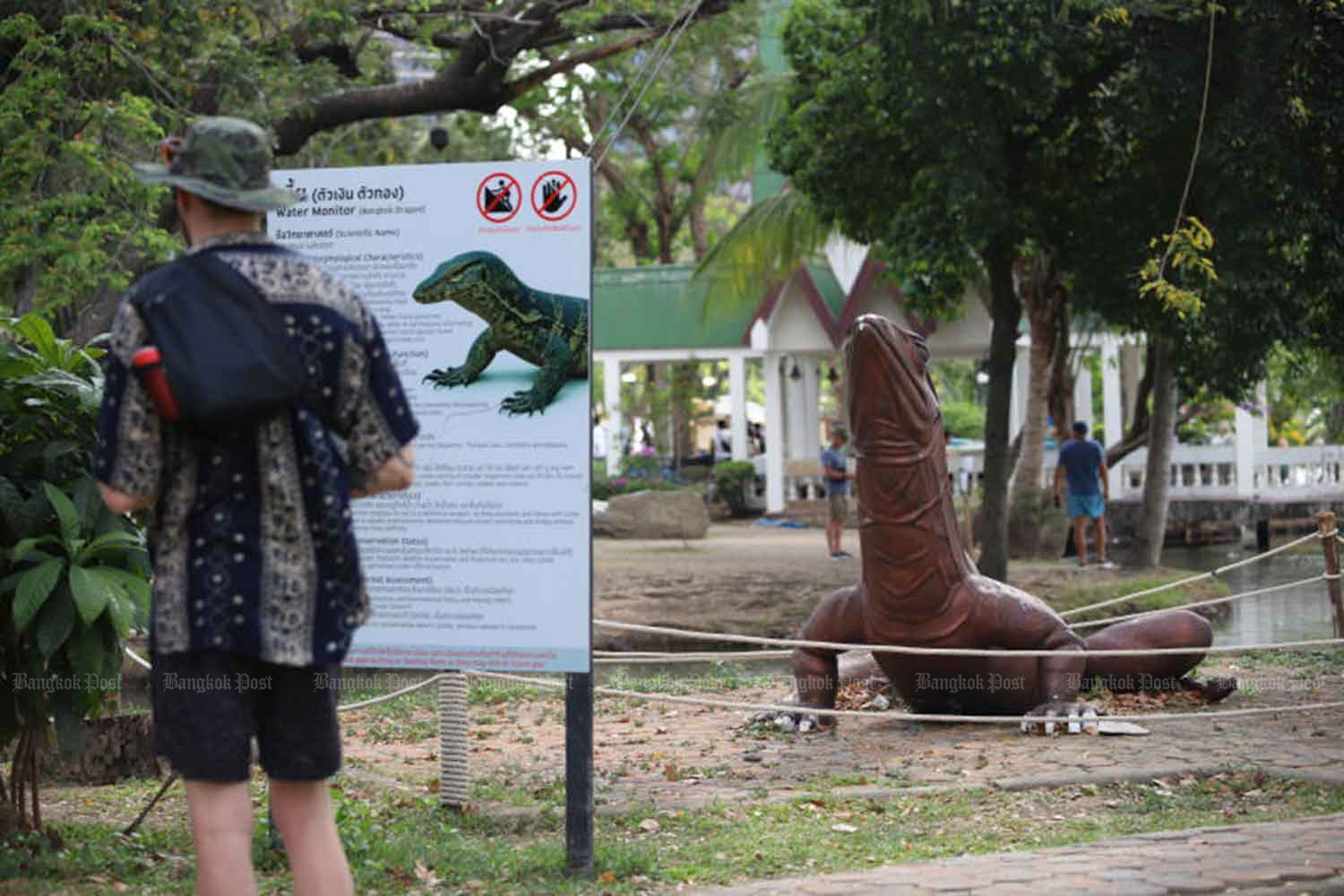
A visitor reads an information board about the Asian water monitor (Varanus salvator) in Lumpini Park. The lizards have drawn many tourists to the 100-year-old park. (Photo: Varuth Hirunyatheb)
Lumpini Dog Park
Beyond its famous reptiles, Lumpini Park is also expanding its role as a modern urban recreational space.
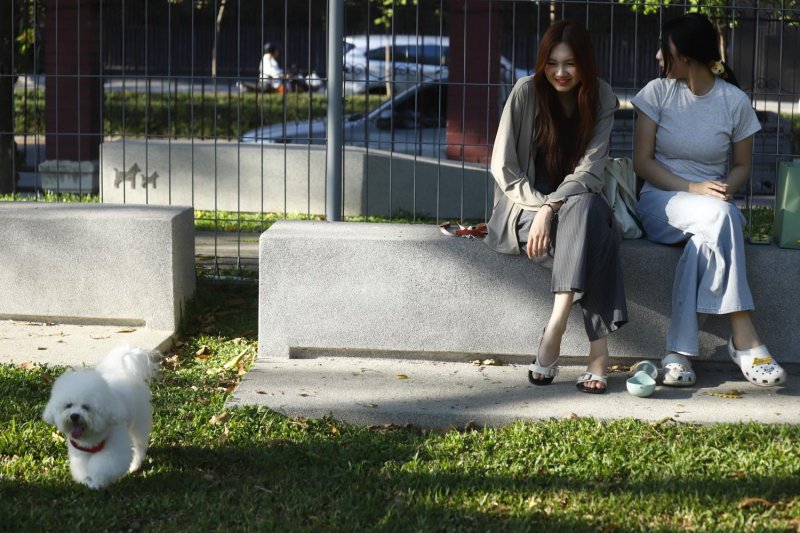
One of the newest additions is the Lumpini Dog Park, located near Witthayu Road. Covering approximately three rai, the facility opened on Feb 7.
Inspired by Japanese-style design, the dog park is divided into two zones: a leash zone for walking and exercising dogs and an off-leash zone where dogs can run freely within a secure enclosure
Facilities also include washing stations for cleaning pets' paws and seating areas where owners can relax and socialise.
Natthaya Ngokngam, another agricultural technical officer at the park, said the new facility has quickly become popular.
"On average, about 100 to 200 people visit the dog park each day, bringing about 100 dogs," she said. "Most come in the morning or early evening."
For many residents, the space fills an important gap in urban living.
"It's great to have a dog park close to home," Intuon Chitanan, a dog owner who frequently visits with a friend, said. "There isn't much space for dogs to run around where we live."
Her friend, Jiraporn Manthammaraksa, said the park also helps build a community among pet owners.
"It's a place where people who love animals can meet and share experiences," she said. "It's clean, well organised and right in the centre of Bangkok."
Revitalising a landmark
The transformation of Lumpini Park is part of a broader renovation project launched to mark the park's 100th anniversary, a milestone celebrated in 2025.
The project aims to revitalise the historic park while adapting it to the needs of modern city life.
Originally opened in 1925, Lumpini Park was the first public park in Thailand. The land was once part of the private property of King Rama VI, who intended to host a grand exhibition showcasing Thai crafts, products and sports.
The exhibition was never held due to the king's passing, and during the reign of King Rama VII, the land was converted into a public park instead.
Today, the century-old site is being redeveloped in phases.
Initial work has focused on infrastructure upgrades, including improved walkways, roads, drainage systems and environmentally friendly running paths.
Further plans include creating cultural and educational spaces in unused buildings, expanding recreational activities and introducing climate-resilient landscape design.
For many Bangkok residents, Lumpini Park is more than just a recreational space -- it is part of their personal history.
Pattharawadee Diskul, an 18-year-old student, said she has visited the park regularly since childhood.
"My family used to live nearby, so this park is full of memories," she said. "Now it's cleaner and greener than before."
For long-time visitors such as 62-year-old Nawat Thanaphon, who exercises there daily, the park represents something even larger.
"In the middle of a busy city like Bangkok, a place like this is priceless," he said.
