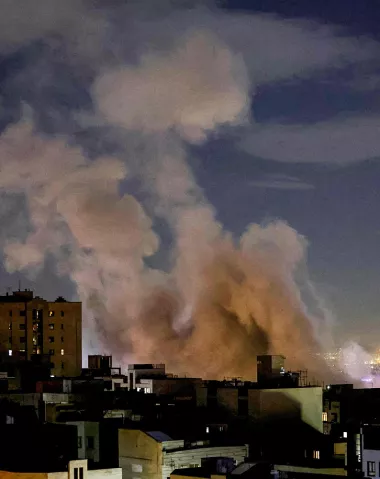
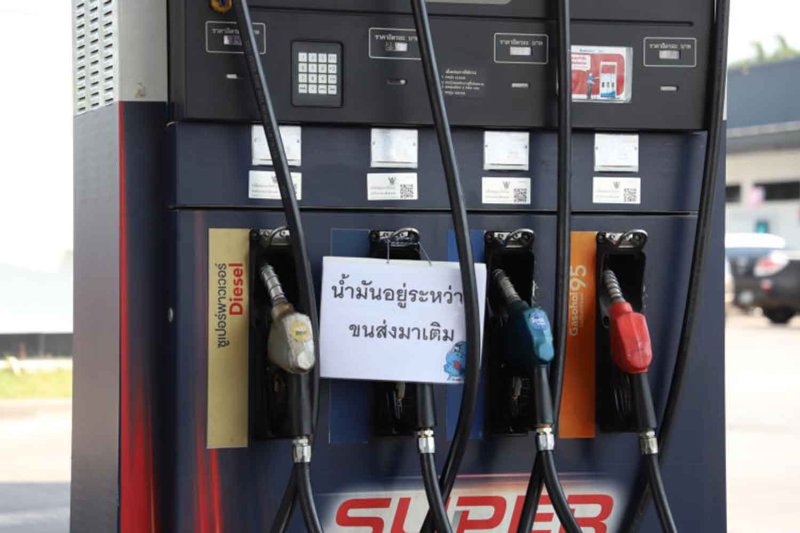
Political figures from across Thailand's spectrum, along with consumer advocates, are urging the government to move beyond routine fuel-price management and prepare for a full-blown energy crisis.
They warned the prolonged Middle East war could cause both supply disruptions and a domestic political storm.
Their message is unusually consistent: Thailand should stop treating the surge in oil prices as normal market volatility and start managing it as a looming supply-security crisis.
That means considering emergency legal powers, restructuring fuel subsidies, sharing the burden between consumers, the state and refiners, and using the moment to tackle long-standing weaknesses in oil pricing and transport systems.
Price volatility, crisis prevention
Atavit Suwanpakdee, list MP of the United Thai Nation (UTN) Party and a former adviser to the energy minister, said the government is still managing oil as a matter of ordinary price fluctuation. In his view, the threat is far more serious.
Thailand imports crude mainly from Saudi Arabia, the United Arab Emirates and the US.
Two of those three sources depend on the Strait of Hormuz, one of the world's most sensitive energy chokepoints. If the strait is blocked, Mr Atavit said, Thailand could face a supply disruption in a matter of weeks as shipping is delayed and previously purchased crude runs down.
Under normal circumstances, governments can use the Oil Fuel Fund and tax adjustments to cushion price spikes. But in a geopolitical shock, the issue becomes not just how expensive fuel is, but whether enough reaches the market at all.

Atavit: Eye on economic reforms
Emergency powers
Mr Atavit's most pointed criticism is the government may be relying on the wrong law.
He said the administration is using the Oil Trade Act of 2000, which allows authorities to stop sales abroad. But more sweeping measures, such as a full export ban and a domestic price freeze without immediate compensation, would require invoking the Emergency Decree on the Amendment and Prevention of Oil Shortage of 1973, which was introduced during an earlier oil crisis.
This is more than a technical argument. If the government uses insufficient legal powers, it may not be able to act quickly or decisively enough in a real shortage.
And because the country is under a caretaker administration, any later move to borrow money or guarantee the Oil Fuel Fund could require approval from the Election Commission, creating delays.
"Preparations for handling this crisis must involve using every legal instrument available," he said.
Mr Atavit said fears of shortages may be driven by policy design more than actual scarcity.
He said the country still has crude oil in the system because much of what is being refined now was bought about two months ago and is already in the country or en route. On paper, then, there should be no immediate nationwide shortage.
Yet shortages can still appear at petrol stations because of what he calls a "two-price" structure. The government is subsidising retail prices at branded stations, while wholesale prices outside that channel remain higher.
This creates a distortion: large franchised stations sell cheaper fuel, while wholesalers, jobbers, small provincial stations, transport firms, mines and farms that rely on bulk purchases face a more expensive supply.
That gap encourages fuel to move toward the most profitable channels and can create visible shortages in parts of the market even when national supply is technically adequate. In that sense, the shortage may be less about physical supply than about a flawed subsidy mechanism.
Mr Atavit also rejected the claim that ordinary consumers, farmers or industrial users are the main hoarders, saying storage is limited and regulated. If there is strategic withholding, he suggested, it is more likely to happen higher up the supply chain.
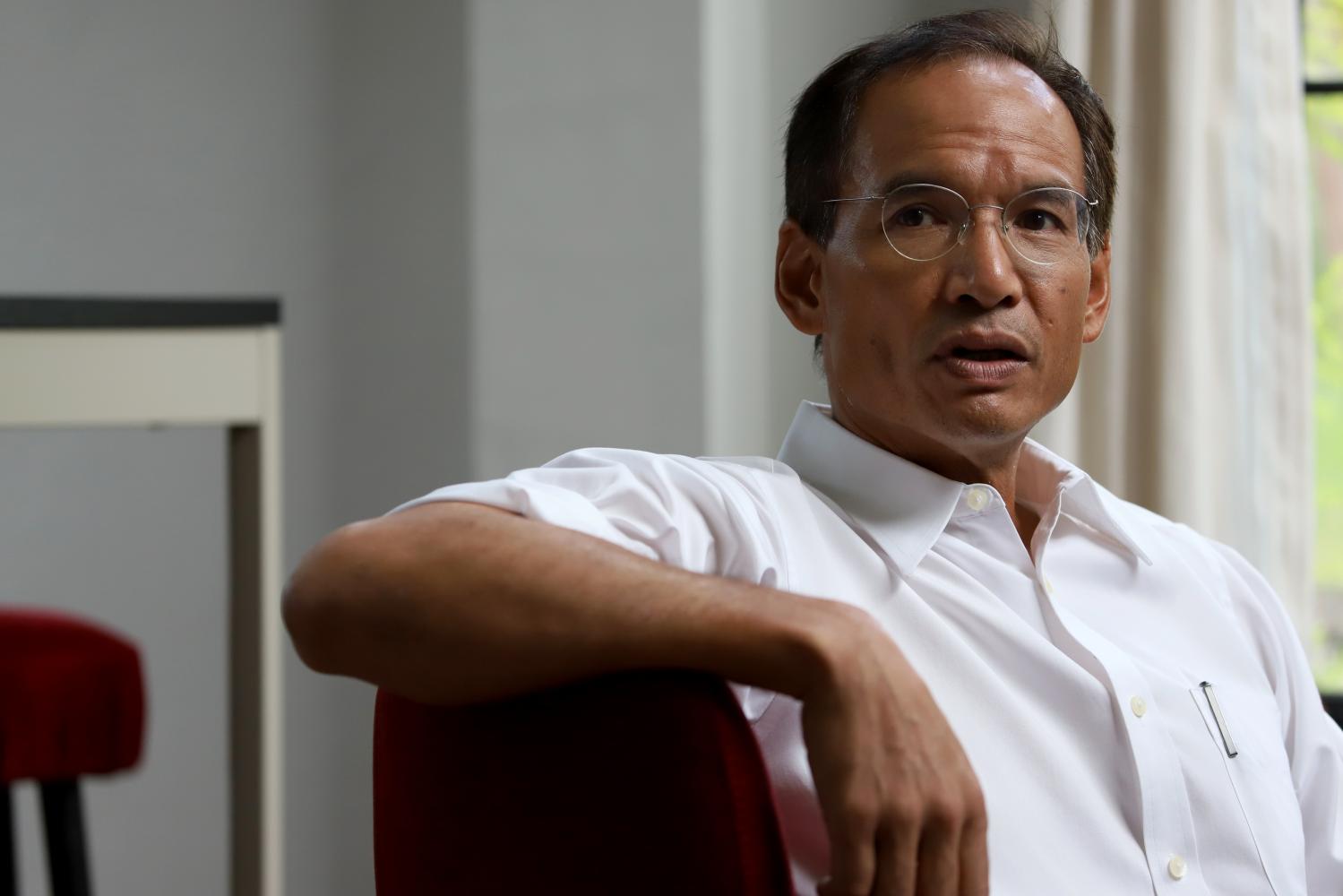
Korn: Seeking refinery levy
Refinery windfalls
This leads directly to the most politically sensitive issue: refinery profits.
Mr Atavit and Korn Chatikavanij, deputy leader of the Democrat Party and a former finance minister, both argue refiners are benefiting from the way Thailand prices fuel.
The country relies on benchmark prices, Dubai crude for feedstock and Singapore prices for refined products, rather than the actual historical cost of oil already bought.
In times of geopolitical panic, the gap between crude prices and refined-product prices often widens sharply.
They say refiners can therefore enjoy windfall gains, even when the crude they are processing was purchased earlier at lower prices.
That is why both politicians have floated the idea of a temporary windfall levy on refiners. Mr Korn's proposal is to collect 3 baht per litre from refiners and direct the proceeds into the Oil Fuel Fund.
When consumers are paying more and the Oil Fuel Fund is absorbing losses that will eventually be repaid through future pump prices, it becomes difficult to defend a system in which refiners capture exceptional profits during a crisis.
Burden-sharing formula
Mr Korn's proposal is one of the clearest alternatives on the table.
He says the burden should be shared among three parties: consumers, the government and refiners.
His two immediate recommendations are: cut diesel excise tax by 6 baht per litre and impose a 3-baht-per-litre windfall levy on refiners.
He says this would reduce the Oil Fuel Fund's daily compensation burden by more than half, to about 700 million baht per day, and extend the fund's life by roughly another month.
"That will be enough to get through the Songkran holiday period in the middle of next month, when fuel demand and travel will surge," Mr Korn said.
Mr Korn's approach is politically sharper than a blanket subsidy because it acknowledges the state must also give up revenue, not just ask consumers to absorb costs now and repay the Oil Fuel Fund later.
He also warned that if the Strait of Hormuz remains closed for a prolonged period, gradual increases in domestic prices may be necessary, possibly in 50-satang increments, rather than allowing a sudden shock.
Mr Atavit and Mr Korn broadly agree the Oil Fuel Fund cannot be the sole line of defence.
The fund is designed to smooth temporary price swings, not to absorb a prolonged geopolitical supply crisis.
If it is overused, today's relief simply becomes tomorrow's burden, because consumers ultimately repay the fund through future levies when prices normalise.
Mr Atavit said if the fund is exhausted too early, the government may struggle to arrange guarantees or emergency borrowing in time under caretaker restrictions.
Mr Korn, meanwhile, opposed immediately resorting to a new borrowing decree, arguing the fund's debt is still far below the levels seen during the Russia-Ukraine crisis and other measures should be tried first.
Their point is the fund should allow the government to buy time, not act as a substitute for policy.
Mr Korn said: "It is not the best approach to keep providing massive subsidies, because in the end the long-term burden will fall on the public's shoulders."
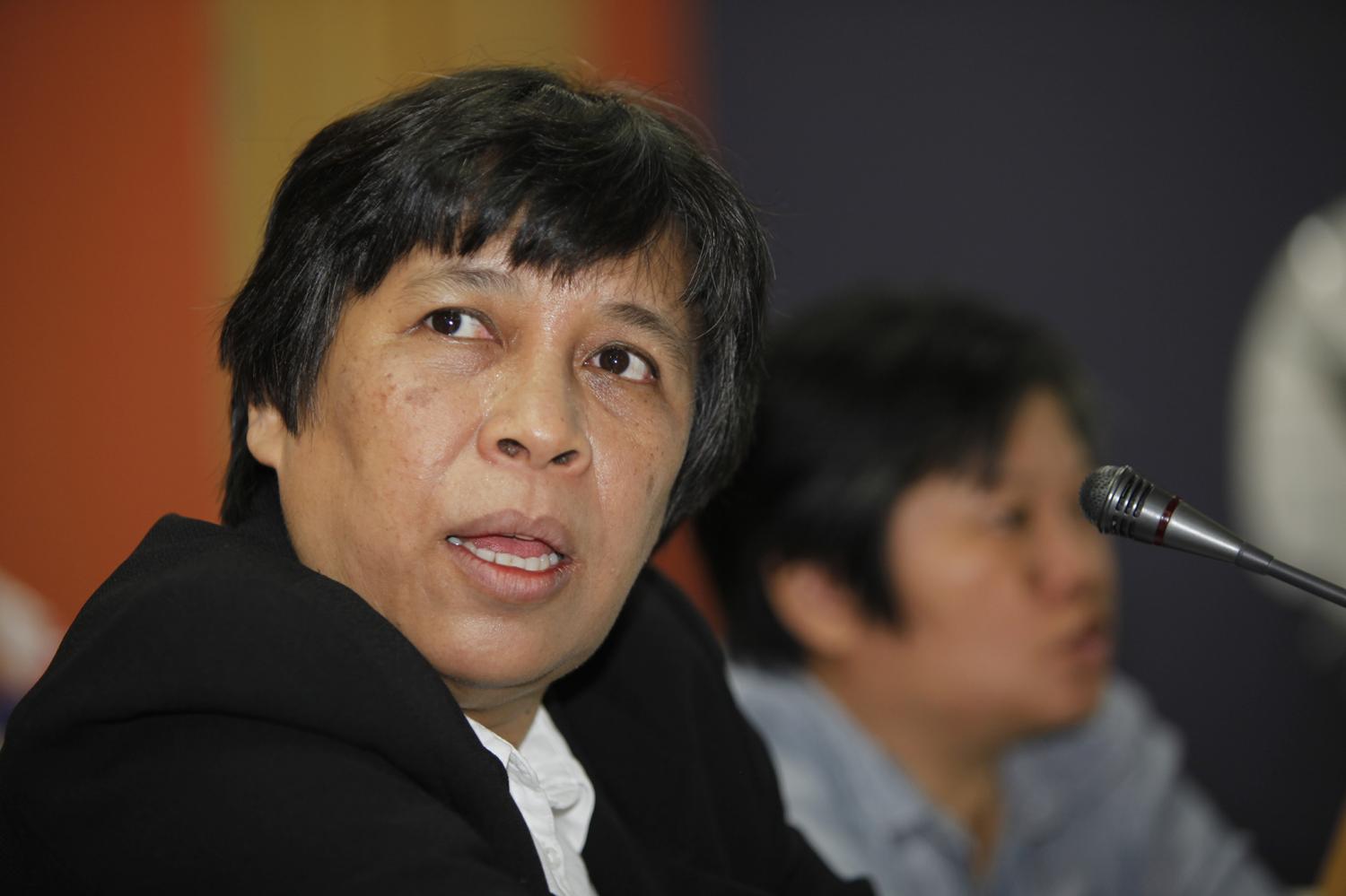
Saree: Focusing on public trust
Transparency and reform
Saree Aongsomwang, secretary-general of the Thailand Consumers Council (TCC), brought another critical issue into focus: public trust.
She said consumers want accurate, consistent information. Conflicting claims about how long Thailand's oil supply can last -- whether three months, one month or just 15 days --only exacerbate confusion and can unleash panic buying.
Her call for a government "war room" is as much about communication as logistics. "In a crisis, clear and credible information can be as important as actual stock levels," she said.
Ms Saree also said the crisis should be used to reform the oil pricing structure, including marketing margins and reference prices that may not reflect real costs. "It's about fairness," she said. She said Thailand also should seize the moment to rethink public transport nationwide and formulate a long-term solution.