


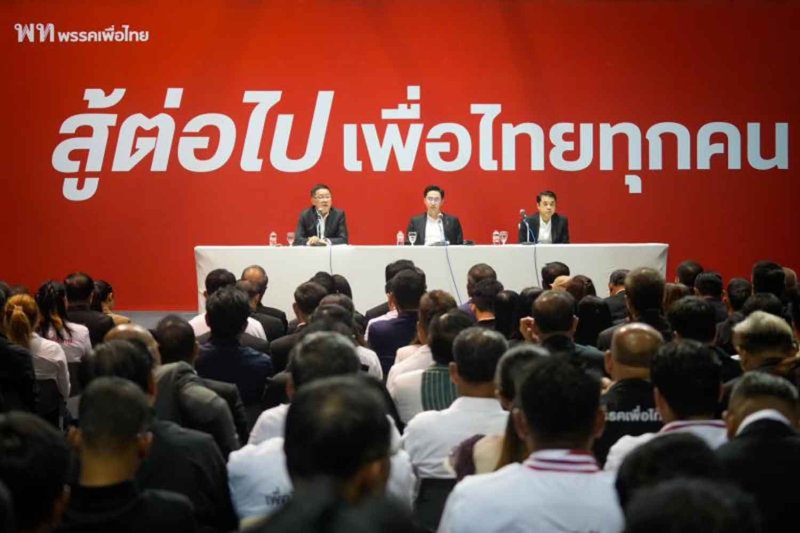
The allocation of cabinet quotas has unsettled Pheu Thai Party, exposing internal tensions while raising questions over its electoral recovery.
The formation of a coalition led by Bhumjaithai Party, with Pheu Thai as a junior partner, has triggered discontent beneath the surface.
Limited ministerial seats, five ministers and three deputy ministers, have inevitably left factions and individuals sidelined, fuelling dissatisfaction and quiet bargaining within the party.
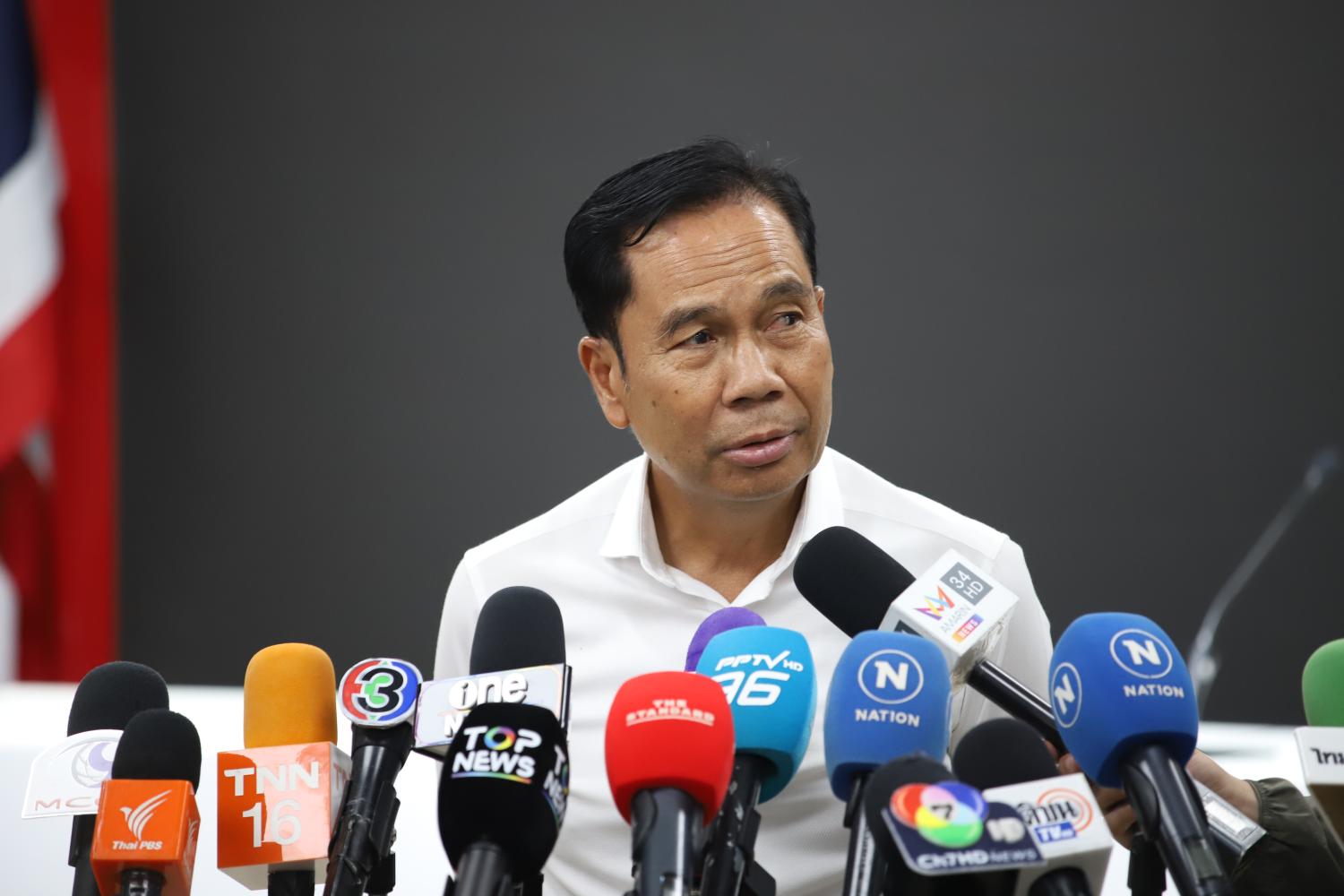
Sutin: 'Parties rise and fall'
Sutin Klungsang, a senior party figure, sought to contain concerns, saying: "Parties naturally rise and fall. With 74 MPs, we remain a large party capable of serving society."
He attributed the party's reduced seat tally to misjudgements rather than structural weakness, arguing the party still retains the resources, personnel and organisational depth to compete.
Despite this reassurance, friction over cabinet positions reflects deeper organisational strain. While Mr Sutin described dissent as limited, he acknowledged some grievances had substance: "There is some basis to the reports, but it is not as serious as portrayed."
Limited fallout
Crucially, there is little indication of imminent defections. Mr Sutin said dissatisfaction has not escalated into breakaway movements, noting: "No one is thinking about leaving at this stage. It is not the right timing, and there are few alternatives."
This suggests the dispute is more a phase of internal negotiation than a rupture. With the election only recently concluded, most members appear to be weighing their options, monitoring both the party's direction and their own political prospects before making any decisive moves.
However, the absence of immediate fallout does not eliminate long-term risk. If grievances remain unresolved, they could resurface later, particularly if compounded by poor government performance or perceptions of unequal treatment within the party.
The more pressing challenge lies in policy delivery. Pheu Thai's assigned ministries, including education, higher education and social development, are less suited to producing immediate, tangible outcomes. Mr Sutin admitted: "Driving our key policies will not be easy if they do not align with the ministries we oversee."
This constraint raises concerns the party may struggle to showcase achievements quickly enough to maintain public confidence, especially in a competitive political environment.
Coalition risks
Questions persist over whether Pheu Thai risks being overshadowed within the coalition. Mr Sutin indicated uncertainty, saying: "It is possible in every direction, but we need time to see."
Thanaporn: 'People will listen'
He added that maintaining close engagement with the public would be essential to safeguard the party's political standing.
The balance of power within the coalition remains a key variable. As the leading party, Bhumjaithai controls the broader agenda, potentially limiting Pheu Thai's ability to shape policy direction. If political manoeuvring outweighs cooperation, tensions could intensify.
External pressures further complicate the outlook. Global instability, including the Middle East war, could exacerbate economic challenges such as rising fuel costs and inflation.
Mr Sutin warned these factors would test the administration's resilience, noting that completing a full four-year term would be difficult under current conditions.
Such uncertainties place additional pressure on coalition partners to deliver results quickly, even as structural constraints limit their room for manoeuvre, he said.
Electoral path
Looking ahead, the central question is whether Pheu Thai can regain dominance in the next election.
Mr Sutin maintained optimism: "It is not impossible to return stronger, but we must work very hard," he said.
He argued the party's decline was situational rather than permanent, suggesting improved strategy and execution could restore its position.
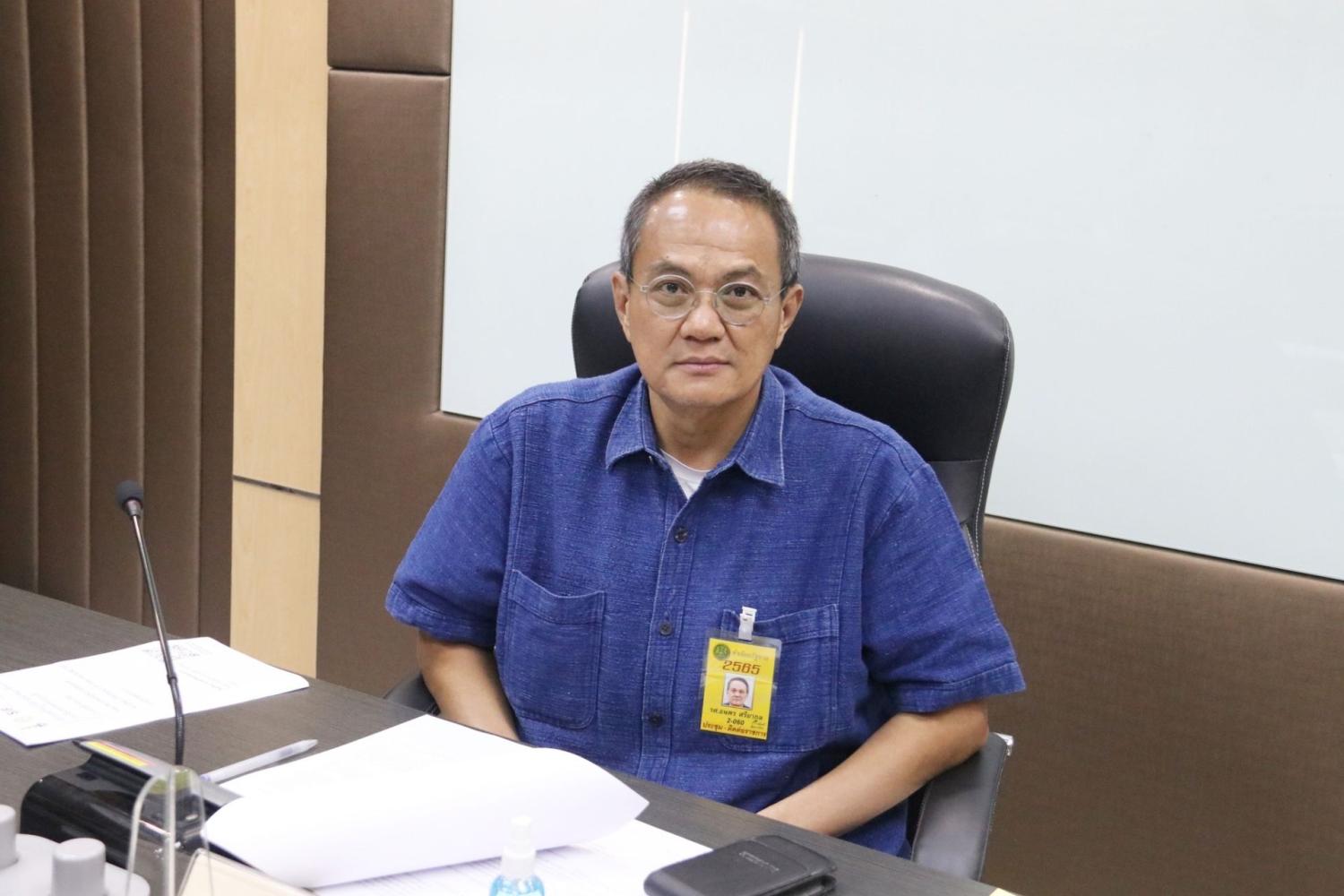
Political analyst Thanaporn Sriyakul offered a more measured assessment. He highlighted the resilience of the party's base, noting: "Supporters remain at a reasonably strong level despite the downturn."
Even at a low point, the party secured a notable share of party-list MPs, indicating enduring appeal among core voters.
He suggested that future gains are plausible, particularly if constituency seats increase. However, he cast doubt on ambitious targets: "Reaching 150 seats in one jump is unlikely, though setting such a goal can motivate performance."
He also pointed to competitive dynamics, arguing that Bhumjaithai may have reached its peak, while Pheu Thai could be positioned for recovery. If this trajectory holds, the electoral gap between the parties may narrow.
Generational shift
Internal transformation is another critical factor shaping the party's future. The emergence of younger politicians, supported by former prime minister Paetongtarn Shinawatra, is expected to inject new ideas and approaches into governance.
Assoc Prof Thanaporn observed: "Young ministers will bring new ideas and energy, especially if they connect effectively with the public."
Their ability to engage through digital platforms and respond to evolving voter expectations could enhance the party's appeal, particularly among younger demographics.
However, this generational shift also introduces potential tension between established figures and rising talent. Balancing continuity with innovation will be essential to maintaining internal cohesion.
The role of Thaksin Shinawatra remains a significant variable. Assoc Prof Thanaporn said: "Whatever he says carries weight, and people will listen."
Thaksin's experience in managing crises and his extensive networks could provide strategic advantages, particularly during periods of economic uncertainty.
At the same time, his involvement must be carefully calibrated, said the political analysis. "While Thaksin's influence can strengthen the party's profile, it also carries political sensitivities that could affect public perception," he said.
Fragile balance
Ultimately, the cabinet quota dispute exposes manageable but meaningful tensions within Pheu Thai. While unlikely to trigger immediate fragmentation, it underscores the challenges of operating within a constrained coalition framework.
Mr Sutin emphasised performance as the decisive factor, stating: "We must do our job in each ministry as best as possible and deliver results people can feel." Delivering tangible outcomes, even within limited portfolios, will be crucial to rebuilding credibility.
The party's prospects hinge less on internal discord than on its ability to translate institutional strengths into effective governance. Maintaining unity, managing coalition dynamics and responding to external pressures will determine whether it can regain momentum.
If Pheu Thai succeeds in demonstrating competence and reconnecting with voters, a resurgence in the next election remains plausible. Failure to do so, however, could entrench its diminished standing and allow rivals to consolidate their advantage.
For now, the party stands at a delicate juncture, navigating internal expectations and external challenges as it seeks a path back to political prominence.
