



There will be no honeymoon period for the incoming administration of Prime Minister Anutin Charnvirakul, with academics warning the government has only a narrow window to prove it can manage a deepening energy and cost-of-living crisis -- or risk a steep fall in public support.
The cabinet due to be sworn in on Monday and deliver its policy statement to parliament on Thursday will take office with full executive authority.
Yet before it has even formally begun work, it is already facing an increasingly hostile environment shaped by rising oil prices, worsening economic anxiety, and the geopolitical fallout from the US-Israel-Iran war, which is spiking global energy costs.
Two political scientists interviewed by the Bangkok Post say the new administration's credibility and long-term stability will depend on whether it can show tangible results early on.

Olarn: New govt likely to survive
Critical three months
Olarn Thinbangtieo, associate dean of the Faculty of Political Science and Law at Burapha University, said the Anutin government is in for a "major storm" in the form of a prolonged energy crisis, one that will have far-reaching impacts on not only fuel prices but the broader economy.
"This will not only hit energy costs," Mr Olarn said. "It will affect small businesses, large businesses, and most importantly the public, because the price of goods across the board will rise. This is a huge storm and a major challenge for the new government."
He argued the crisis is especially dangerous because it coincides with questions over the government's political image and legitimacy. The coalition's cabinet formation has already drawn criticism for what many see as a familiar power-sharing arrangement among entrenched provincial factions and political "big houses," rather than a genuine reset.
While the ruling Bhumjaithai Party (BJT) has attempted to project a generational transition by elevating younger figures, Mr Olarn said that move has itself come under scrutiny. Critics were sceptical about these new ministers' experience in managing a crisis of this magnitude. They also suggest that some remain under the influence of their political families.
That problem is compounded, he said, by the inclusion of veteran ministers from coalition partner Pheu Thai Party, who continue to attract heavy criticism, weakening the administration's overall image just as it confronts an energy shock and worsening economic pressures.
For Mr Olarn, the government's first task is to restore confidence. That means quickly rolling out clear measures to address what may be a prolonged fuel crisis. Beyond that, he said, ministers must confront at least three other urgent threats: a deteriorating household economy that could be even more severe than during Covid-19, rising corruption concerns, and a worsening social crisis driven by the spread of narcotics in communities nationwide.
He argued the government's political fate will be shaped by whether it can convert crisis into opportunity. "After the oath-taking and policy statement, the cabinet must produce results within three months," he said. "The prime minister should set clear KPIs for ministers. People need to see what can actually be achieved in that time."
If the government can demonstrate urgency and commitment, even inexperienced ministers may still win public trust. But if it fails to move decisively, the consequences for its popularity could be severe.
Protests not immediate
Mr Olarn was more cautious about the prospect of street protests bringing down the government in the short term. Public frustration over energy prices is real, he said, but a recent history suggests public anger does not automatically translate into a mass mobilisation capable of toppling a government.
"People are dissatisfied, but the issue has not fully ignited," he said. "It is still difficult to consolidate enough public power to overthrow a government."
Phichai: Inflation is biggest problem
Triple pressure point
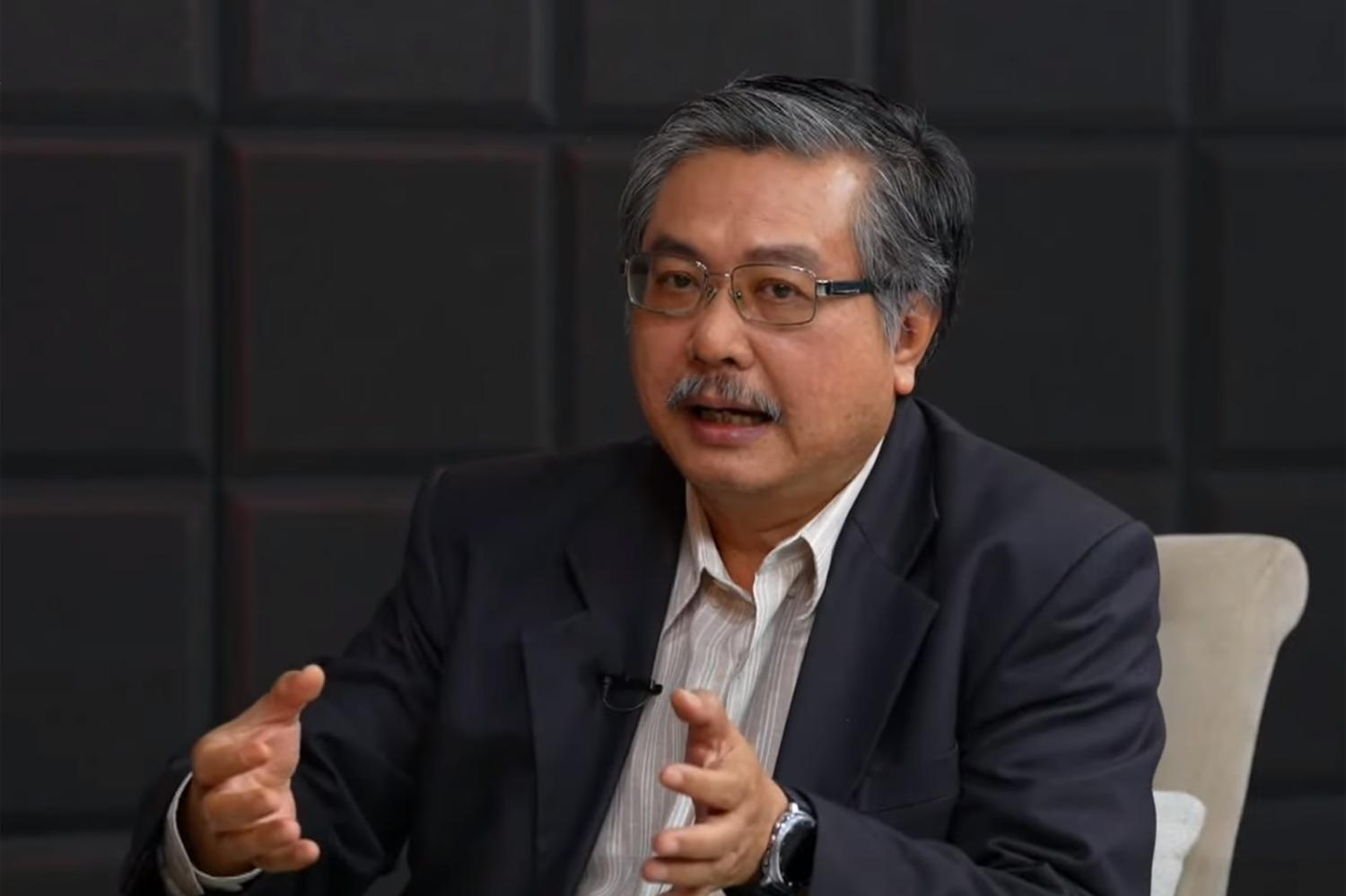
Phichai Ratnatilaka Na Bhuket, director of the politics and development programme at the National Institute of Development Administration (Nida), painted an even starker picture.
He said pressure piles on the government on at least three fronts: the energy crisis, the worsening PM2.5 pollution problem, and a broad cost-of-living surge that will intensify as higher fuel prices feed through the economy.
On energy, Mr Phichai said the government has already been criticised for asking the public to wait until it assumes full authority before announcing relief measures.
Yet central questions remain unanswered: who is controlling fuel supplies, why the government has not pursued a windfall tax on refineries that have benefited from high margins, and why it has not opted to cut excise taxes -- a measure used in the past -- instead of relying on more borrowing that could further expand public debt.
The second looming issue is air pollution. Northern Thailand is once again choked by the PM2.5 fine dust crisis, but Mr Phichai said the government has yet to show clear, concrete action. Worse still, if the Clean Air bill currently before the Senate fails to pass, the administration could be blamed alongside the upper chamber.
The third and perhaps most politically explosive factor is inflation at the household level. Rising fuel prices will spread across supply chains and push up the price of food, transport and daily necessities. If oil prices continue climbing toward 60-70 baht per litre, he warned, pressure on the government will intensify dramatically.
Mr Phichai said the government's popularity is especially vulnerable because its current support base is not genuinely deep. He cited recent polling that places government approval at around 26%, roughly in line with its electoral starting point.
"If the government cannot solve these problems, this support will nose-dive," he said, especially among middle-class voters who were an important source of backing for Mr Anutin and helped BJT secure more than 10 party-list seats in the Feb 8 general election.
Unlike Mr Olarn, who sees a three-month grace period as a decisive benchmark, Mr Phichai argued that public patience may already be wearing thin. Some groups have already begun to mobilise, he said. "There are already people who are not giving the government a chance. Others are still waiting and watching. If they see the situation worsening, they may join later. It could build in waves."
Could the government fall?
For now, both academics agree the government is not in immediate danger of collapse. The parliamentary structure still favours the coalition, and the opposition is not yet strong enough to force a decisive confrontation.
But if the crisis worsens, Mr Phichai said several scenarios could emerge: a change of prime minister within the same power bloc, a coalition reshuffle, a withdrawal by Pheu Thai, or even -- in an extreme case -- a dissolution of parliament. Still, he believes Mr Anutin would likely resist such moves until the last possible moment.
