


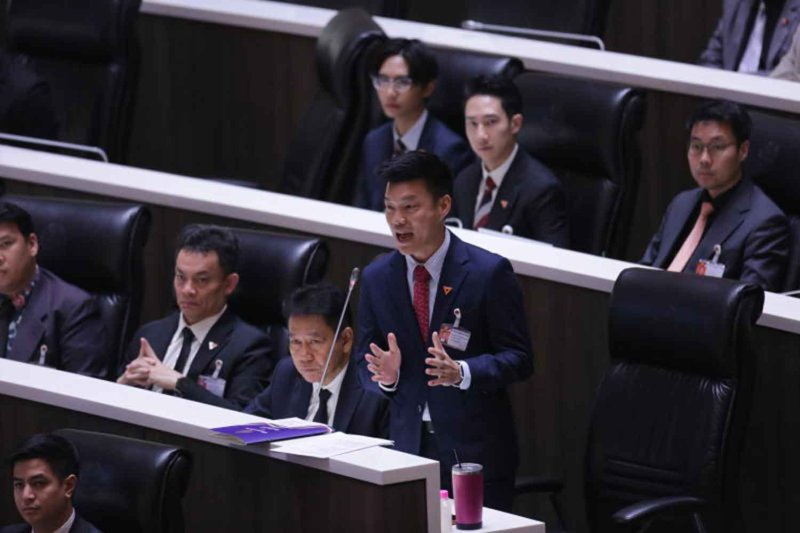
The Supreme Court's decision to accept a serious ethics case against 44 former Move Forward Party MPs over their proposed amendment to the lese majeste law has placed the People's Party (PP) at a critical juncture.
The Move Forward Party is the predecessor of the PP.
The case, filed by the National Anti-Corruption Commission (NACC), is set for its first hearing on June 30. Ten MPs from the PP including party leader Natthaphong Ruengpanyawut have been allowed to continue performing their duties pending a ruling.
Following the court's decision, it is believed that a planned leadership change in which Veerayooth Kanchoochat would take over as party leader is now on hold.
The party is likely to fill only the secretary-general's post left vacant by Sarayut Jailak who stepped down during the annual general meeting, set to conclude today.
However, questions remain over what lies ahead. Political analysts outline challenges if the court rules against the 10 MPs.

Stithorn: Immediate change not needed
Caretaker role before Thanathorn's return
Stithorn Thananithichot, a political scientist at Chulalongkorn University, said there may be no immediate need for a leadership change as Mr Natthaphong can still perform his job as MP.
However, if the court rules against the 10 MPs, changes will be unavoidable, he said, noting in that case it may be more practical for the party to proceed with a leadership change sooner rather than later.
Mr Stithorn said the choice of a new leader, Mr Veerayooth, is a short-term arrangement for the current parliamentary term, rather than a long-term strategy.
He said the PP leadership is to stabilise the party, manage parliamentary duties and maintain its position as the main opposition party.
"The party isn't positioning a prime ministerial candidate at this stage, particularly with expectations that Thanathorn Juangroongruangkit may return in the next election cycle," he said.
Mr Thanathorn, leader of the now-dissolved Future Forward Party (FFP), predecessor of Move Forward Party, was banned from politics for 10 years in February 2020 by the Constitutional Court.
The ban stemmed from a 191.3 million baht loan he provided to his party, ruled an illegal donation, leading to the party's dissolution and the disqualification of its executives.
He is now leader of the Progressive Movement and a campaign assistant to the PP.
Mr Stithorn said Mr Veerayooth is not being positioned as the party's long-term leader even though he is one of the PP's prime ministerial candidates in the Feb 8 general election.
Mr Veerayooth's past performance, he said, has yet to generate strong political momentum, but he has a solid profile and can deliver effectively in parliamentary debates.
When asked about Mr Veerayooth's performance in parliament, Mr Stithorn said he should be given time to prove himself, but expectations should remain modest.
"Mr Veerayooth is seen as part of a close-knit leadership circle, raising perceptions that control remains within a small group," he said.
If the party wants to present itself as a political institute, it needs drastic changes such as promoting spokesman Parit Wacharasindhu.
Instead, the current approach suggests the party is maintaining its structure while waiting for a longer-term leader to return.
Mr Stithorn also said the party's prospects will depend less on internal changes and more on the performance of the Bhumjaithai Party and the Pheu Thai Party. If both parties underperform or fail to gain public confidence, support would flow to the PP.
On the prospect of Mr Thanathorn's return, Mr Stithorn said its impact would depend on whether he can genuinely create political momentum.
"If his return doesn't significantly change the landscape, there may be no need to act against him," he said. "But if momentum builds, there are always other mechanisms that could be used, depending on the situation."
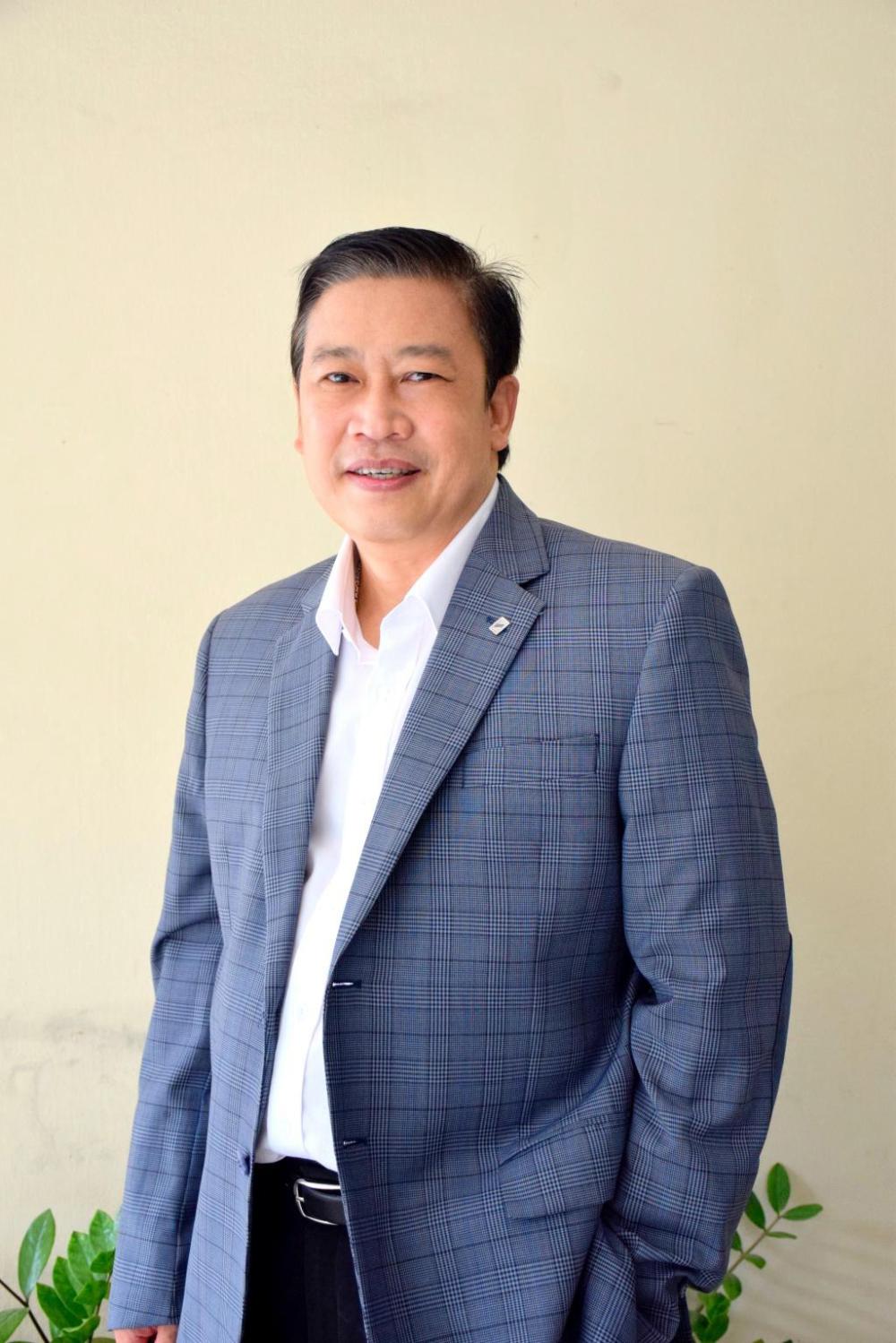
Suvicha: PP has limited options
Preserving position
Suvicha Pouaree, director of the Nida Poll Centre, said when Pita Limjaroenrat was elected to lead the now-dissolved Move Forward Party, support initially declined before gradually recovering.
A similar pattern was seen when Mr Natthaphong was elected, but this time, the PP appears to be trying to limit any further decline by signalling leadership changes in advance, he said.
He said Mr Natthaphong's continued role in the PP after its performance in the general election has raised questions. Mr Natthaphong should have stepped down along with Mr Sarayut.
His ongoing role in the party reinforces the observation the PP is controlled by a small group, he added.
As for Mr Veerayooth's rise in the PP, it remains to be seen whether he can engage more effectively in political debate, he noted. Mr Veerayooth is widely seen as a new face with an academic background.
He said the PP has limited options, with Mr Veerayooth and Mr Parit among the few viable choices, and Mr Parit may still be considered too young for the role at this stage.
For now, he said, the PP's immediate goal may be to maintain its current position but it could be difficult if the Democrat Party continues to strengthen its parliamentary performance.
As for public support, there is little momentum for recovery. Without a clear turning point, the party risks further decline, particularly if its performance in parliament as the main opposition fails to match that of the Democrat Party, he said.
He said the PP leader has focused more on political attacks than policy, limiting the party's ability to build alliances. "Politics is about building alliances. Without that, it is a struggle," he said.
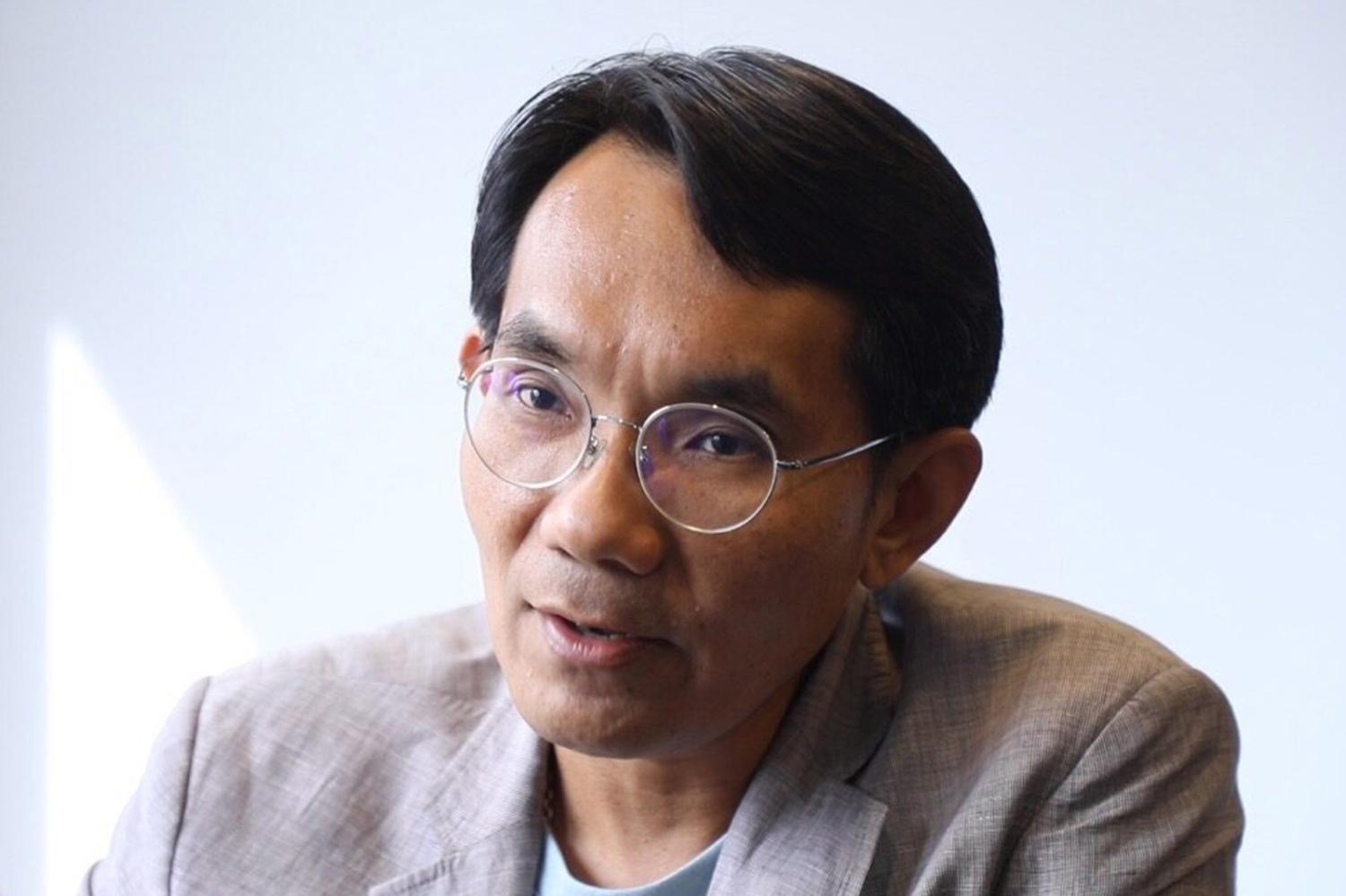
Olarn: Veerayooth lacks broad appeal
Survival over ideology
Olarn Thinbangtieo, a political science lecturer at Burapha University, said while Mr Veerayooth is seen as capable, his style is more appealing to technocrats and the middle class than the broader public.
He said he understands the PP has limited options and its leadership reshuffle appears to be aimed at maintaining stability in the short term.
Mr Olarn said the PP should return to its core principles as suggested by Piyabutr Saengkanokkul, secretary-general of the Progressive Movement, even if that means facing sustained political pressure.
"The party's success won't happen overnight. It requires time, consistency and a willingness to withstand repeated political challenges," he said.
Citing Mr Piyabutr, he said the PP members have softened their positions to remain politically viable and thus danced to the established power groups' tune.
He said this will ultimately make the PP no different from other parties.
The choice of Mr Veerayooth as leader and Mr Natthaphong as party secretary-general suggests key figures behind the party continue to shape its direction through trusted allies, he said.
To move forward, Mr Olarn said the PP needs to strengthen its role as an effective opposition. Past efforts at being a "proactive opposition" had fallen flat.
"For a party that prides itself on having 'no grey areas', that motto falls short. It needs a reset and should take it seriously. MPs should rely less on AI tools to write lengthy speeches but use them more effectively. It's not the only opposition party. The Democrats are steadily gaining ground," he said.
On the party's future, Mr Olarn said it may remain stable but is unlikely to expand much under current conditions.
He expressed doubt that the PP will return to being a strongly ideological force, saying many members appear increasingly focused on short-term survival rather than long-term principles.
It remains unclear what direction the party's "owner" intends to take and even if the party manages to survive, its level of public support may not recover, he said.
"The Democrats are gaining ground, and even remarks about scrapping free meals by Thai Pakdee Party leader Dr Warong Dechgitvigrom have carried more impact," he said.
