


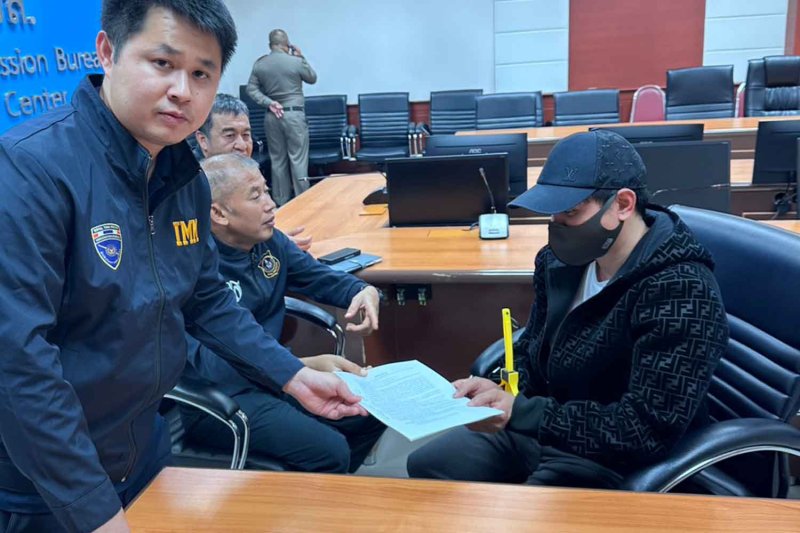
Authorities are intensifying efforts to seize assets linked to Thapanan, alias "Noo Chen", a major narcotics trafficker whom police compare to the late drug lord Khun Sa for the scale of his operations and influence.
After evading arrest for 14 years despite facing more than 60 outstanding warrants, Thapanan was arrested in Seoul on April 6 following a joint investigation involving authorities from Thailand, Laos, Japan and South Korea.
In an apparent effort to evade capture, the suspected drug kingpin spread false reports on social media claiming he had died and underwent cosmetic surgery in South Korea to alter his appearance.
Justice Minister Pol Lt Gen Rutthapon Naowarat confirmed the arrest on April 7, saying authorities had verified Thapanan's identity before extraditing him to Thailand.
Thapanan had long appeared on the Narcotics Suppression Bureau's "Most Wanted" list, with a one-million-baht reward offered for information leading to his arrest.
Police say he began as a drug user and small-scale dealer in Bangkok's Srinakharin area between 2000 and 2002, before rising through trafficking networks after developing ties in prison with figures linked to Khun Sa.
Police say those connections later helped him establish drug production operations in the Kokang region near Wa-controlled territory in Myanmar, becoming a major supplier of narcotics entering Thailand.
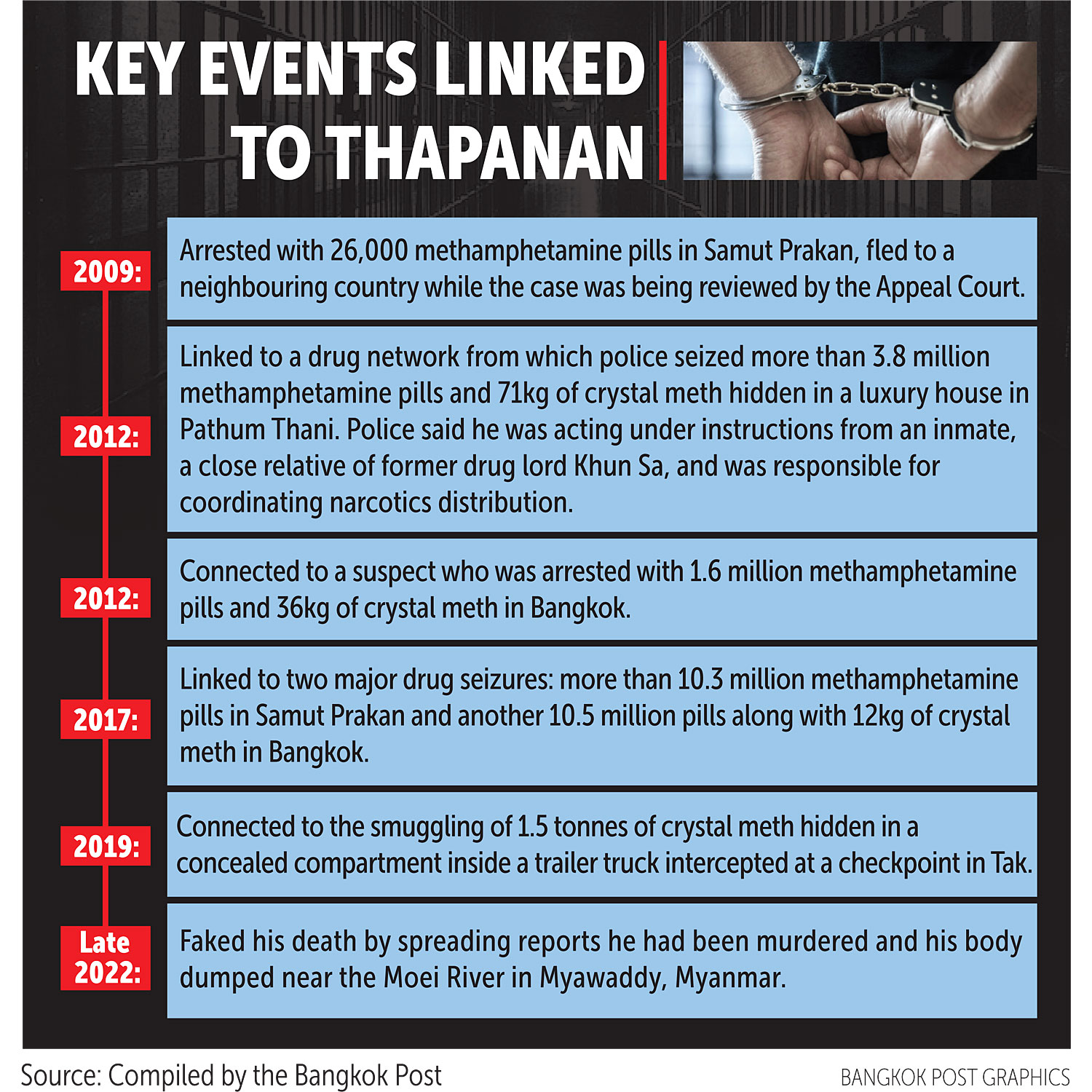
Authorities believe Thapanan's network has been linked to numerous large-scale drug trafficking cases over the years.
Lengthy probe
Behind the arrest was a lengthy investigation by Thai immigration police combining digital surveillance, international coordination and conventional detective work.
The operation was led by Pol Col Chaya Phanakit, deputy commander of the Immigration Bureau's transnational crime suppression unit, and Pol Lt Col Komen Wannaboworn, an inspector in the bureau's investigation division, under the supervision of deputy commissioner Pol Maj Gen Panthana Nuchanart.
Pol Col Chaya said investigators spent more than two years tracking Thapanan, who was wanted on drug trafficking and money laundering charges.
The breakthrough came as investigators monitored a woman believed to be the suspect's new wife while trying to verify rumours circulating on social media that he had been murdered and his body dumped in the Moei River in Myawaddy, Myanmar.
In March, police detected suspicious travel patterns by the woman, who frequently travelled to Laos -- sometimes aboard private jets -- before recently flying to Japan.
Through coordination with Japanese authorities, investigators confirmed the woman was staying in Japan with a Lao man later identified as Sinsai Prommanee. When photographs of the man were analysed using facial recognition technology, police said the results showed a 96% similarity with Thapanan.
After learning the suspect had travelled to South Korea, Thai authorities sent Thapanan's fingerprints to South Korean officials for comparison with those of Sinsai. At the same time, the Immigration Bureau coordinated with the Narcotics Suppression Bureau and local police handling related drug trafficking and money laundering cases to secure an Interpol Red Notice.
Fingerprint check did the job
Authorities said fingerprint analysis later confirmed a 100% match between Sinsai and Thapanan, prompting the issuance of the Red Notice and the final phase of the operation.
Following approval from senior officers, a Thai police team travelled to South Korea to coordinate with local authorities. Shortly after the meeting, South Korean police arrested Thapanan in Seoul, ending a 14-year manhunt.
"He told the arresting team that he never thought this day would come and that he would be arrested in South Korea," Pol Col Chaya said.
Police reckon 25%-30% of narcotics entering Thailand may have passed through Thapanan's network.
Authorities believe the network was capable of supplying more than 100 million methamphetamine pills annually, as well as over five tonnes each of crystal methamphetamine, heroin and ketamine every year.
After fleeing Thailand, Thapanan settled in Tachileik, Myanmar, opposite Chiang Rai's Mae Sai district.
Following crackdowns by Myanmar authorities, he later relocated to Kokang territory under the protection of armed groups linked to former associates of Khun Sa.
Police describe Thapanan as operating less like a traditional gangster than a businessman, maintaining a low profile while building a major narcotics network and investing in ventures including a hotel in a neighbouring country.
Authorities allege that two to three years ago, he paid about one million baht in bribes to obtain Lao citizenship and legal documents, including an ID card, house registration and passport, before travelling to South Korea for cosmetic surgery.
"We believe he was in South Korea for another surgery when we arrested him," Pol Col Chaya said.
Pol Maj Gen Panthana said authorities are now working with the Office of the Narcotics Control Board and the Anti-Money Laundering Office to seize assets linked to the suspect, his wife and associates.
Assets in Thailand alone are estimated to be worth tens of millions of baht, while cash and gold worth around 40 million baht are believed to be held in Laos, he said. Efforts to track and seize assets in neighbouring countries are expected to take time.
