


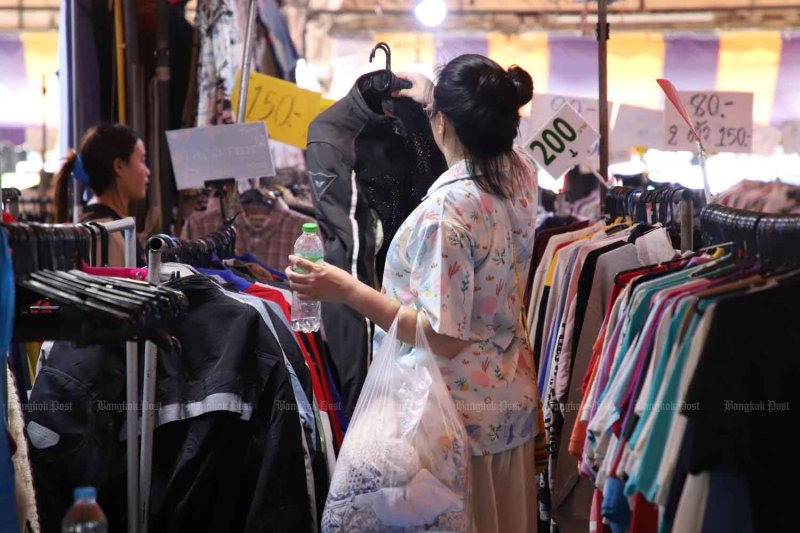
At a sprawling second-hand market tucked inside Bung Kum district, rows of faded denim jackets, vintage shirts and discarded office uniforms spill across narrow walkways.
But among the mountains of used clothing, one category stood out: second-hand school uniforms.
Today, used school uniforms are no longer simply a bargain hunt for frugal shoppers.
They have become a quiet gauge of economic hardship, social inequality and the mounting financial burden carried by parents struggling to prepare their children for a new school term beginning today.
For families with children in kindergarten, primary school, secondary school and even university, uniforms remain a non-negotiable expense.
Many education outlets strictly require students to wear official uniforms to attend classes or even sit examinations.
In practice, that means school uniforms are treated not as optional clothing, but as essential household items for nearly every family with school-age children.
As the economy shows signs of prolonged weakness and household debt remains high, more parents are turning to second-hand markets in search of relief.
One of the best-known destinations is the sprawling Patthavikorn Market in Bung Kum district, where shoppers searching for affordable uniforms navigate through endless rows of second-hand merchandise.
Yet despite the scale of the market, finding used school uniforms is far from easy.
Unlike ordinary second-hand clothing, school uniforms are highly specific products. A parent cannot simply buy any white shirt or dark shorts.
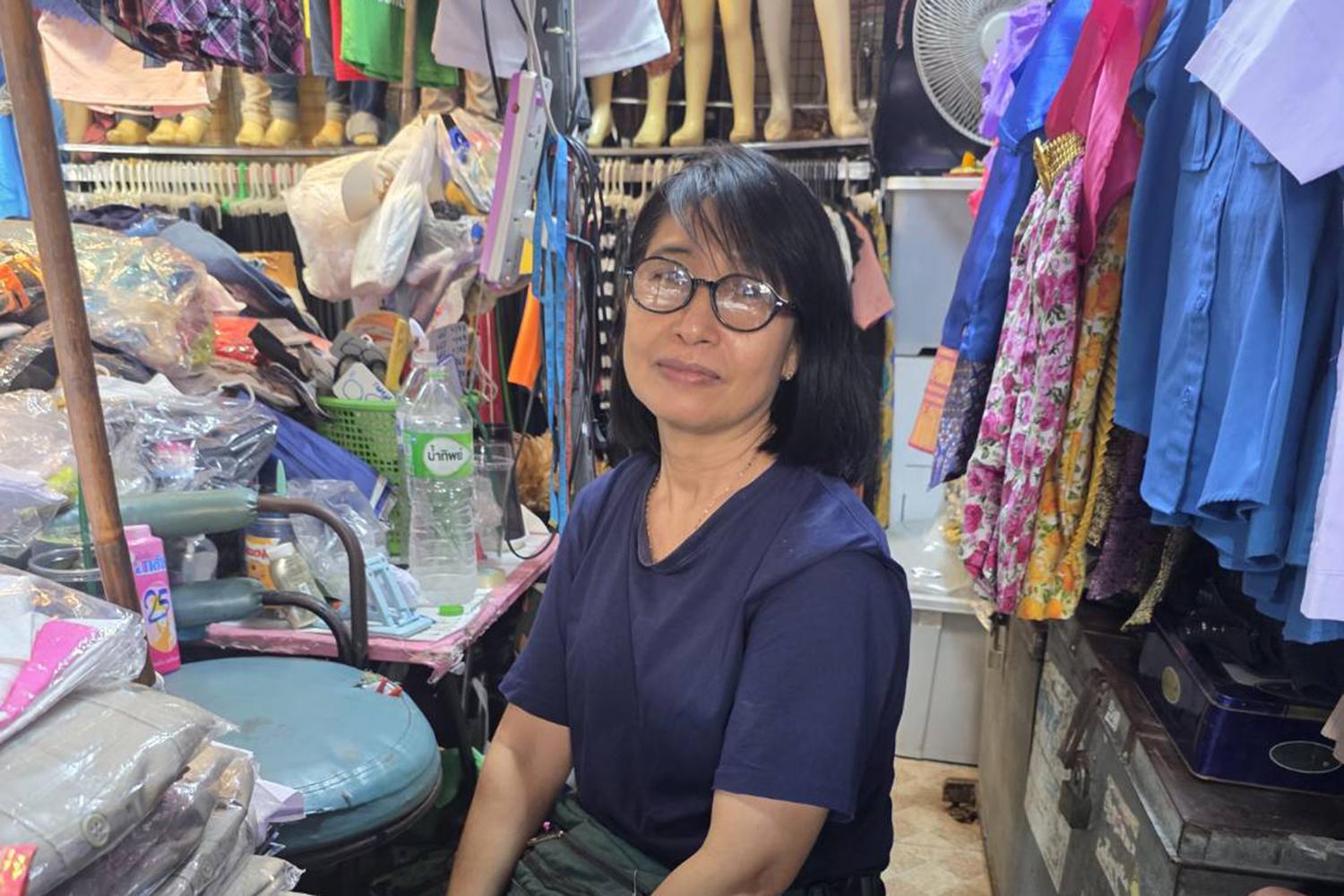
Vendor Pannee Sutsanoh, 55, sells second-hand uniforms at Patthavikorn Market. She says sales of used uniforms have risen slightly this year as families become more cautious about spending. (Photo: Mongkol Bangprapa)
The uniform must match the exact style and regulations of a child's school, down to the shade of trousers -- black, navy blue, dark blue, or even the distinctive red shorts worn by kindergarten students.
Then comes the challenge of size.
Parents often spend hours combing through piles of clothing searching for uniforms that both fit their children and comply with school rules. Some buy oversized uniforms simply to store them for future years.
Inside Soi Nawamin 72 Yak 1, many regular customers know exactly where to go. They ask for "Pa Rat", one of the market's best-known second-hand uniform sellers.
Patthavikorn Market has been the unlikely frontline in the country's cost-of-living crisis.
Sign of hardship
Rattanaporn Parasawai, 56, originally from Kalasin, has spent more than a decade selling second-hand clothes in the market's older section. In recent years, she said, demand for used school uniforms has risen steadily as parents struggle with rising prices.
"Customers keep telling me they can't make ends meet," she said.
New school uniforms can cost anywhere between 100 and 400 baht per piece depending on size and education level.
To meet growing demand, she now asks clothing wholesalers to separate school uniforms from bulk second-hand clothing shipments specifically for her shop.
Even then, profits are thin.
Ms Rattanaporn sells most uniforms for about 60 baht each, despite weekend rental fees at the market reaching 400 baht per day for a tiny six-square-metre stall.
Additional costs come from transport, cleaning, disinfection, ironing and repairs.
"You cannot just receive second-hand uniforms and sell them right away," she explained. "Everything must be washed and sanitised first."
Her customers range from parents of kindergarten children to teenagers in secondary school. Demand surged sharply two to three years ago and has remained high ever since, although overall spending has weakened.
"Sometimes parents find only larger sizes and buy them anyway for future use," she said. "If they bought extra last year, they may not need to buy as much this year."
Nearby, another vendor, 55-year-old Pannee Sutsanoh -- Ms Rattanaporn's younger sister -- runs a stall selling both new and used uniforms.
She said second-hand sales have gone up slightly this year as families become more cautious with spending.
"The price difference is huge," she said. "A new uniform might cost 300 baht, while a second-hand one costs only 40 to 60 baht depending on condition."
Before resale, the uniforms undergo cleaning, disinfection and alterations. Embroidered student names must often be carefully removed.
Ms Pannee said many parents now mix new and second-hand uniforms together. A child may own one new official uniform -- necessary for school reimbursement claims -- alongside several second-hand backup sets used during rainy days or emergencies.
Under the education support programmes, families may receive annual reimbursements ranging from 325 to 550 baht depending on grade level, particularly in state schools and Bangkok Metropolitan Administration schools.
Yet vendors and parents alike say the assistance falls far short of actual costs.
Beyond standard uniforms, families must also purchase scout uniforms, girl guide outfits, sportswear and other mandatory clothing required by schools.
"For families with several children, the costs are overwhelming," Ms Pannee said.
Her own financial situation speaks of the broader struggles facing small vendors. Monthly rental fees for her stalls exceed 18,000 baht, while weak consumer spending has pushed her business into losses for much of the year.
Only during the Songkran festival did sales temporarily improve thanks to demand for colourful festival shirts.
The shoppers themselves reveal how deeply uniforms are tied to household survival strategies.
A 40-year-old housekeeper, who requested anonymity and identified herself only as "Ra", arrived at the market with her mother and two sons. She has three boys studying in primary and secondary school.
Finding the correct size and school-approved style, she said, is never easy.
Each child needs at least two or three standard uniforms for weekly use, plus additional backup clothing for rainy days when laundry cannot dry in time.
"A new pair of school shorts costs more than 300 baht," she said while browsing through stacks of navy trousers. "Here I can buy them for 50 baht."
Whenever she finds a larger size, she buys ahead for future years.
She insisted her shopping habits are not solely driven by the economy, but by long-term financial planning. Hand-me-downs between siblings rarely work because children wear out uniforms through heavy daily use.
Every year, she spends roughly 500 baht on backup second-hand uniforms. Buying all-new clothing would cost three to four times more.
Yet second-hand uniforms are not purchased only by struggling parents.
Diverse uniforms
Ms Rattanaporn said nearly half of her customers come from entirely different backgrounds. Private companies buy uniforms for themed office parties.
Alumni groups use them for reunion events. University film crews purchase them as costumes for student productions.
Some buyers even source uniforms for international resale.
One female trader, who declined to give her full name for business reasons, said she purchases vintage Thai uniforms and resells them online to foreign niche collectors and costume enthusiasts.
During peak festival periods, she said, her sales once reached 80,000 baht before expenses.
The diversity of buyers reveals a broader truth about the second-hand economy: purchasing used clothing is no longer a simple marker of poverty.
Meanwhile, online donation campaigns and community drives on social media have rapidly expanded, promoting the recycling of school uniforms and encouraging broader public participation.
For many families, however, second-hand uniforms remain a necessary tool for survival amid rising living costs and insufficient state support.
The issue has fuelled growing debate over whether Thailand should abolish mandatory uniforms altogether.
In a country where school uniforms remain deeply embedded in educational culture, second-hand clothing has become more than a marketplace trend.
It is now part of an informal social safety net -- one stitched together by struggling parents, market vendors and communities trying to ease the burden of getting children through school.
