
Tending to gentle giants
Ratchadaporn Srisamut
With more than 3.4 million followers on Facebook, veterinarian Ratchadaporn Srisamut — widely known as “Doctor Bow” — has become one of Thailand’s most influential voices in elephant medicine.
At just 30 years old, she has transformed the public's understanding of wildlife care through tireless fieldwork, candid storytelling and an unwavering commitment to some of the country’s most vulnerable giants.
Recognised among the Bangkok Post Women of the Year for 2026, Dr Ratchadaporn has built a national following by documenting her demanding work of treating sick and injured elephants across southern Thailand.
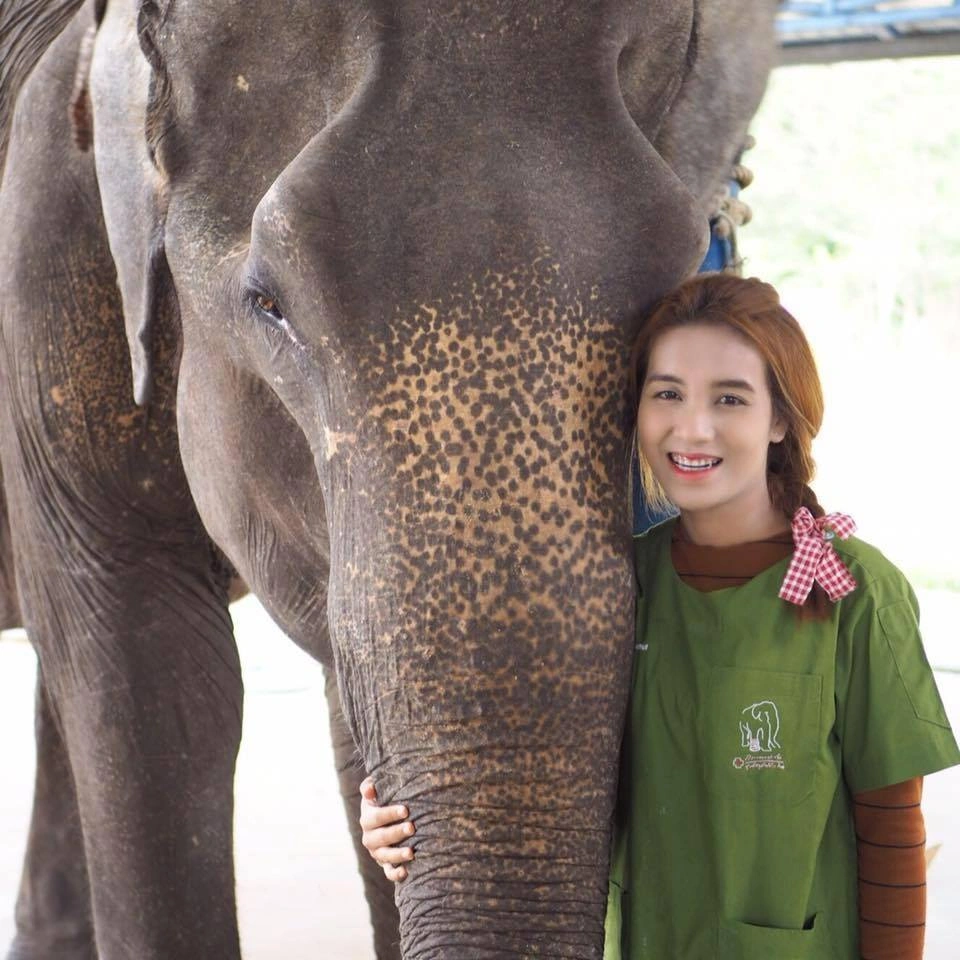
Her slight 157-centimetre frame standing beside four-tonne patients inspired the tagline of her Facebook page: “Doctor Bow: the Petite Doctor and Giant Patients.”
Mor Tiea — meaning “Short Doctor” — she demystifies complex medical cases. Speaking clearly, she explains diagnoses, treatment plans and recovery timelines, offering rare transparency in a field few outsiders ever witness.
Her approach has not only educated the public but also built deep trust among elephant owners and mahout communities.
One recent case that captured national attention involved “Pee-Diew”, an elephant injured after falling in a mountain in Phangnga province.
For a full month, Dr Ratchadaporn delivered daily on-site care to stabilise the elephant's fractured leg. When the elephant was strong enough to move, she coordinated a delicate, 2.5-hour transfer of the 3.1-tonne patient to a hospital in Phuket.
She later credited the success of the relocation to the profound bond between Pee-Diew and the elephant's mahout — a reminder that elephant medicine depends as much on human relationships as clinical expertise.
Another widely shared image showed her trekking through a palm plantation carrying a 3-kilogramme tranquiliser gun to sedate a distressed elephant near forest borders. The mission left her with minor injuries but earned admiration nationwide.
A veterinary science graduate, Dr Ratchadaporn specialises in critical and bedridden elephants, which require around-the-clock monitoring and rapid intervention.
After graduation, she joined the Krabi Elephant Hospital — then the only dedicated elephant hospital in southern Thailand — despite having no prior hands-on experience with elephants.
Two critically ill elephants required urgent attention, and she stepped forward to do the job without hesitation. One of her earliest patients, Bua Sawan, remains under her care today.
Her passion for veterinary medicine began in childhood. Raised in a farming family, she grew up caring for chickens, birds and a beloved pit bull. From an early age, she knew she wanted to become a veterinarian — and eventually chose elephants.
“Thai people treat elephants like family,” she says. “Helping one recover is deeply fulfilling.”
In 2020, she launched her Facebook page to document cases and raise awareness about elephant health. Merchandise sales, fundraisers and her own income help finance treatment, while donated medicines from followers provide additional support.
In 2023, she resigned from her formal hospital role to move closer to her home in Phuket and care for her mother, who has Alzheimer’s disease. Yet her mission to care for elephants did not slow. She continues to travel throughout southern Thailand, offering free mobile veterinary services to elephants in need.
More than a decade into her career, Dr Ratchadaporn has redefined professional success.
Rather than pursuing titles or institutional prestige, she measures achievement by impact: healthier elephants, supported mahout families and a more informed public.
Through compassion, resilience and purpose-driven leadership, the “short doctor” has shown how one determined veterinarian can strengthen conservation and inspire a new generation of women leaders.