


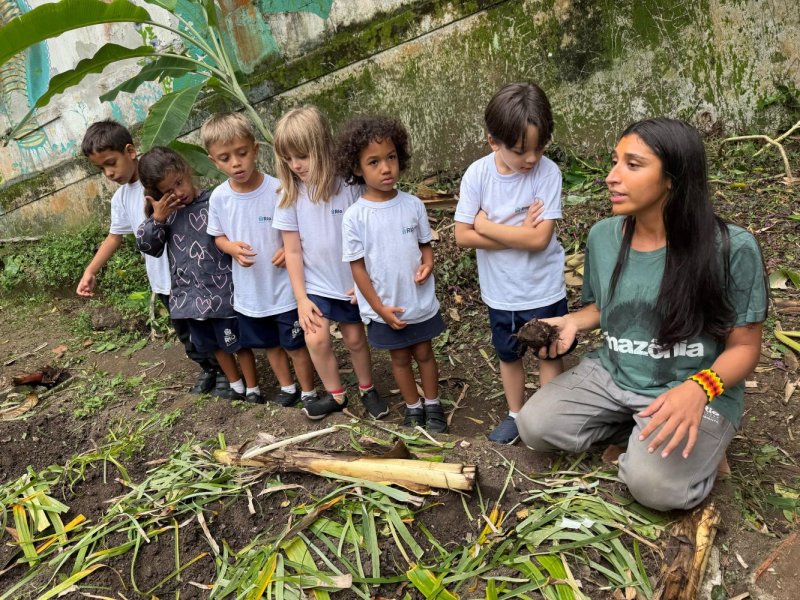
Rio de Janeiro: Brazil's national school meal programme is being hailed as a global model for ensuring children's right to healthy food, even as the country battles industry resistance to broader regulations on ultra-processed products.
The school food policy, known as the National Free School Meal Program, is rooted in Brazil's constitutional guarantee of the right to food and health.
"Children are entitled to healthy meals in school. It's a constitutional right," said Paula Johns, executive director of the ACT Health Promotion.
The initiative mirrors the principles behind Brazil's universal healthcare system, established after the country's return to democracy.
Ms Johns has been working in advocacy for healthy food policies in this Latin American country for many years and has been involved in the adoption of several important policies, such as warning labels on foods alerting to excess salt, sugar, or fat, and the taxation of ultra-processed foods.
She said that over time, the programme has expanded to include procurement from local farmers, with at least 30% of produce required to come from small-scale agriculture.
Recent regulations also prohibit the purchase of ultra-processed foods with federal funds, further strengthening the programme's nutritional standards. "We have been improving it over time with the evidence we have," she said.
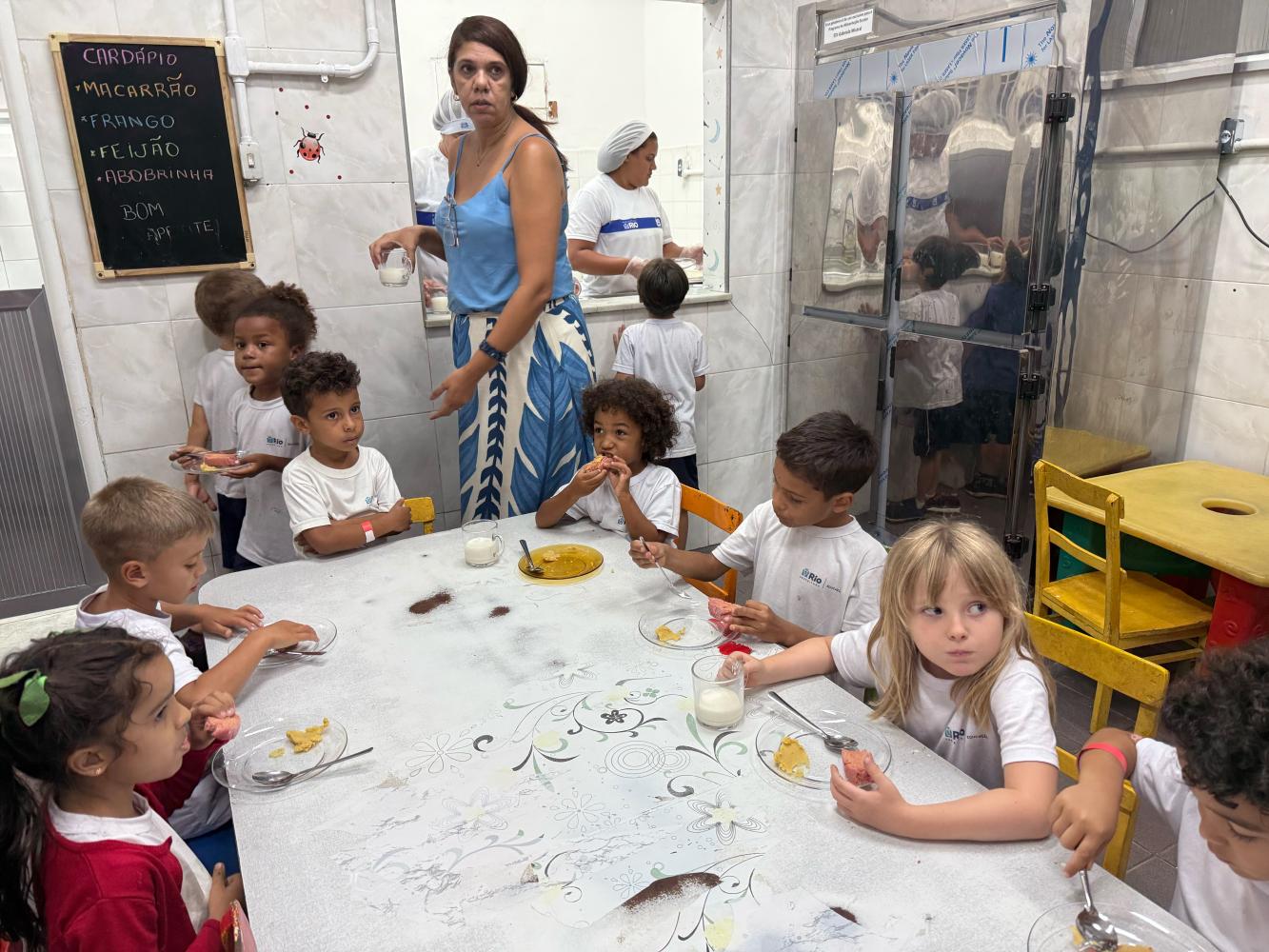
Students at the EDI Gabriela Mistral School eat meals provided under the city of Rio de Janeiro's menu programme.
Feeding 40 million
The programme currently reaches 40 million Brazilian children, many of whom rely on school meals as their most nutritious meal of the day. For urban families, public schools often provide the only reliable source of healthy food. "It's the best meal they have during the day," she told the Bangkok Post.
While public schools are covered, private schools remain largely outside the programme, though some municipalities and states have introduced their own restrictions on ultra-processed foods. A federal bill is also under discussion in congress to expand protections nationwide, Ms Johns said.
Outside the classroom, however, children remain exposed to aggressive marketing. Efforts to ban advertising of harmful foods to children under six were blocked in congress after industry lobbying.
"It was shocking to see the industry kill an article that aimed to protect children's health," she said.
The programme has faced challenges with corruption, as funds intended for school meals have occasionally been diverted. "There have been scandals where mayors misused the money," she said.
However, media exposure has proven effective in curbing abuses, with monitoring and evaluation systems helping to ensure accountability.
Despite industry efforts to sow confusion, public opinion in Brazil is changing. Recent surveys show that more than half of the population now recognises the health risks of ultra-processed foods.
"The industry wants people to think we are against all industrialised food, but that's not true. We are talking about a specific group of products that are stripped of real food and filled with cosmetic additives," she said.
"Every step is hard-fought, but we are evolving -- and the evidence is clear that protecting children's right to healthy food is both possible and essential," she said on the sidelines of the 4th Partnership for Healthy Cities Summit in Rio de Janeiro.
The global summit drew more than 200 health and city leaders, representatives from 55 cities around the world, and journalists from Thailand, Mexico, Kenya, India, the UK, Colombia, South Africa, and Brazil.
The event was held by Bloomberg Philanthropies, the World Health Organization, Vital Strategies and the City of Rio de Janeiro last week.
Media Field Trip
To demonstrate the programme's success, foreign media were invited to witness its implementation at the EDI Gabriela Mistral School, a public school located in the South Zone of Rio de Janeiro, in an adapted building which was previously a bathing resort
The school was inaugurated in 1958 and currently teaches about 90 students aged 4-5. The school is located within a military area, next to Morro da Urca, the sandy stretch of Praia Vermelha, and the Sugarloaf Mountain Aerial Cableway.
Aline Borges, President of the Municipal Institute of Sanitary Surveillance, who oversees the food programme of the public schools, said the country's national school meal programme has highlighted its role in improving child nutrition, supporting family farmers, and reducing reliance on ultra-processed foods.
The programme, which has been in place for decades, provides free meals to millions of students across public schools. Funded jointly by the federal government and municipalities, it represents an annual investment of approximately 400 million Brazilian Reals (2.4 billion baht).
Ms Borges said at least 30% of the funds are directed toward purchasing food from small-scale farmers, strengthening local economies and ensuring fresher ingredients for students.
Recent legislation has tightened restrictions on processed foods in school menus. While earlier rules allowed up to 20% of meals to include ultra-processed items, new resolutions aim to reduce this figure to below 8%. Nutrition experts praised the move, noting its potential to improve children's long-term health outcomes, she said.
"This is not just about feeding children," Ms Borges said. "It's about shaping healthier habits, supporting sustainable agriculture, and ensuring that every child has the right to nutritious food.''
Renata Neves, the school's principal, said all of her students benefit from the fresh, healthy food that contains no ultra-processed products. The menu changes each week. Moreover, children undergo health check‑ups twice a year, and all of them meet the required standards. Ms Neves said that foreign countries, including Thailand, can learn from this school food policy.
