


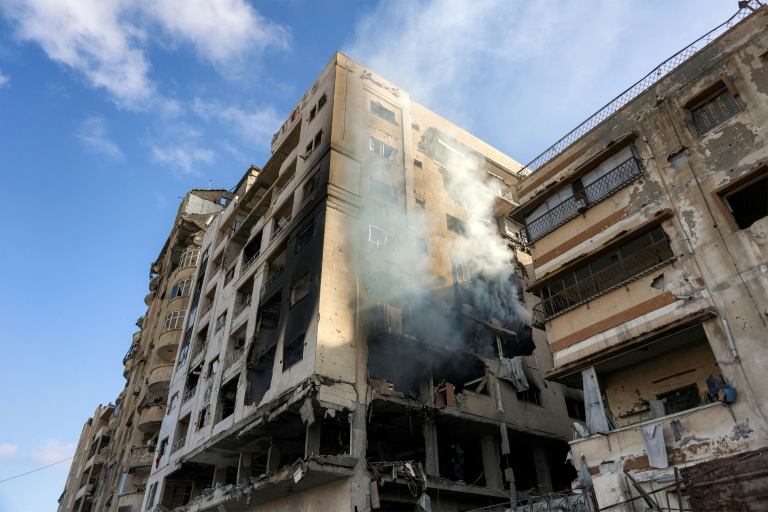
JERUSALEM - Israel said on Saturday it had killed Ezzedine Al-Haddad, the head of the armed wing of Hamas, in an airstrike in Gaza the previous day, describing him as a key architect of the Oct 7 attacks.
Since the October 7, 2023 cross-border assault, the Israeli military and intelligence services have waged a campaign targeting the Palestinian group’s senior political leaders and militant commanders in Gaza and across the region.
The military said on Friday it had carried out an airstrike in Gaza targeting Haddad, before confirming his death on Saturday.
“The IDF and the ISA announce that yesterday, in a precise strike in the area of the City of Gaza, the terrorist Ezzedine Al-Haddad was eliminated,” the military said, referring to itself and the Shin Bet domestic security agency.
Two Hamas officials also told AFP that Haddad had been killed in an Israeli strike.
A member of Hamas’s armed wing separately confirmed his death. Haddad was killed along with his wife and a daughter, according to another Hamas source.
Haddad was also involved in holding Israeli hostages during the war, the Israeli military added.
“Haddad managed Hamas’s hostage captivity system and surrounded himself with hostages in an attempt to prevent his elimination,” it said.
Over the course of the war, Israel has claimed responsibility for the assassinations of several Hamas leaders, including Yahya Sinwar, widely regarded as a mastermind of the Oct 7 attack.
It also killed Mohammed Deif, the longtime commander of Hamas’s armed wing and another key architect of the attack.
Israeli strikes have also targeted Hamas operatives in Lebanon, as well as senior Hezbollah commanders allied with the group, including former Hezbollah chief Hassan Nasrallah. (Story continues below)
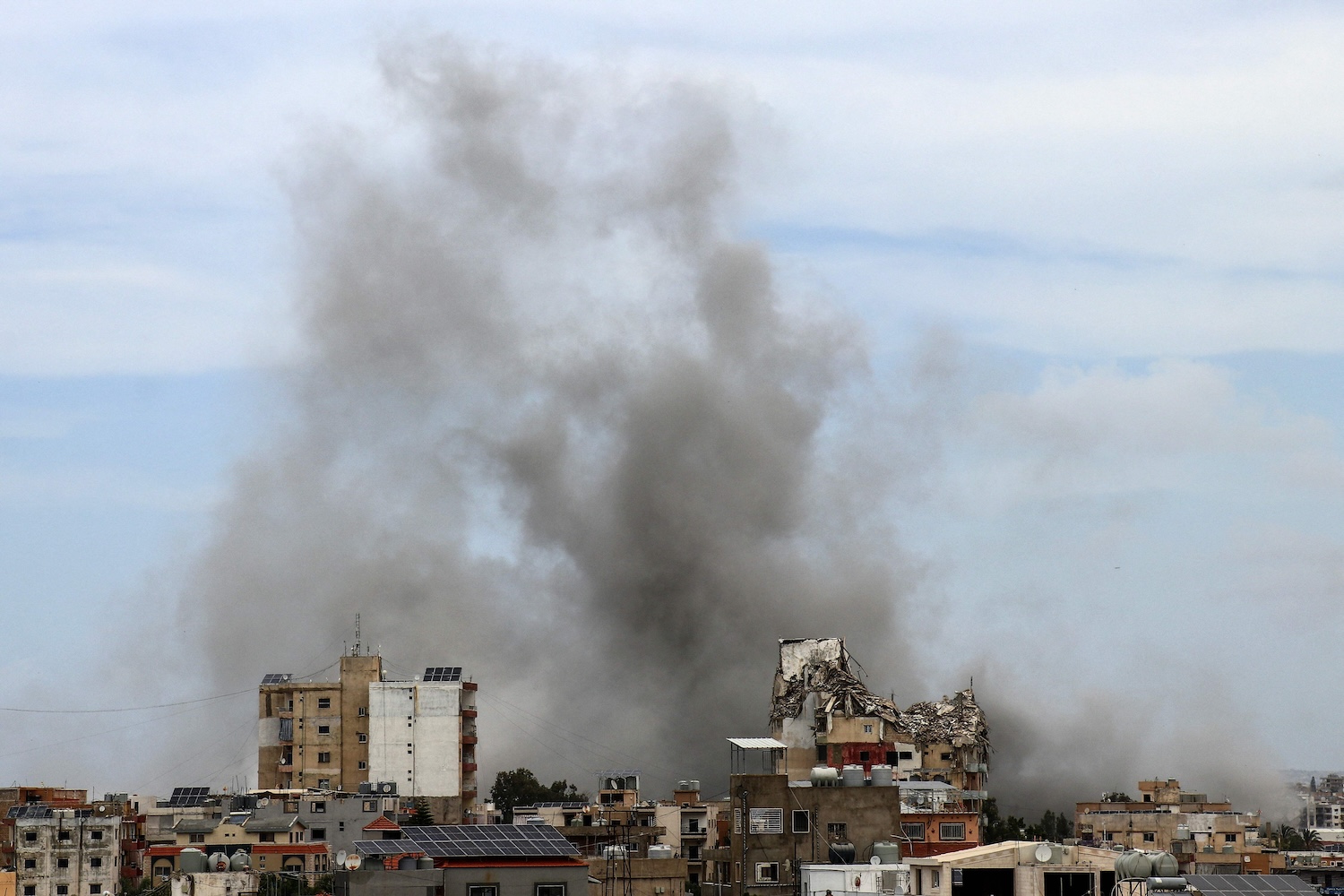
Smoke rises from the site of an Israeli airstrike in the southern city of Tyre in Lebanon on May 15, 2026. (Photo: AFP)
More strikes in Lebanon
Elsewhere, Israel launched another series of airstrikes on southern Lebanon on Saturday, despite the extension of the truce between the two countries.
Israel says it is targeting Hezbollah but the strikes were preceded by an evacuation warning covering nine villages.
And the continuing bombardment has only increased scepticism about the truce among the many thousands of Lebanese driven from their homes in the south.
Lebanon’s state-run National News Agency (NNA) reported strikes on at least five villages on Saturday, including one more than 50 kilometres from the border.
At the same time it reported an new exodus of residents towards the southern city of Sidon and the capital Beirut.
On Friday, the two countries agreed to extend a ceasefire, which began on April 17 but has been marred by numerous violations, by another 45 days.
Since the start of the ceasefire, Israel has repeatedly issued evacuation warnings for south Lebanese villages ahead of strikes.
Over this period their geographical scope has expanded to include areas north of the Litani River and further from the border.
The Israeli military also struck at least one town that was not included in the warning, near the southern city of Nabatieh.
Despite the ceasefire, Israel continues to conduct strikes in Lebanon, and its forces are occupying territory near the border.
Hezbollah, meanwhile, regularly claims attacks on northern Israel and against the Israeli military in southern Lebanon.
Israeli attacks since the start of the war have killed more than 2,900 people in Lebanon, including more than 400 since the truce took effect, according to Lebanese authorities.
Israel has also reported the deaths of 19 soldiers in southern Lebanon since fighting with Hezbollah erupted.
The latest strikes come after envoys from Israel and Lebanon held negotiations in Washington — following the first direct talks in decades last month between the two countries, which do not have diplomatic relations.
They agreed to extend the ceasefire.
Lebanon’s delegation in Washington welcomed the 45-day extension and the creation of a US-facilitated security track, saying they “provide critical breathing space for our citizens, reinforce state institutions, and advance a political pathway toward lasting stability”.
Lebanon was dragged into the Middle East war on March 2 when Hezbollah fired rockets at Israel in retaliation for the killing of Iran’s supreme leader Ali Khamenei.


