A US-Iran agreement to extend their ceasefire and begin talks on a permanent peace deal is now in effect, with the presidents of the two countries signing the 14-point memorandum of understanding, White House officials have confirmed.
The deal also sets the stage for the reopening of the Strait of Hormuz after a three-month closure that upended the global oil market and sent prices soaring.
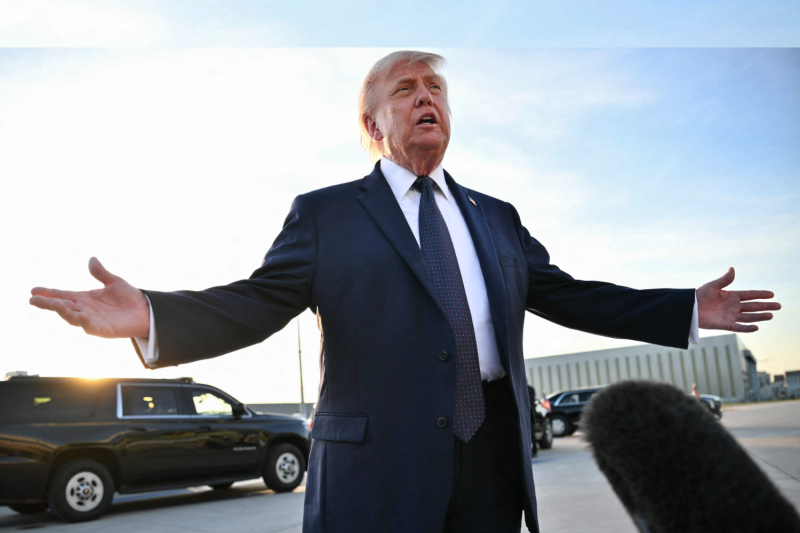
US President Donald Trump, in France for the G7 summit, signed the agreement on Wednesday evening at the Palace of Versailles near Paris, US officials said. Iranian President Masoud Pezeshkian signed the accord the same day in Tehran.
The official in-person signing ceremony planned for Friday in Switzerland is still expected to go ahead as a ceremonial event and to kick off 60 days of technical-level talks.
Washington and Tehran also released the text of the agreement to end the Middle East war, with Iran committing to dilute its enriched uranium while being allowed to resume oil sales.
Washington commits to waive some sanctions and to facilitate the release of a $300 billion reconstruction fund for Iran supported by regional nations when a final agreement is reached on the Islamic republic’s nuclear programme, according to the text.
Trump said on Wednesday that he was prepared to “bomb the hell” out of Iran if they violated the agreement.
He told reporters that he “might” stay in Europe for the formal signing but added that as it is just a memorandum of understanding, “it might not be the kind of a document I should be signing”.
Vice President JD Vance is leading the US delegation to Switzerland, where he will be joined by Iranian Parliament Speaker Mohammad Bagher Ghalibaf to sign the document.
American political commentators have said that Vance’s presence in Switzerland is an attempt by Trump to distance himself from the agreement, which many see as a capitulation by the US after a deeply unpopular war that has created economic pain.
Mixed reactions
Highlighting the global impact of the deal, China said on Wednesday that its top diplomat had impressed on Tehran that it was “key” for all sides to “genuinely implement” their commitments.
While the agreement is essentially a prelude to a more detailed negotiation on Iran’s nuclear programme and other issues, it has provoked strong reaction from different quarters.
US Senator Bill Cassidy from Trump’s own Republican Party was scathing about the agreement which he said would allow Iran to rebuild.
“Iran’s nuclear ambitions were not curbed, and they have learned that threatening the Strait of Hormuz works,” he said. “Sanctions will be lifted, and the bombing has stopped. This is the worst foreign policy blunder in decades.”
The head of the pro-Tehran Lebanese Shiite movement Hezbollah, Naim Qassem, on Wednesday described the deal as a “great victory” for Iran.
He thanked Tehran for insisting that it cover Lebanon, which was drawn into the conflict when Hezbollah fired rockets at Israel on March 2 in support of Iran.
In a televised address, Qassem called on followers to take advantage of the agreement and “expel Israel” from Lebanon.
Nuclear programme curbed
Under the terms of the deal released by US officials, Iran will dilute its enriched uranium stocks, possibly by “down-blending on site under the supervision of the IAEA” — the UN’s nuclear watchdog.
“The fact that they’re conceding to that is a major, major win for the United States of America,” a US official said of the nuclear issue on a call with reporters on condition of anonymity.
The US also commits to facilitating the release of a $300-billion fund for the reconstruction and economic development of Iran in the event of a final agreement on Iran’s nuclear programme, according to the text.
But the official said the US would not be required to contribute financially.
Tehran would also be allowed to resume its oil sales as soon as the agreement is signed this week, while all sanctions would be lifted if a final agreement is reached at the end of a 60-day negotiating period, the same source added.
Oil prices have tumbled in recent days as optimism grew of a lasting Middle East peace agreement, but reversed course on Wednesday.
Prices briefly jumped five percent as uncertainty spread about the signing, before stabilising later in the day.
Lebanese front
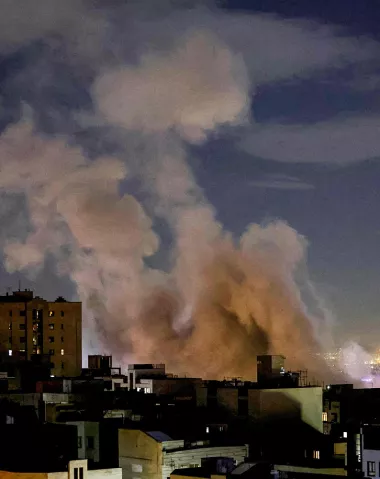
While violence has declined in Lebanon following the announcement of the deal, Israeli strikes on the south have killed at least five people since then, according to state media, which also reported Israeli raids on south Lebanon on Wednesday.
Israel’s army said five soldiers were wounded on Wednesday, one of them severely, “as a result of an explosive drone impact in southern Lebanon”, the first such announcement since the US-Iran deal.
The Israeli military also said its air force intercepted “several rockets” launched toward soldiers operating in south Lebanon, without reporting casualties.