 Listen


 Facebook
 Reddit
 Copy Link


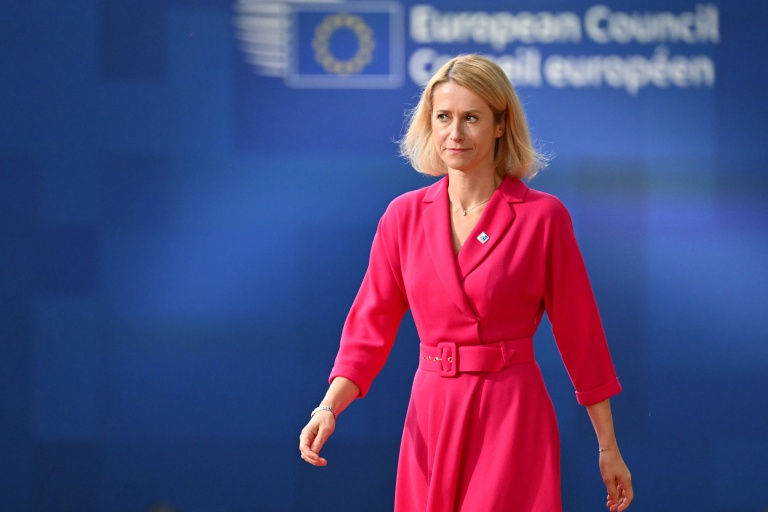
DUBLIN - European Union foreign policy chief Kaja Kallas warned Friday Europe must not walk into Russian “traps” over Ukraine talks, saying reaching a ceasefire needed to be the priority, not broader security negotiations.
US envoys said on Thursday after talks with Vladimir Putin that Europe would join future negotiations — but the Kremlin appeared to slam the brakes on that plan, saying no decision had been made.
After pushing for months to be involved, Europe is now asking itself who should represent it and what it is willing to discuss with the Kremlin.
Moscow has pushed to renegotiate Europe’s broader security architecture as part of any talks — and appears to be reviving hardline demands to roll back NATO.
“First we need a ceasefire. If we start to talk about what Russia is asking regarding the security architecture, we actually walk into the traps that Russia is setting us, which is that we divert the attention away from that there is no ceasefire,” Kallas told reporters at an EU summit in Dublin.
US envoy and Donald Trump’s son-in-law Jared Kushner said that getting Europe onboard will “allow us to address the broader postwar European security arrangements”.
The new push has set alarm bells ringing among US allies in Europe who have long rejected the Kremlin’s desire to overhaul the continent’s security framework.
European Commission chief Ursula von der Leyen insisted it was “self-explanatory that Europe is included in the peace talks to safeguard our interests, but also to support Ukraine”.
EU representation
At the same time there are calls for Europe to decide soon on who will represent it — with EU leaders set to debate the issue in Dublin.
“This needs to be resolved,” said Irish premier Micheal Martin.
“In my view, finally decided upon within the next week or two.”
This week officials from Britain, France, and Germany, along with the EU, were present on the sidelines of talks in Abu Dhabi.
Key players such as Germany’s Friedrich Merz have backed keeping that rough combination, playing down the need to name a single person.
Others have backed sticking to the EU’s treaties and having the EU’s top officials represent the bloc.
Kallas for her part urged Europe not to get bogged down by the discussion and instead focus on the substance of what it wants to achieve. The hawkish former prime minister of Estonia said it was not “up to” Russia to decide who would represent Europe.
“They don’t want anybody strong on the other side because they want to push through their maximum demands,” Kallas said.
As the EU’s foreign policy chief chosen by leaders, she put herself forward as a logical candidate.
“I know that the Russians don’t want me, but you know, do we have a say on who is representing Russia? No, we don’t,” she said.
