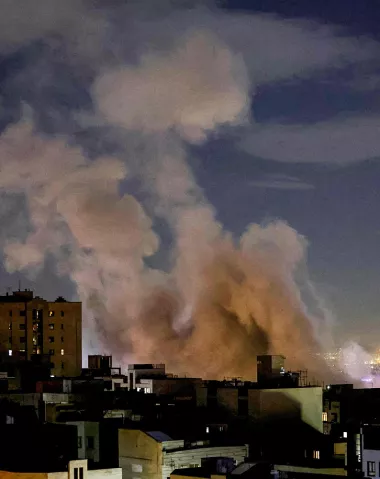
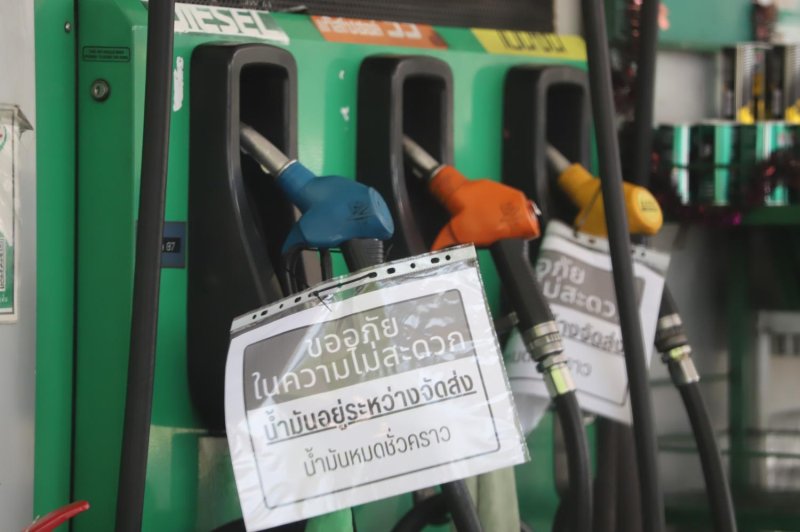
Energy authorities are moving swiftly to streamline oil logistics in a bid to accelerate fuel deliveries to filling stations grappling with shortages caused by surging demand amid the ongoing US-Israeli war with Iran, which has disrupted global supply routes, according to the Department of Energy Business (DOEB).
Retailers under the PTT brand have responded to the temporary shortfall by introducing quotas on fuel sales to motorists, a measure aimed at rationing limited supplies while ensuring broader access.
Sarawut Kaewtathip, director-general of the DOEB, said officials are working to increase the frequency of oil transport to ensure motorists have access to sufficient supplies.
"We are reorganising our oil transportation system to ensure sufficient supply to meet demand," he said, noting that stations with their own refineries will be prioritised, while those without must negotiate with transport contractors to boost delivery schedules.
The strain on supply is evident in consumption figures.
Diesel sales have skyrocketed by 85%, rising from an average of 68 million litres a day to 118 million litres a day.
Gasoline and gasohol sales have also jumped by 33.3%, climbing from 30 million litres a day to 40 million litres a day.
PTT Plc, Thailand's national oil and gas conglomerate, acknowledged that the surge in demand has overwhelmed its transport system. Typically, oil shipments to PTT stations take between 12 and 24 hours depending on the distance from storage facilities.
"Now oil demand has increased 2-3 times, so we need to increase the number of trips," the company said, warning that some stations may be unable to sell fuel during certain periods.
Other retailers are also grappling with logistical challenges.
Chairit Simaroj, managing director of Susco Plc, pointed to a shortage of oil trucks as widespread stockpiling intensifies.
Many consumers are rushing to secure fuel ahead of anticipated price hikes, particularly after the government's oil price subsidy programme ends on March 17.
The state Oil Fuel Fund, which has long cushioned consumers from volatile prices, is under severe strain. As of March 15, the fund reported losses of 12.6 billion baht, with most of the subsidies directed towards liquefied petroleum gas used for cooking.
Authorities are now weighing whether to maintain current fuel prices or introduce new price ceilings.
Meanwhile, Thailand's six oil refineries are diversifying their crude oil sources to reduce reliance on Middle Eastern shipments, which face disruptions due to tanker restrictions in the Strait of Hormuz.