 Listen


 Facebook
 Reddit
 Copy Link


How do you know a film is important? Not because it received a 25-minute ovation at its Venice premiere, but because the Israeli government threatened to revoke its directors’ citizenship over the documentary.
Israel’s prime minister, Benjamin Netanyahu, also ordered the identification of the Israeli interviewees who gave first-hand accounts of what goes on inside the Israel Defence Forces (IDF). Not only that, the Israeli government then produced a rebuttal film in the same style with the same name to counter the film’s narrative and confuse Google searches.
That is when you know NAZA is important.
The British documentary, written and directed by Yuval Abraham and Rachel Szor and produced by The Guardian and JW Films, interviews 24 Israeli soldiers who took part in the IDF’s alleged systematic mass killing of Palestinians in the Gaza Strip.
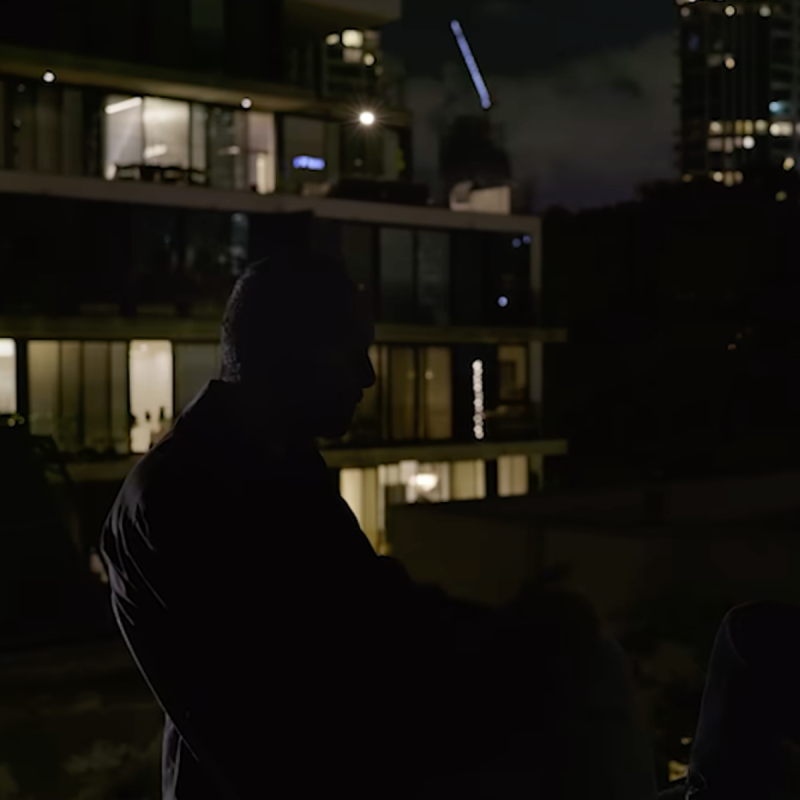
To illuminate the truth, the film has to hide in the dark. Abraham conducted the interviews himself, over three years, on rooftops in Tel Aviv. Each interviewee’s voice is distorted and only their silhouette is visible, which conveying how sensitive the topic was, and still is, at the time and place of filming
NAZA shines a light on an Orwellian surveillance system that, from my limited knowledge, I cannot imagine is being used anywhere else in the world right now. A system called “Lavender” allows the military to monitor phone calls and photo galleries on people’s phones to track down potential Hamas operatives. That level of access feels too invasive for any democratic country to have.
Beyond surveillance, NAZA shows how artificial intelligence (AI) is integrated into strikes on Palestinians to calculate how to inflict maximum damage. The tool can map each floor of each building and calculate the number of casualties per strike.
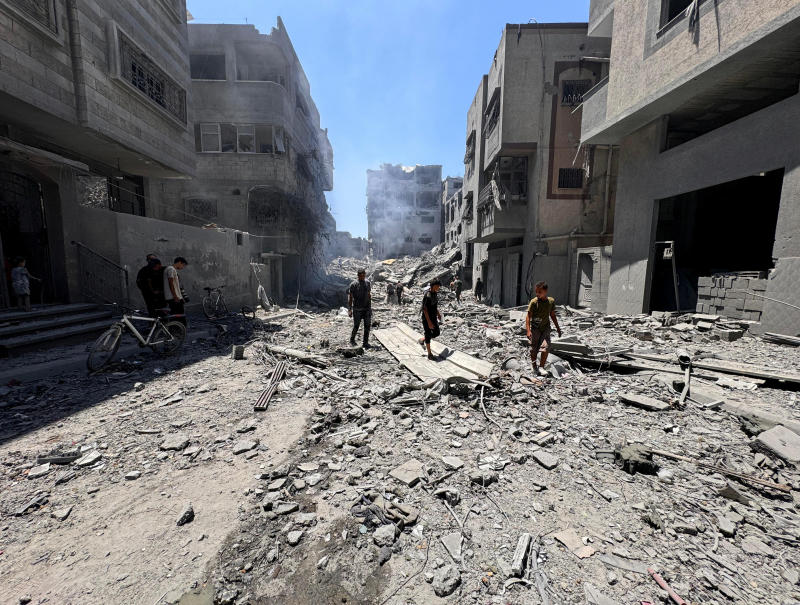
Palestinians search for casualties at the site of Israeli strikes on houses, amid the Israel-Hamas conflict, in Gaza City, on June 22, 2024. (Photo: Reuters)
Behind the tools lies a systemic layer, the film argues, which is designed to reduce killing to just another part of the job. NAZA delves into the soldiers’ psyches, and most of them express the notion that “somebody else will do it” or that “it was ordered from someone” to justify taking lives. In that system, those who kill are relieved of moral responsibility, and lives become mere numbers.
Just like the surveillance system, the Newspeak of George Orwell’s 1984 can be seen here too. The word “NAZA” refers to the number of civilians killed per strike, rather than stating how many “women and children” died. There is also something cynical about naming the AI system used for spying and killing a flower. It is language used to soften the weight of what is really happening.
Although the documentary is screening in only a few cinemas in Thailand, and what is happening is geographically far from us, its sheer journalistic courage and its insight into the process of dehumanisation behind the deliberate, ongoing bombing of Gaza make it undeniably the most important film in cinemas right now.


