
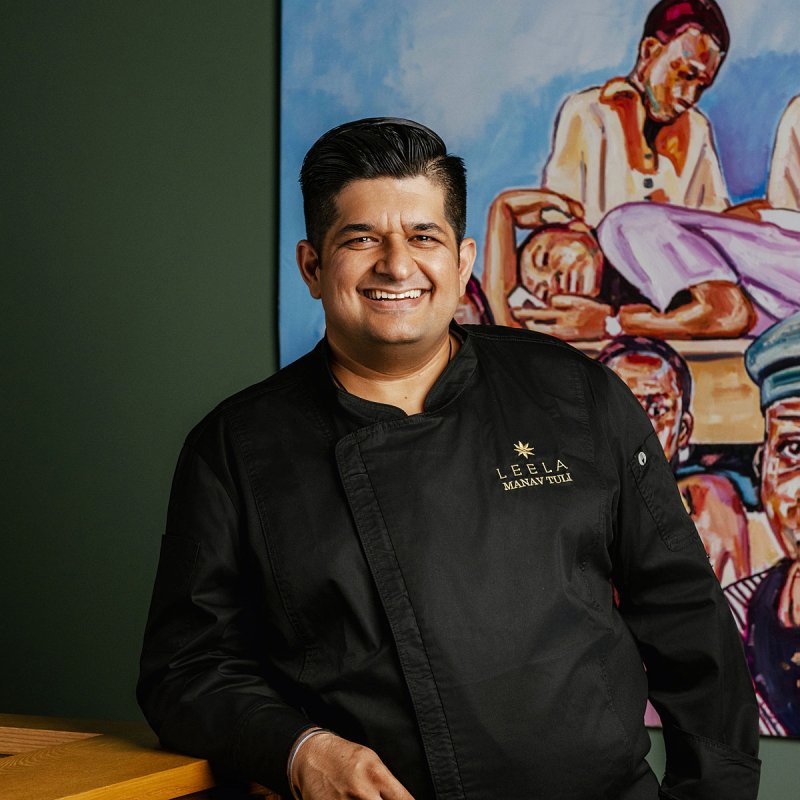
Manav Tuli may be the jovial chef we are all familiar with but underneath the laughter is a discipline that makes Leela one of the best Indian restaurants in Hong Kong.
"My culinary philosophy is to learn wherever I go and adapt. I also apply something known as 'sense of place', which is very Rosewood [the hotel brand] jargon, but I apply that to all my food. For example, since I came to Hong Kong from the UK, I did carry a few things from the UK. When I came to Hong Kong, I started adapting to Hong Kong. I started doing things like octopus biryani, tandoori abalone and tandoori squid.
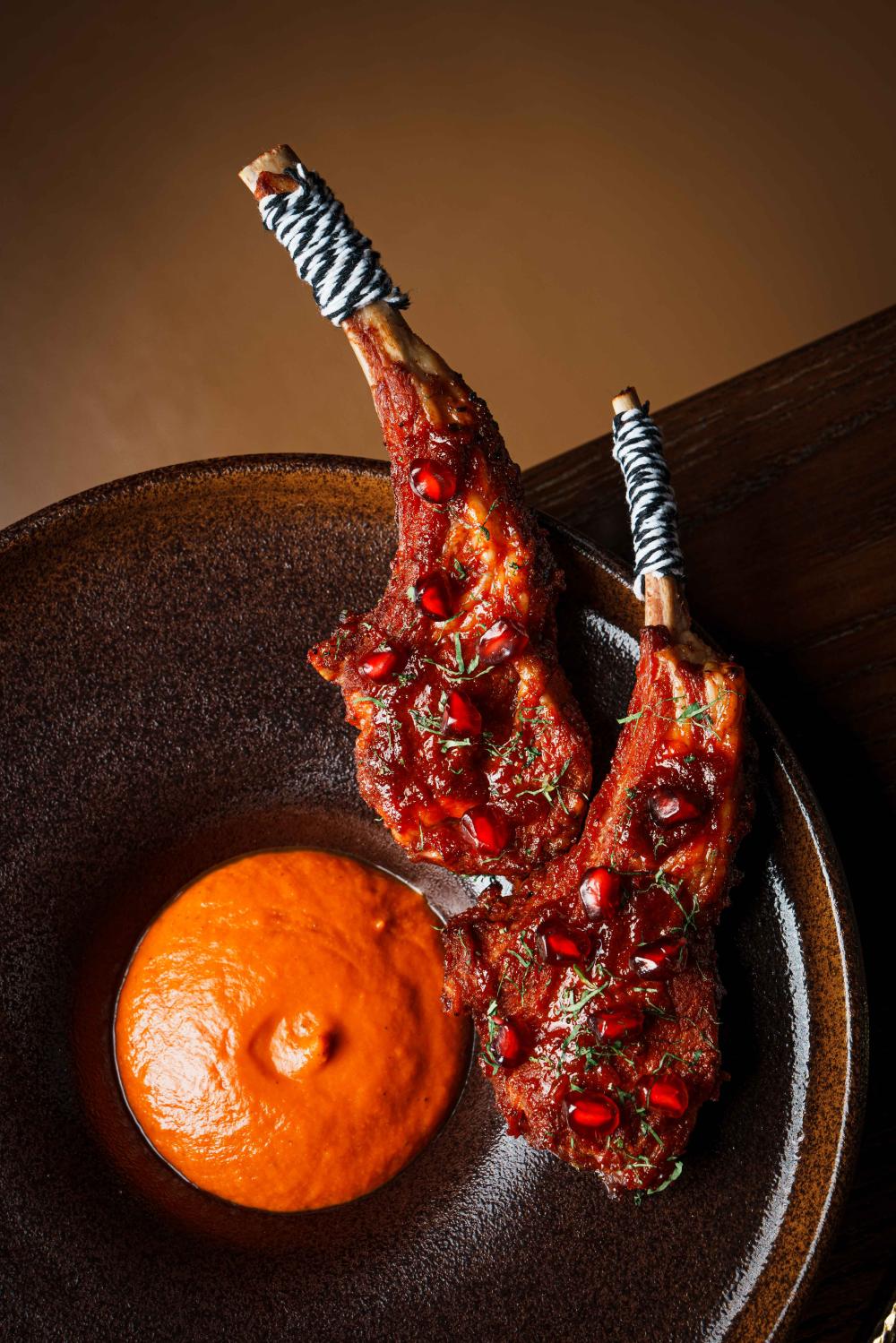
Kandahari lamb chop.
"When I moved to Hong Kong in 2019, steakhouses were very popular, so I came up with an idea of a tandoori tomahawk. I adapt to flavours and I adapt to local preferences but I don't change the dish. I keep the authenticity of the dish intact. Having said that, I also treat my protein with utmost respect, which I was taught in the UK; how to treat protein in a much better manner.
"If I have to cook a lamb shank, I will not boil it for two hours, rather I would slow cook it in a vacuum bag we have developed over the years. In the past six years, I've developed my own method of sous vide, which is not sous vide or roasting. It is somewhere in between," explains chef Tuli.
However, having said that he retains the authenticity of a dish, he is not shy to say that authenticity doesn't really exist because each dish is very personal and often depends on the person cooking it.
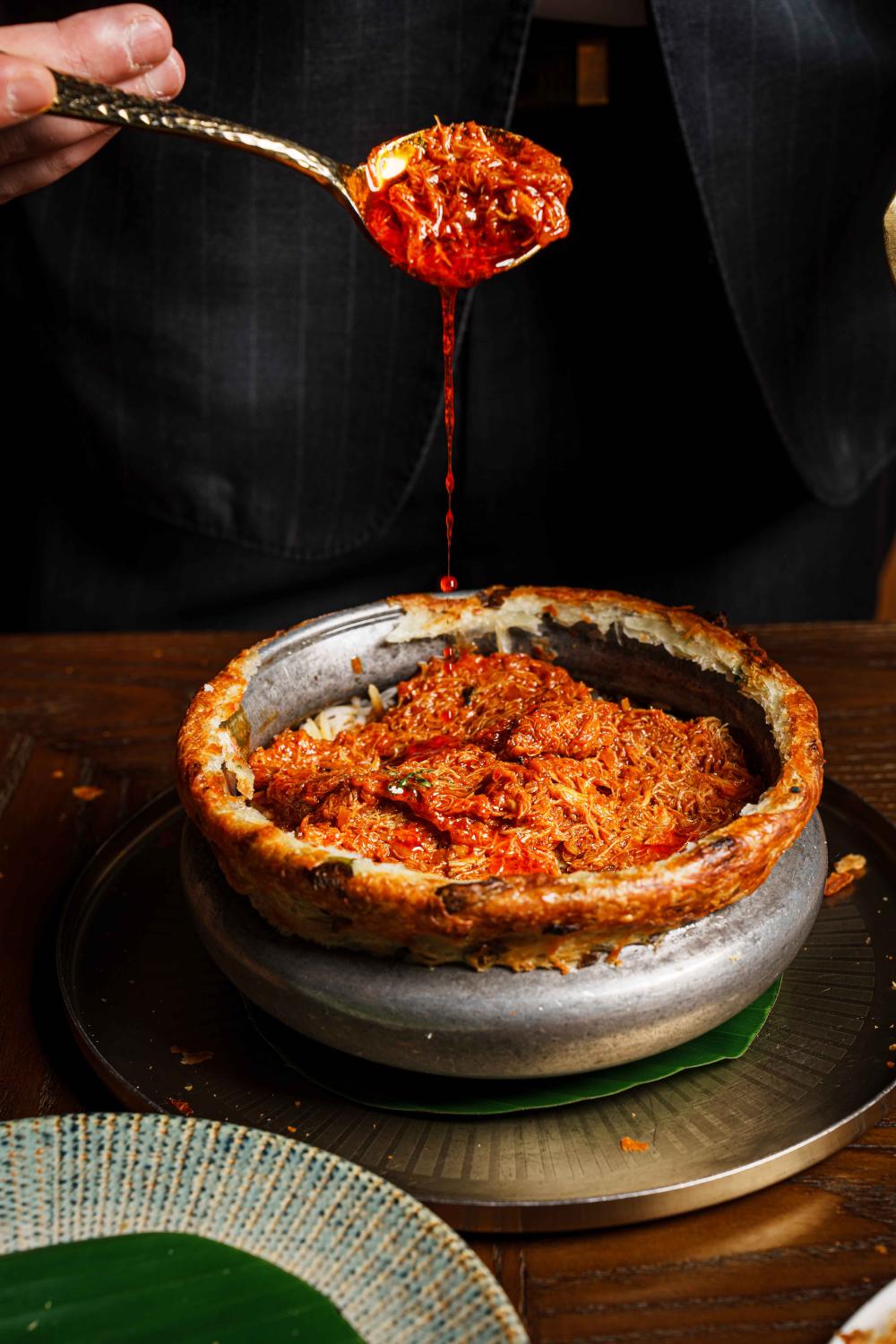
Hairy crab biryani.
"Take the simple Indian dish called poha [spiced flattened rice], which is made in almost every Indian household. My mother makes it with peanuts, onions and lots of coriander. However, my mother-in-law makes it with a lot of green peas and no peanuts. The beauty is that both houses are only 80km apart. So, this begs the question: which one is authentic? My authentic and your authentic in India can be different.
"My food looks very simple and basic, but once you cut into the meat then you realise that a lot of effort has been put into refining and balancing the dish, rather than just making it look beautiful," says the chef.
"My nihari recipe was given to me by chef Surender Singh, who is a famous chef in the Oberoi Group, and the person who got me into cooking. I've kept his recipe intact and the only change is that I'm serving the nihari with a lamb neck fillet, which has been slow-cooked for six hours and is very tender and pink on the inside. The recipe is true to the original, but I do change the ratios based on which region the dish comes from."
Having got into culinary school by accident, chef Tuli has helmed the kitchens at Tamarind and Chutney Mary in London, before opening Chaat at Rosewood Hong Kong and his first solo restaurant, Leela.
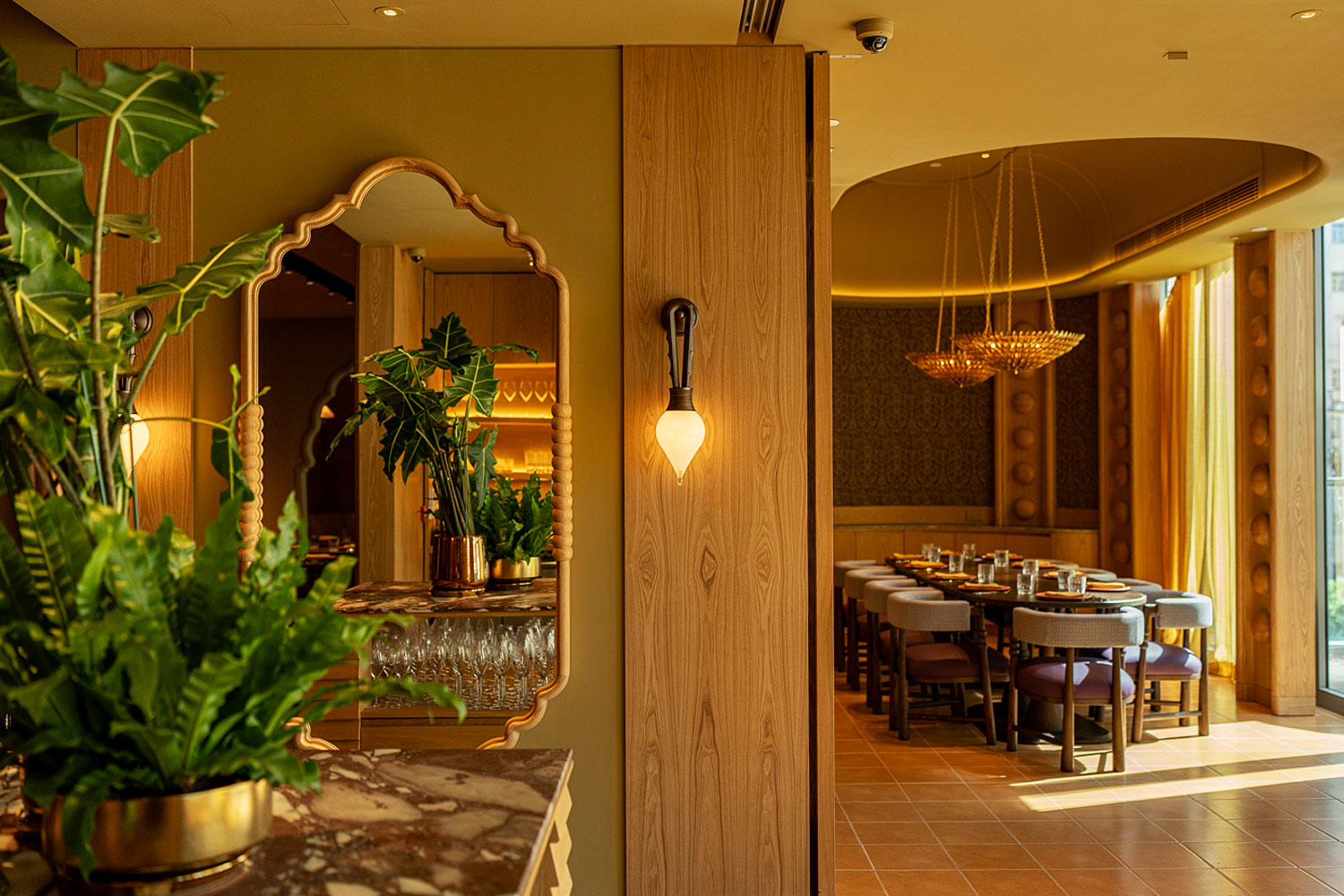
Inside Leela in Hong Kong.
"At Chaat, though we were at the very top of the Indian food scene in Hong Kong, I could not see my next step. I realised that four years of being at Chaat, I wanted to do much more than what I was doing there. When you are riding a highway, you get bored of it soon, especially if it's never-ending. You need to get off the highway and get back on again. In terms of learning, Chaat was becoming monotonous.
"At Leela, I really wanted to showcase greater India cuisine. I wanted to showcase dishes from Afghanistan, Pakistan, India, parts of Bangladesh, Nepal and share that story and that narrative. Though we all are geopolitically so different, some dishes tell stories of the times when we all were one. Also Leela, which translates as 'divine play', tells the story my journey in Hong Kong, which is why I chose the name.
"When I first came to Hong Kong, I thought it was a wrong decision. It was the beginning of Covid and the project I came for was delayed. I thought I would probably be sent back and it was a very difficult time for me. But there was no turning back and here I am at Leela," says chef Tuli, emphatically.
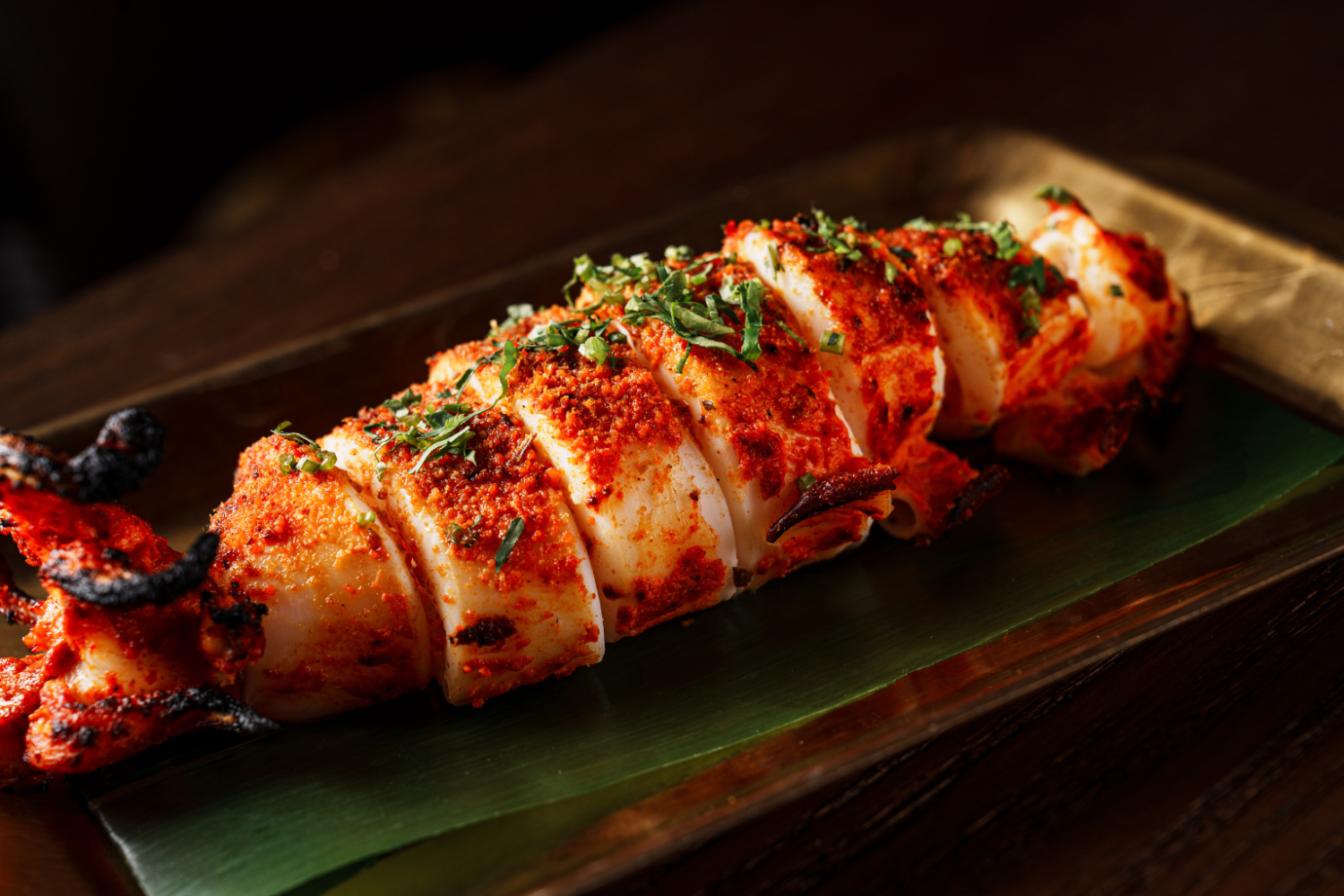
Tandoori shenga chutney squid.
"In hindsight, Leela is also how my cooking has been formulated. A lot of my dishes at Leela are world-firsts -- like the hairy crab biryani. No one's ever done it before. However, I don't plan for a lot of these things. The hairy crab biryani idea came to me when I was in Ningbo and everyone at the table was talking about the crab. They joked that 'someday Manav will come out with a hairy crab biryani' and I was like why not? That was when the dish was conceived.
"Recently, a chef friend was discussing his 24-day aged duck with me and I expressed an interest to learn how the dish was done. Even though it is French I will make it Indian. I have no idea how, but that is next on my list of things to do," adds chef Tuli.
"Discipline has been passed down to me since I was a child, as my dad was rather strict. It has shaped me as a disciplined person. One thing that I tell everyone in my kitchen and service team is I can't stand people who have to be disciplined. Whether they like it or not, small things matter to me, like well-coiffed hair, polished shoes. I'm very disciplined in that manner.
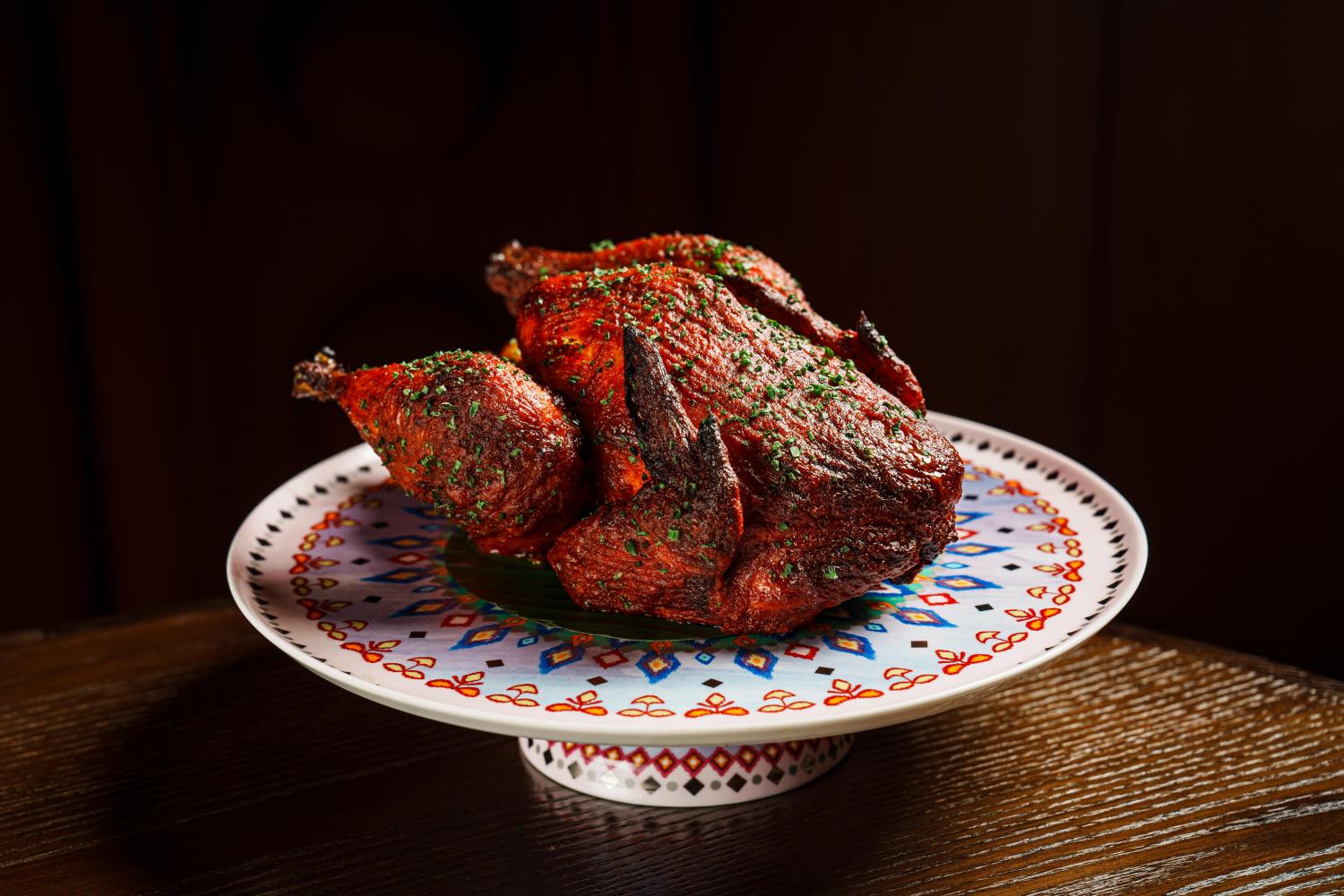
Whole roasted tandoori-spiced three yellow chicken rice.
"Having worked with great chefs and teachers in the UK, I have learned that the only way I can get quality and consistency is by following a recipe to the T. I have a golden rule in my kitchen: All my chefs have a diary with all the recipes of dishes on the menu. No matter which section they are in, they have the recipes. If any change is made, the diary has to reflect that change. We have a very fixed schedule of training. If I'm to get anything great from my team, I need to understand them psychologically, so I am nosey and get into their private lives. Sometimes it's not comfortable, but I still want to know everything about them.
"I do a lot of things on gut feeling. I don't have a formula for that. If I see a guy who's very serious or sad, and generally, if I see him jovial and happy, I definitely make it a point to figure out as to what is wrong," explains the chef.
"By the end of the year, I want Leela to be Leela 2.0. I want to have a separate section of Indian and Chinese-inspired Indian dishes. Not Indian-Chinese cuisine, but Indian dishes inspired by Chinese flavours. My honey sesame pork, char siu and even the hairy crab biryani are seasonal dishes. I now want to have a menu where they feature all-year-round. I don't think anyone else is doing this, and that's what makes me different, compared to any other Indian chef in the world.
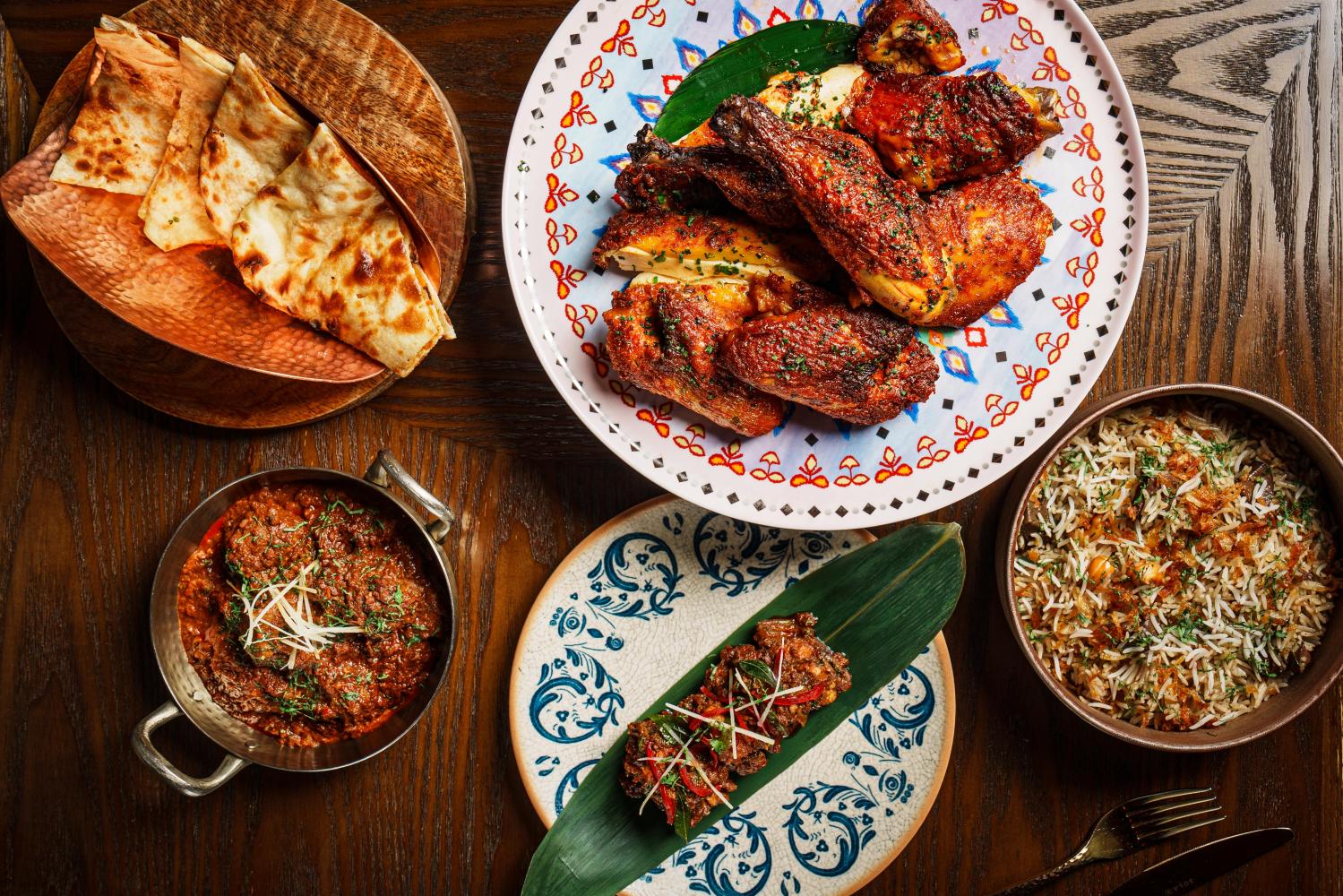
Leela in Hong Kong serves dishes found nowhere else.
"In Ningbo, I ate a lot of their steamed fish and really liked the yellow croaker. I'm going to create something similar, but with a very Indian flavour. It will look like the Ningbo dish, but it will taste Indian," says the chef.
Leela is not chef Tuli's only restaurant. He also runs the Bombay Club in Dubai and Leela at Wynn Palace in Macau, which again could be attributed to divine play.
"Soon after Chaat got a Michelin star, I hired a personal trainer to lose weight and keep fit, and he suggested keeping a notebook with affirmations of what I wanted in life. I wrote down that I wanted to have five restaurants in the next five years in Beijing, Shanghai, Hong Kong, Singapore and India. I also wrote that I wanted to open an institute in India where young kids are taught Indian cuisine the way French food is taught. That was three years ago and I still have the book.
"And then out of nowhere, two restaurants, in Macau and Dubai, have opened. I know I wrote five, but I am happy with three. I am not sure what is next for me. I have met quite a few people on quite a few new projects. I have developed a philosophy that I should not say no till the time I can manage them and if it makes practical sense."