
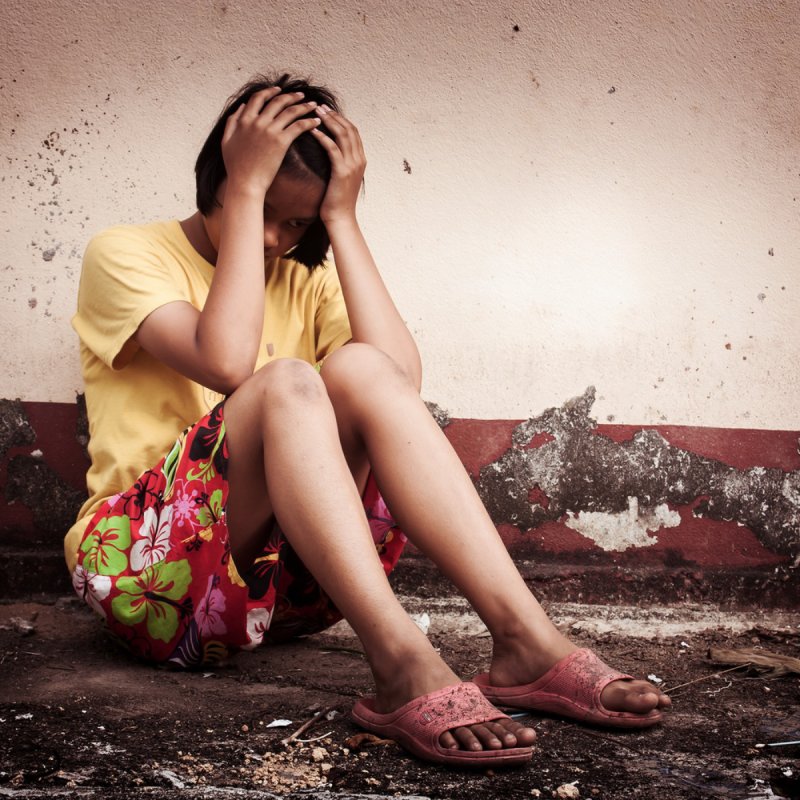
In the past, schools were believed to be safe places for youngsters. However, it has been revealed that many students are victims of bullying there.
Last year, the Thailand Consumer Council revealed that 42% of Thai students experienced bullying at school. The results came from a survey of 337 students across primary, junior high and high school.
Of the three types of bullying -- verbal, physical and cyber -- students faced verbal bullying the most. The survey indicated that 68.7% of students experienced hurtful words; 63.3% experienced sarcasm and gossip; and 62.6% were beaten up.
In addition to bullying, some students experienced traumatic events such as school shootings or hostage situations.
For example, in February this year, an 18-year-old man stormed into Patong Prathankiriwat School in Hat Yai District in Songkhla, and attempted to take teachers and students hostage. The incident resulted in one death and six injuries.
In October 2022, a former police sergeant in Nong Bua Lamphu province opened fire at many places, including a child development centre. The incident resulted in 36 deaths and 12 injuries. These incidents have made people sceptical about whether schools are still safe places.
To raise awareness about student safety, Kasetsart University organised an online forum titled "Strengthening Immunity In Thai Society: Ensuring A Safe System For Every Child" on its Facebook page and YouTube channel.
Assoc Prof Patcharapa Tantichuvech, a lecturer at the Faculty of Education and Development Studies at Kasetsart University, Kamphaeng Saen Campus, revealed that bullying in Thailand is severe since it is not limited to schools; people in the workplace experience bullying as well. The age of bullies seems to be getting younger and bullying occurs as frequently as three to four times a week.
"Bullying is like a silent threat which attracts attention when it is revealed and becomes a scandal. Then, it will be swept under the rug. Bullying is a long-standing problem because adults tend to view it as just children playing around, so people should not overthink it," said Assoc Prof Patcharapa.
Assoc Prof Patcharapa conducted research by surveying the opinions of 670 people, including administrators, teachers, educational staff and students at PSU Wittayanusorn School Hat Yai district, Songkhla. Her research was consistent with that of the Thailand Consumer Council in that most students were subjected to verbal bullying.
"In bullying, there is the bully, the victim and bystanders. In many cases, bystanders film the incident but do not intervene. The question is, how do we turn bystanders into helpers to stop bullying instead of waiting for a teacher to intervene, because teachers are not always nearby," said Assoc Prof Patcharapa.
She pointed out that creating a safe ecosystem is not the responsibility of one group.
Everyone -- the school board, administrators, teachers, students, canteen vendors, janitors, security guards, parent representatives and people in the community -- plays a role in helping students thrive in a safe school environment. Everyone should be on the same page that bullying is not innocent playing.
Dr Suriyadeo Tripathi, a paediatrician specialising in children and adolescents, and director of the Center for Moral Development, cited research from abroad that students who live with single parents, parents with limited education or parents from low socio-economic backgrounds are at risk of drug use.
The study indicated that young people living with these kinds of parents have "a low life asset level" and are at three to 10 times higher at risk of using drugs.
Life asset refers to children who have had support, love and care from their parents. Children of PhD parents can have low life assets if their parents do not have time for them. Since they have a low life assets, their risk of drug abuse is three to 10 times higher. Having a wealthy and highly educated family does not guarantee children will not have problems.
Additionally, Dr Suriyadeo suggested that to create an anti-bullying programme, a school should allow students to participate in surveys. One of the survey questions is, when students encounter problems, which teacher or adult do they turn to?
The other question is: "What are three behaviours or statements that students would absolutely not want to experience in this school?" Dr Suriyadeo said the answers would guide principals to understand what the do's and don'ts are.
To prepare for a mass shooting, Assoc Prof Patcharapa suggested an emergency management framework called 2P (Prevention and Preparation) and 2R (Response and Recovery). Prevention includes physical security such as fencing and surveillance equipment. According to the Office of Basic Education Commission, schools are required to have fencing. However, many schools, especially in rural areas, do not have a budget for fencing.
For preparation, schools need to have an emergency action plan. Everyone involved at the school, such as school administrators, teachers, parents, students, food vendors, gardeners, cleaners and security guards, must understand how to carry out the emergency procedure. The school also has to build its safety ecosystem by networking with community health centres and local police stations.
Response refers to the immediate procedure during an active shooter which is run, hide and fight. The procedure must be performed quickly and quietly in small groups, so the schools should run active drills every term. Recovery is to provide mental services to survivors and community members.
Assoc Prof Patcharapa explained that school administrators and the school community of PSU Wittayanusorn School teamed up together to label colours in order to divide the levels of bullying and mass shooting.
"Yellow signifies verbal bullying, exclusion from groups and online blackmail. Orange signifies physical bullying and red signifies use of weapons. Each school should have a signal to warn everyone in the community without verbal announcements, such as using a specific school bell signal," she said.
Pol Lt Sarawut Duangmanee of the Thung Song Hong Metropolitan Police Station, Metropolitan Police Division 2, revealed that not many schools signed the MoU with local police stations.
In Thung Song Hong area, there is only one school which signed the MoU. With the MoU, the school can immediately contact the police station via Line messaging. Pol Lt Sarawut hopes that more schools will cooperate with local police stations.
Currently, firearms possession is granted for life. Pol Lt Sarawut commented that instead of issuing lifetime licence, the law should require gun owners to undergo a physical capability test to ensure safety.
While student safety is paramount, many schools lack adequate resources to deal with bullying or mass shootings.
Dr Suriyadeo revealed that the Bangkok Metropolitan Administration will launch SoSafe, an online platform for safety of society. SoSafe is an extension of the Traffy Fondue platform which is the online complaint and issue-reporting platform for Bangkokians. This may help students who need assistance but are unable to report issues to their school.
"Schools should be a safe space for students, but when students encounter problems, they should be able to voice their concerns. This will lead to effective protection measures for young people," the doctor said.