
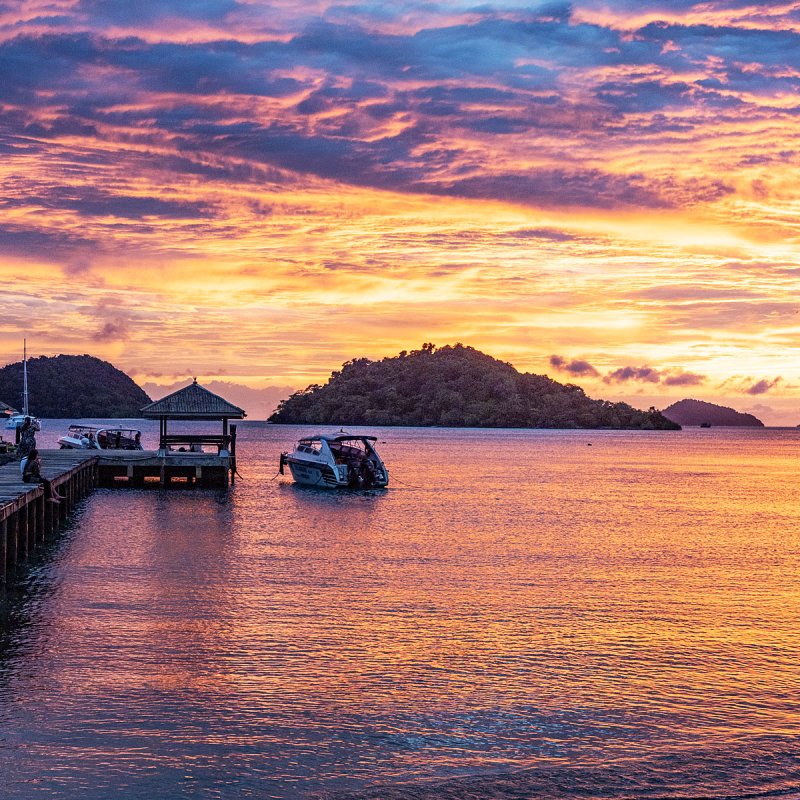
When we first arrived on the quiet island of Koh Mak in Trat province, I expected turquoise waters, swaying palms and maybe a snorkelling excursion.
What I didn't expect was to find myself swimming among coral nurseries, learning firsthand about the delicate ecosystems that sustain the oceans, and meeting two of the most inspiring conservationists in the world: Titouan Bernicot, founder of Coral Gardeners, and Dr Sylvia Earle, founder of Mission Blue.
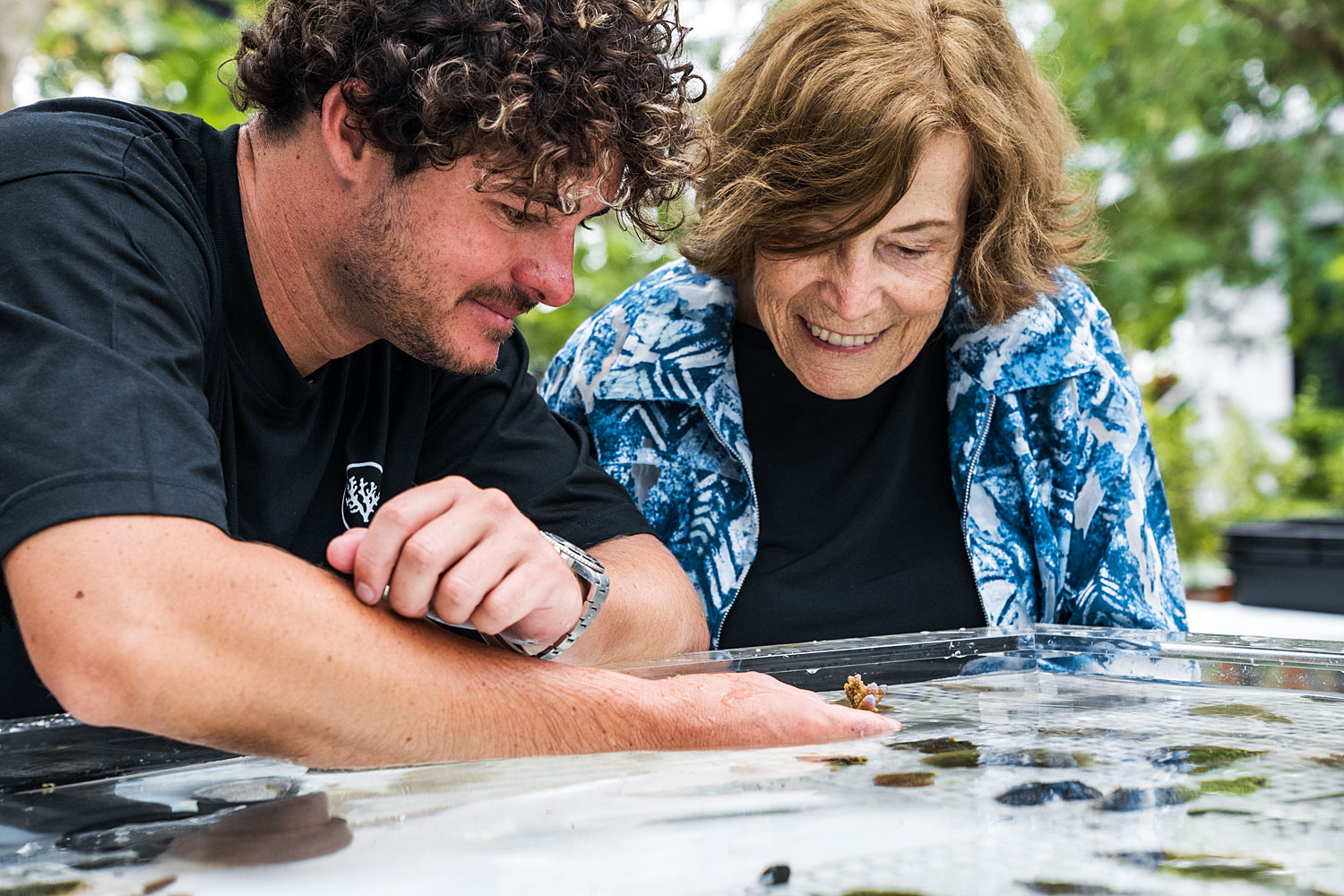
Titouan Bernicot, left, founder and CEO of Coral Gardeners, with Rolex Testimonee Dr Sylvia Earle, founder of Mission Blue.
The Rolex Perpetual Planet Initiative had brought the two organisations together in the Gulf of Thailand, a region home to more than 300 species of coral but recently devastated by some of the worst coral bleaching on the planet. Without living reefs, the fish will disappear, coastal communities will struggle and the intricate marine web that has thrived for millennia teeters on the brink.
Bernicot's journey to this point is almost cinematic. Growing up on the remote Tatu Archipelago in French Polynesia, he spent his early years on islands without schools, hospitals, or supermarkets.
"The fun at the beginning for us was everything by radio," he recalled. "It was really cast away like Robinson Crusoe's life… we had that playground, and so I started really enjoying that coral reef and that ocean. I started loving and falling in love with freediving, with sharks. I just love those animals in Tahiti."
By the age of 16, Bernicot witnessed firsthand the bleaching of the corals he had grown up alongside: "I didn't know what a coral was. You know, at 16 years old, they were like bushes, or flowers in your garden. They have always been here for me, but I didn't realise."
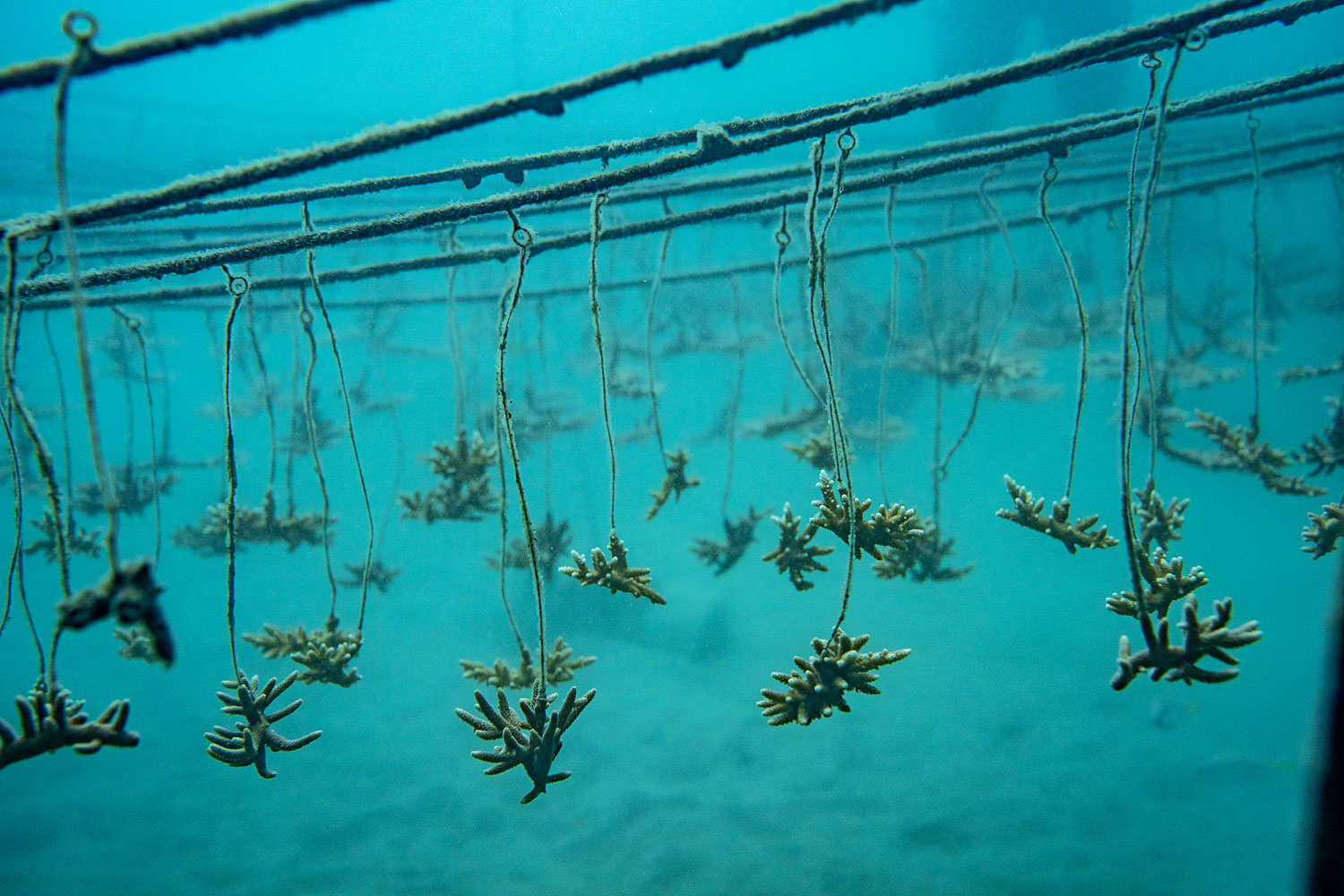
Coral hanging in an underwater nursery.
That early awareness sparked a life-long mission. He traded surfing for coral restoration, founding Coral Gardeners in 2017 to train local communities and restore reefs worldwide.
In Thailand, the Coral Gardeners' new branch is already making an impact. Bernicot and his team built the region's first land-based coral nursery -- the largest in Southeast Asia, with the capacity to grow up to 50,000 corals, alongside ocean-based nurseries producing over 10,000 corals per year.
"Being a gardener underwater is the coolest thing on earth," he said. "The fish are like your co-workers. You create new habitats and in weeks and months you see your impact growing."
But Bernicot is clear that restoration alone is not enough: "Restoration without protection is useless. You need the surrounding species, the fish, the turtles… you need a living ecosystem if we want the corals to be happy and thrive."
This is where Mission Blue's global network of Hope Spots comes in. Founded by Dr Sylvia Earle in 2009, the initiative highlights ecologically important marine areas vital for species preservation and community survival.
Earle's encouragement has already inspired the Coral Gardeners team to pursue Hope Spot status for Koh Mak and Koh Kood -- potentially the first in the Gulf of Thailand.
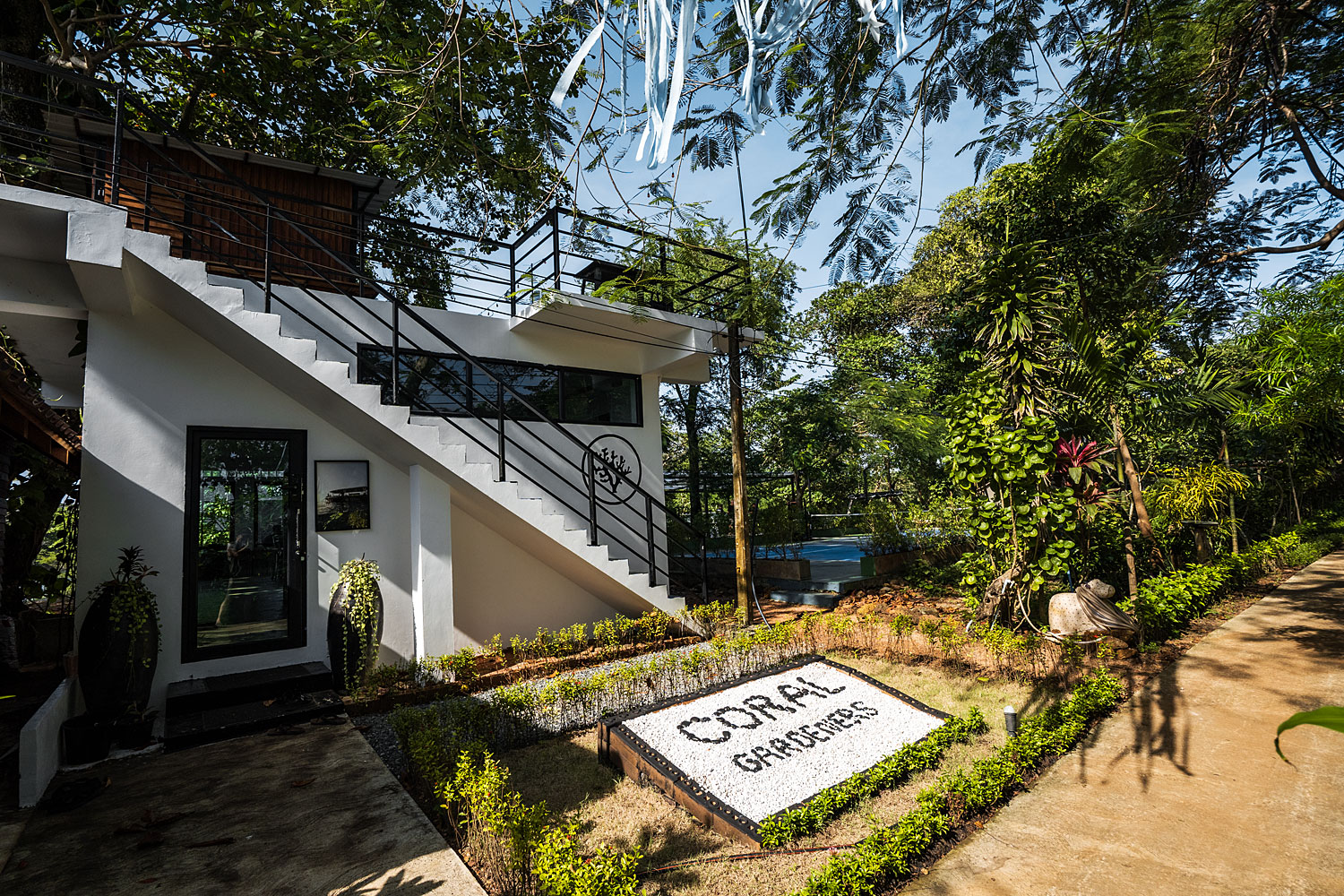
The Coral Gardeners’ Thailand headquarters. (Photos courtesy of Tim McKenna)
Meeting Earle in person was nothing short of awe-inspiring. At 90 years old, she radiates energy and passion. She speaks softly, but her words carry profound urgency and wisdom.
According to her assistant, Earle spends less than 30 days a year at home with family, constantly travelling to dive, survey and advocate for marine ecosystems around the world. Watching her interact with the Coral Gardeners team, you see someone who embodies joy in conservation -- a model of dedication and humility.
Earle describes the partnership with Bernicot as a natural alignment of missions.
"We have comparable goals, whatever can be done anywhere helps everywhere. But it's more than that. It's inspiring everyone to do what they can to change this trajectory," she said. Her message underscores the immediacy of the climate crisis but also its solvability: "No one person can do everything, but every person can do something. Together, we really can make a difference."
The collaboration is already showing tangible outcomes.
Thailand's waters are richer in coral species than even French Polynesia, necessitating both land- and ocean-based nurseries, research facilities and restoration sites.
Bernicot emphasised the importance of the local team: "The person who grew up in front of his reef needs to be the one caring for his reef. He knows where the lobster, the corals, the sponges are. That's their skin, that's who they are. The ocean and beaches are their playground. And heritage for generations."
The Thai government and local authorities have welcomed the Coral Gardeners initiative with open arms.
"The Thai government is smart. They care and want to learn," Bernicot said. The head scientist here knows about corals and fishes. Places like this know the value of their resources, especially after the massive bleaching last year."
For Earle, the work in Thailand fits into a larger vision of planetary stewardship.
"The ocean generates more than half of the oxygen in the atmosphere -- the ocean and rainforests are really connected. When you destroy coral reefs, you're taking another bite out of the system," she explained.
Her perspective ties local action to global impact, emphasising that conservation is not a luxury but a responsibility.
One of the most impressive aspects of Coral Gardeners is its ability to balance scientific rigour with modern storytelling. Bernicot, who initially found conservation "boring", recognised the power of social media to engage a new generation.
"It's not about planting corals, you know, it's about telling the stories of these peoplee. They are living heroes. The internet and social media are way more important than you think. How do you want to care if you are not aware?"
By sharing the passion and daily efforts of the local teams, Coral Gardeners inspires audiences worldwide, making conservation both aspirational and achievable.
This combination of local empowerment and global visibility is what makes the Koh Mak initiative so promising. By working with islanders and training them as reef guardians, the project ensures that restoration is not just a temporary intervention but a generational commitment.
"The guy who grew up on the reef, he is the reef," Bernicot emphasised.
Earle's reflections for young people echo this vision. "Don't go doom and gloom… Look at the knowledge we now have that nobody could know before. We have the power to destroy, yes, but also the power to heal," she said. Her words capture the duality of conservation: the stakes are high, but hope is everywhere if action is taken.
During my own snorkel trip around Koh Mak, seeing the team at work in the underwater nurseries and the vibrancy of the coral fragments ready for outplanting, I felt the optimism Bernicot and Earle speak about. The coral seems almost alive with potential, a testament to human ingenuity aligned with nature.
It's a rare moment when conservation feels tangible, joyful, and participatory -- a far cry from the despair often associated with environmental reporting.
The Rolex Perpetual Planet Initiative underpins this work, providing both funding and a global platform. It's clear that without such support, the scale and ambition of Coral Gardeners' Thai branch would not have been possible.
At the same time, the collaboration highlights that conservation is inherently collaborative: local communities, global networks and passionate individuals must act in concert to restore the planet's reefs.
By the end of the day, after diving among the coral nurseries, talking with Bernicot about his childhood on the Tatu Archipelago, and listening to Earle articulate the connections between local ecosystems and planetary health, I was reminded that hope is not abstract. It is tangible, growing quietly beneath the waves, nurtured by those willing to act.
As Bernicot puts it: "Today, action is hope. When I see the team every day, going in the water in front of their homes to see what they can do to revive their reef, this brings us a lot of hope."