 Listen


 Facebook
 Reddit
 Copy Link


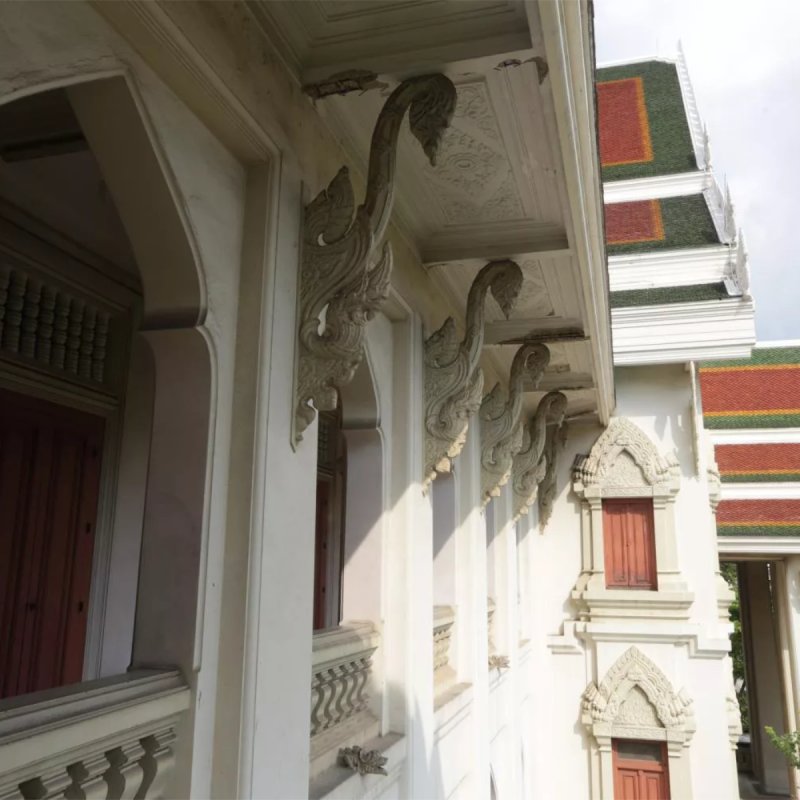
Though the building is associated with Chulalongkorn University's Faculty of Arts, the Devalai has long been a place of significance, connecting generations of scholars.
Known formally as the Maha Vajiravudh Building, the Devalai has served first as an academic space and later as a library.
Its temple-like architecture stands apart from the functional design of nearby contemporary university buildings, making it a recognisable landmark for those who have visited the campus or travelled along Henri Dunant Road.
But within its distinctive exterior lies a history that extends beyond its present association with the Faculty of Arts. Not many would know that in the past, the building once accommodated both the faculties of Arts and Science before becoming a central library, which reportedly housed over 500,000 books.
Today, as the building prepares for another transformation, the Faculty of Arts is holding "Times Within Devalai", an exhibition that invites visitors to experience its history beyond a conventional timeline.
"Times Within Devalai" brings together archival material, photographs, rare publications and personal recollections, arranging fragments from different eras and perspectives into an unconventional narrative.
Rather than simply retracing the building's past, it seeks to create a journey in which history, memory and contemporary culture intersect, allowing visitors to discover Devalai through unexpected connections.
For artist and lead curator Nakrob Moonmanas, the prospect of change initially raised questions about what might be lost when the building enters its next chapter.
"After the transformation, we might have a sinking feeling that the building is not the same any more. Will it change into something else entirely?" he said.
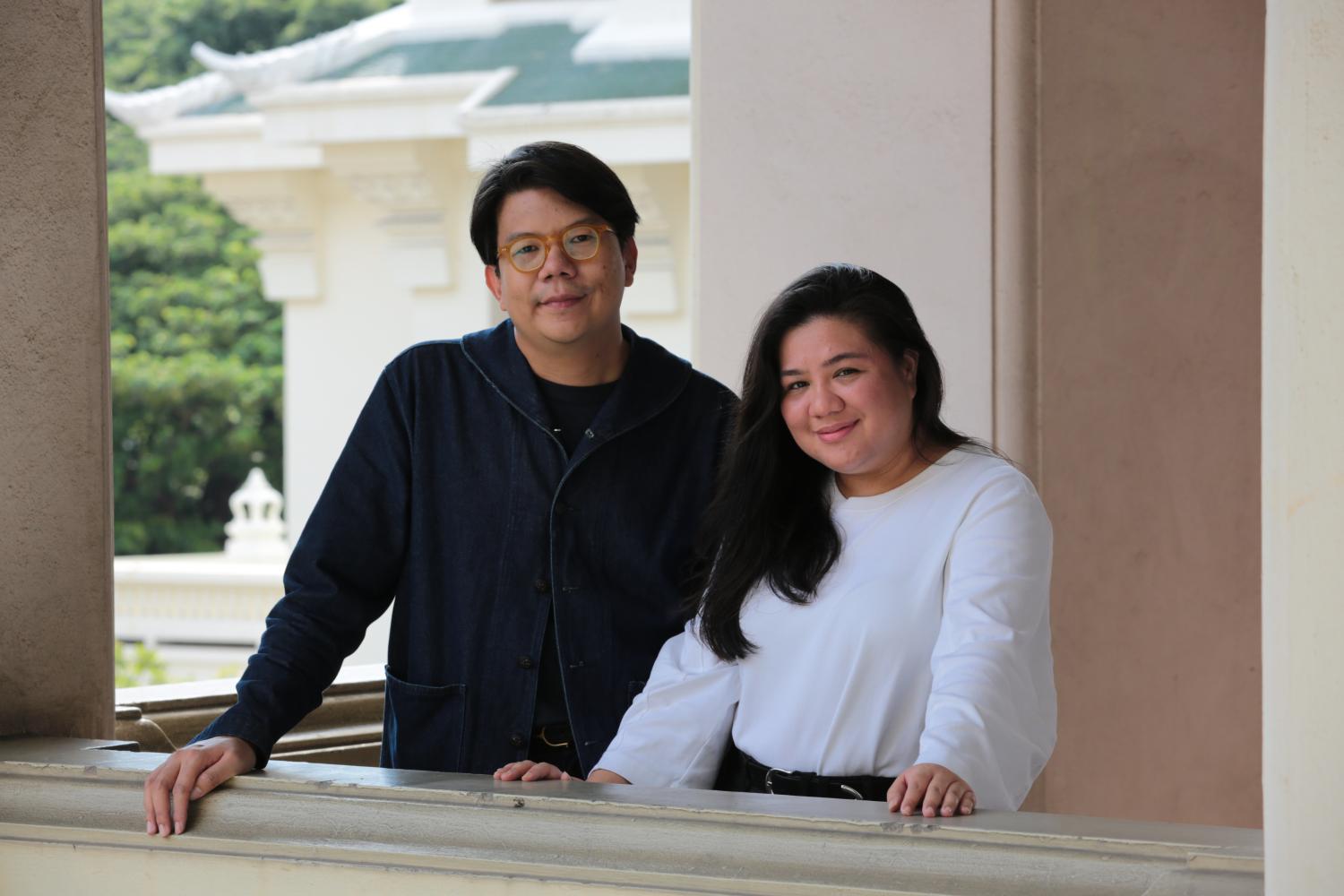
Curators Nakrob Moonmanas and Paspawisa Jewpattanagul.
However, the exhibition led him to reconsider the assumption that Devalai should remain unchanged.
"I found that Devalai has transformed throughout many eras. It is a constantly evolving body. It used to accommodate different faculties before becoming a central library. Transformation is something that has always happened throughout its history," Nakrob said.
Rather than treating the building's next chapter as a departure from its past, Nakrob sees it as another part of an enduring story: "What happens next is another aspect of our history. It has to continue progressing; we cannot expect it to remain the same forever."
The exhibition therefore occupies an important moment between what the building has been and what it will become.
Devalai's evolving identity is also reflected in how younger generations encounter the building today. In Pokémon Go, for instance, it appears as a gym within the game's digital landscape, giving the historic landmark a new presence beyond its physical walls.
Although the way people engage with the building has changed, Devalai remains part of contemporary life, finding relevance even in spaces far removed from its original purpose.
A greeting that travelled beyond the building
Nonetheless, some of Devalai's most fascinating stories extend far beyond its walls.
Rather than simply presenting Devalai's history, lead curator Paspawisa Jewpattanagul sought to weave its many stories into an experience that would engage visitors in unexpected ways.
Drawing on her experience as a theatre director, she approaches the exhibition as an experience to be designed, where objects, images and recollections from different periods are brought together to create unexpected encounters.
Among them was the story of the word sawasdee, the Thai greeting that has since become part of everyday life.
"As the team went through the archives, we found a report by Phraya Upakit Silapasan [Nim Kanchanachiwa] that offered a glimpse into the history of sawasdee. It documented how a professor at Chulalongkorn University's Faculty of Arts encouraged students to greet others using the word. The professor described it as an amarith, likening it to that of a love potion," said Paspawisa, recounting her process of creating a narrative for visitors.
"This discovery offered a glimpse into how the university's intellectual community helped shape aspects of Thai culture that we now take for granted."
The exhibition traces the word's origins to the university's intellectual community, illustrating how a seemingly ordinary expression can emerge from a particular historical context before becoming embedded in a wider culture.
This Thai greeting was later included on Nasa's Voyager Golden Record, a collection of sounds and greetings from Earth launched into space aboard the Voyager spacecraft in 1977.
The recording offers a remarkable connection between a local expression and humanity's attempt to communicate with the wider universe.
Devalai's changing identity also raises a broader question: what is the role of a physical library when information is increasingly available online?
Asst Prof Dr Sorakom Dissamana argues that while technology has transformed library services, it has not diminished their fundamental purpose.
"The role of the physical library has not fundamentally changed, even though the ways it provides services have," he explained.
Digital resources can make information more accessible, but not everything available online is academically reliable. Also, digital access cannot entirely replace the experience of encountering original material or exchanging ideas with other people in a shared space.
Nakrob added: "There is still a certain charm in going into a library to look for one book, only to discover another one sitting right beside it that turns out to be just as useful. A digital library cannot quite offer that experience. Only a physical library allows you to wander through the shelves and stumble upon unexpected treasures."
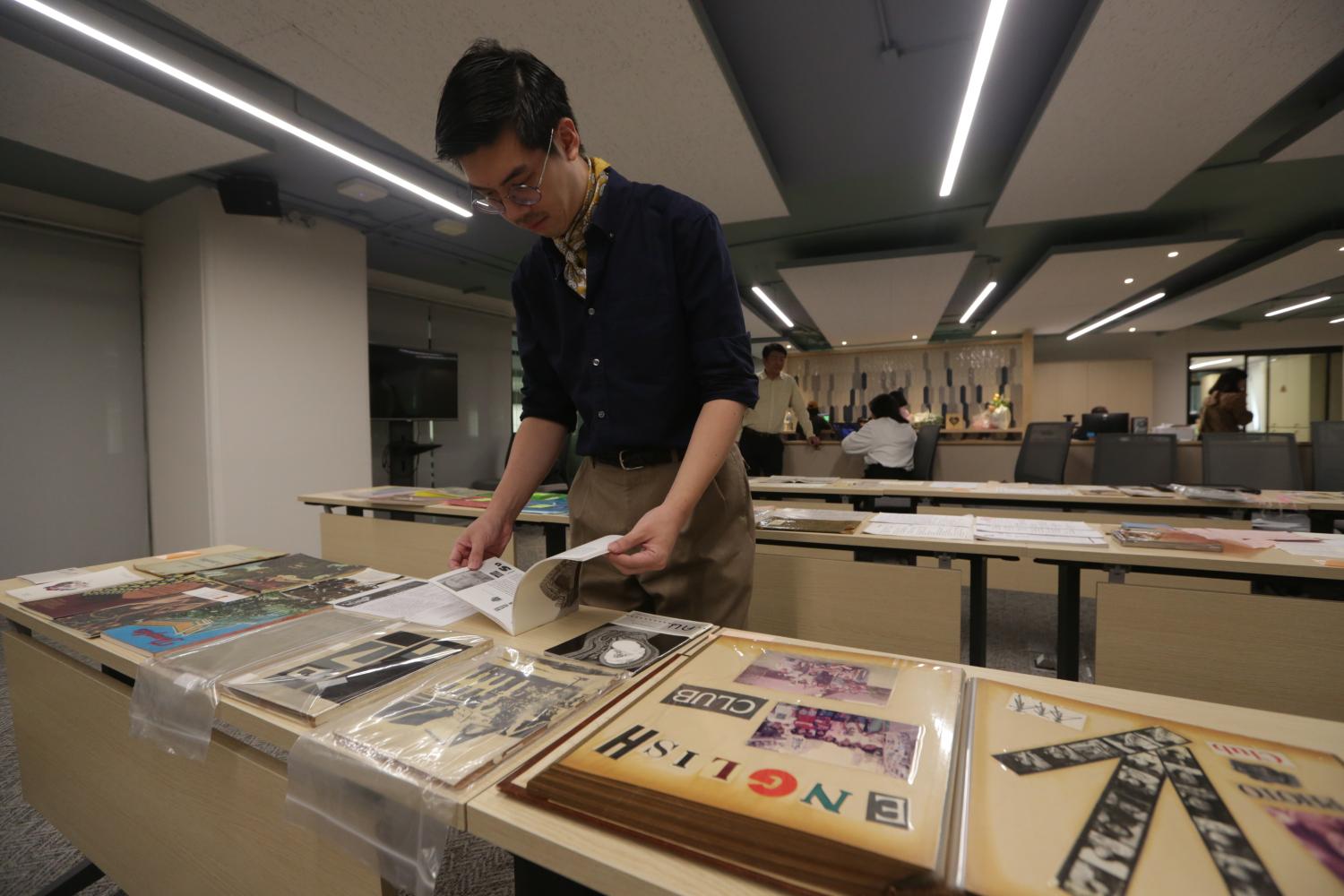 Dr. Peerapat Ouysook
.
Uncovering Devalai's Hidden History
For Dr Peerapat Ouysook, an archivist working on the exhibition, preserving the integrity of historical evidence is essential. Working with a museum-style archival approach, the team avoids altering photographs, recognising that even the smallest details can reveal overlooked stories.
While sourcing a higher-resolution image of Devalai's architectural plan, Dr Peerapat noticed a signature that challenged the long-held attribution to an architect named Dohring. It appeared to read Mario Ceradini, a name the team traced to an Italian academic journal in which the architect reportedly described receiving a commission to design a university in Siam.
"We tend to accept what has already been recorded as the truth of its time. But when we went back to the original evidence, we found something new. It opens the door for further research into a name that had never appeared in Chulalongkorn's established history," noted Paspawisa.
The discovery offers a glimpse of how revisiting original records can uncover names and stories missing from the established history of Devalai.
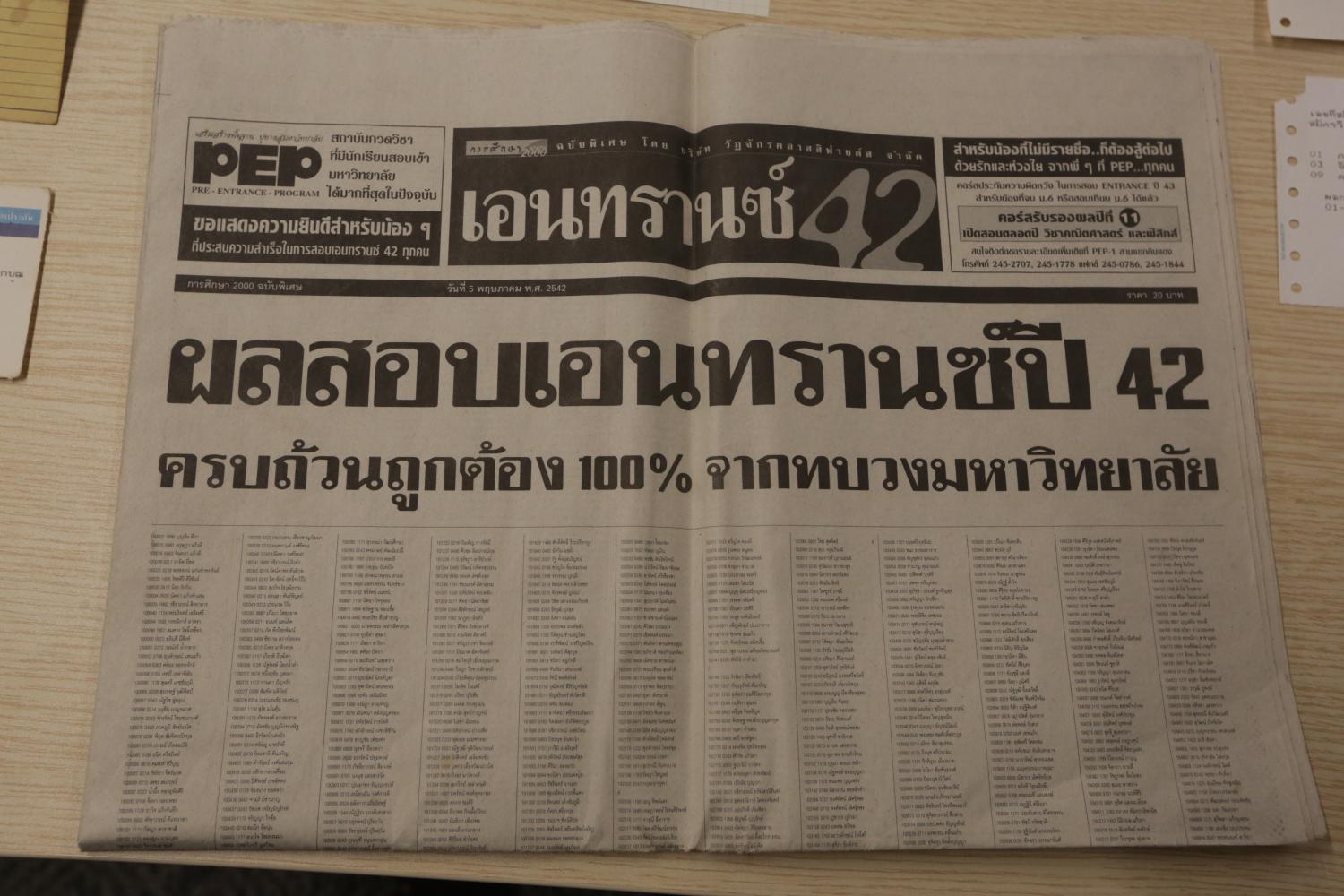
A display at the exhibition.
Between memory and what comes next
Like a theatrical production, "Times Within Devalai" is designed as a journey across three floors, unfolding through four distinct sections.
The Making Of Devalai, on the 1st floor, examines the building's formation and history through three days of projection mapping. On the 2nd floor, Memories Of Devalai explores personal recollections, while The Arts Of Library, on the auditorium side, considers its library heritage.
The 3rd floor houses Crowdsourcing – Images Awaiting Stories, inviting visitors to contribute their own interpretations of mysterious photographs.
Together, the sections bring official records into conversation with individual experiences, acknowledging that a building's history cannot always be captured by documents alone.
There is no single, absolute truth of a place that has been experienced differently by successive generations. Much like the theory of relativity, Devalai is understood through different frames of reference, each shaped by the people who pass through it, the memories they leave behind and the stories they choose to preserve.
For students who rarely enter Devalai today, the exhibition offers an opportunity to reconnect with a building that has quietly shaped the university's identity. For alumni visitors, it provides a chance to revisit a familiar place through the eyes of others.
And for the building itself, the exhibition marks a moment of reflection before another transition.
Perhaps Devalai's significance has never depended on remaining unchanged. Its history is one of adaptation, from academic building to library, from a repository of books to a site of collective memory.
"Times Within Devalai" runs from Saturday until Nov 15 at the Maha Vajiravudh Building, Chulalongkorn University. Projection mapping will take place from Saturday until Nov 9.


