

From false birthdates to fake moustaches, British children are finding ways to bypass age verification under the UK’s landmark Online Safety Act (OSA), a survey has found.
Despite the new legal framework designed to shield minors from harmful material, a recent study suggests that nearly half of underage users find existing digital barriers easy to circumvent, leaving them exposed to adult content and violent imagery.
The Online Safety Act mandates that platforms hosting user-generated content or adult material must employ robust age-verification technologies. This push has led to increased regulatory scrutiny by UK authorities, forcing tech giants to roll out parental controls, content filters and facial scan tools. However, the practical application of these safeguards is reportedly falling short of legislative intent.
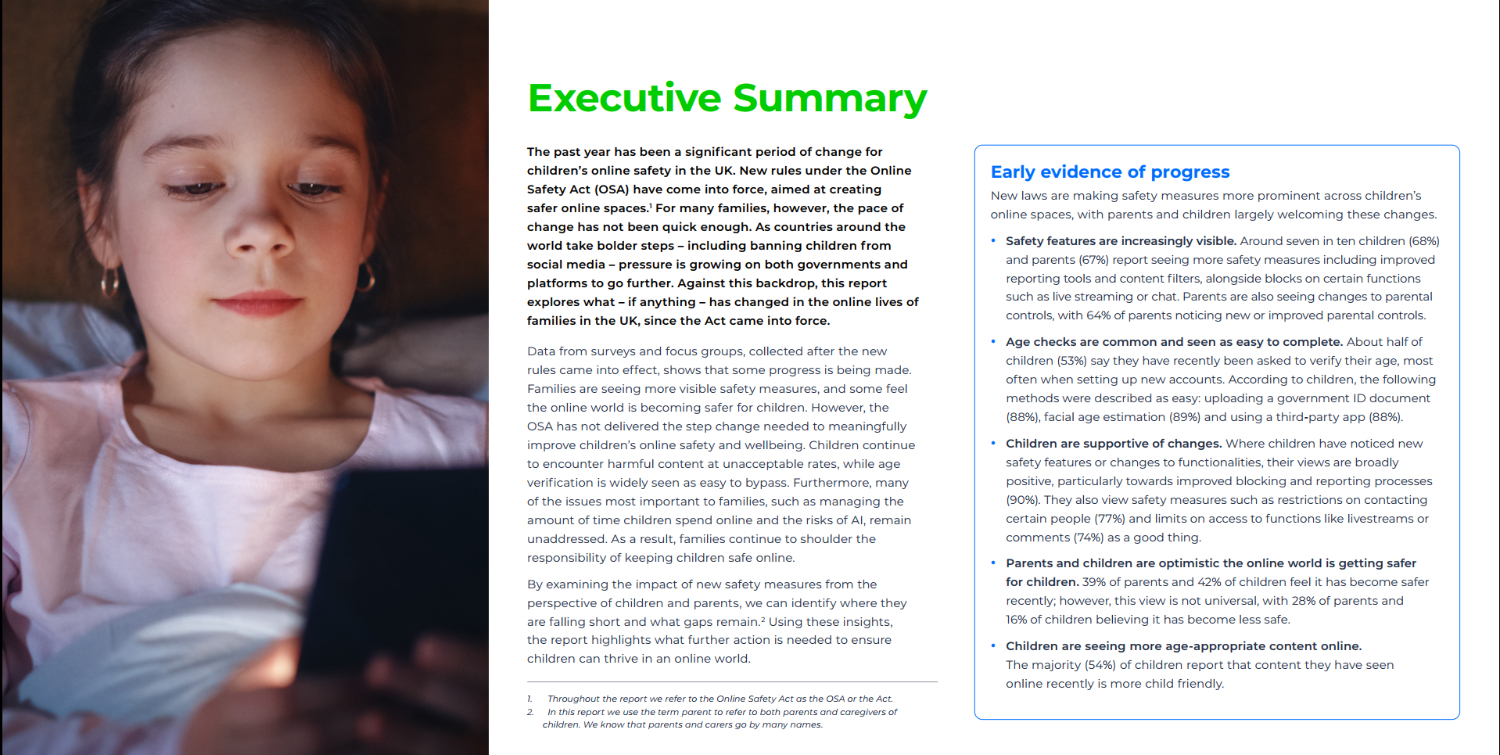
Photo: Internet Matters
A report by Internet Matters, based on a survey of 1,000 children and parents across the United Kingdom, highlights a significant disconnect between policy and reality. While the OSA has pressured platforms to prioritise safety, the survey found that 46% of underage children consider bypassing these systems to be “easy”.
The methods of evasion vary from the rudimentary to the theatrical. While most children simply input a false year of birth, others have found ways to trick biometric systems. In cases where platforms use facial analysis technology, some youths reported using make-up or attaching fake moustaches to appear older than their actual age.
The effectiveness of these barriers is further called into question by the discovery that 49% of children still encounter harmful content online despite the new measures. This suggests that while the law has increased the “safety theatre” on many apps, the underlying technology remains vulnerable to basic manipulation.
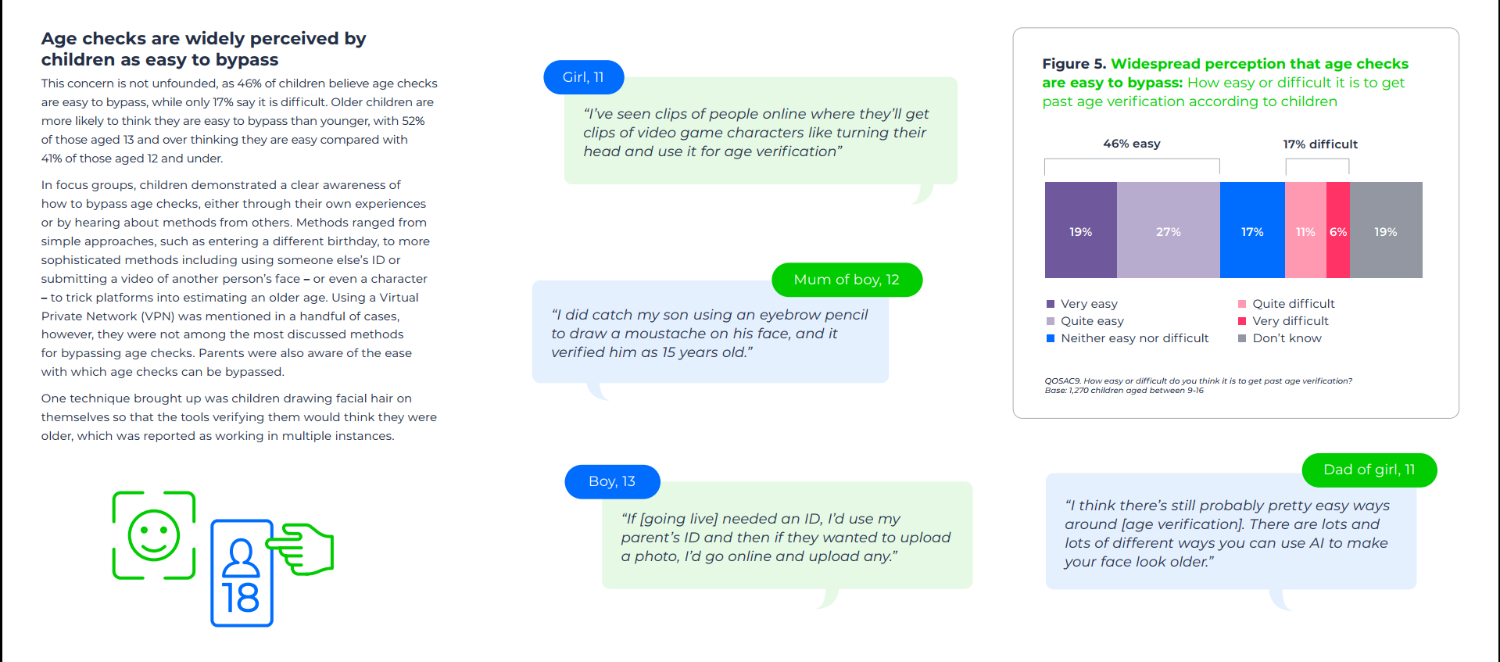
Photo: Internet Matters
Beyond traditional adult content, British parents are voicing growing concerns regarding:
AI-generated content: Deepfakes and synthetic media that are difficult for children to distinguish from reality.
Screen time: The addictive nature of algorithms that keep youths online for excessive periods.
Safety-by-design: The lack of fundamental safety features built into the core architecture of social media apps.
Internet Matters argues that age verification should not be treated as a “silver bullet”. The organisation advocates for a “safety-by-design” approach, urging developers to integrate protections at the conception stage of a product rather than as an afterthought or a reactive measure to legislation.
Furthermore, the report suggests that platforms must adopt a more nuanced, risk-based approach. This would involve assessing specific features and content types for their potential impact on different age groups, rather than applying a “one-size-fits-all” standard to every user.
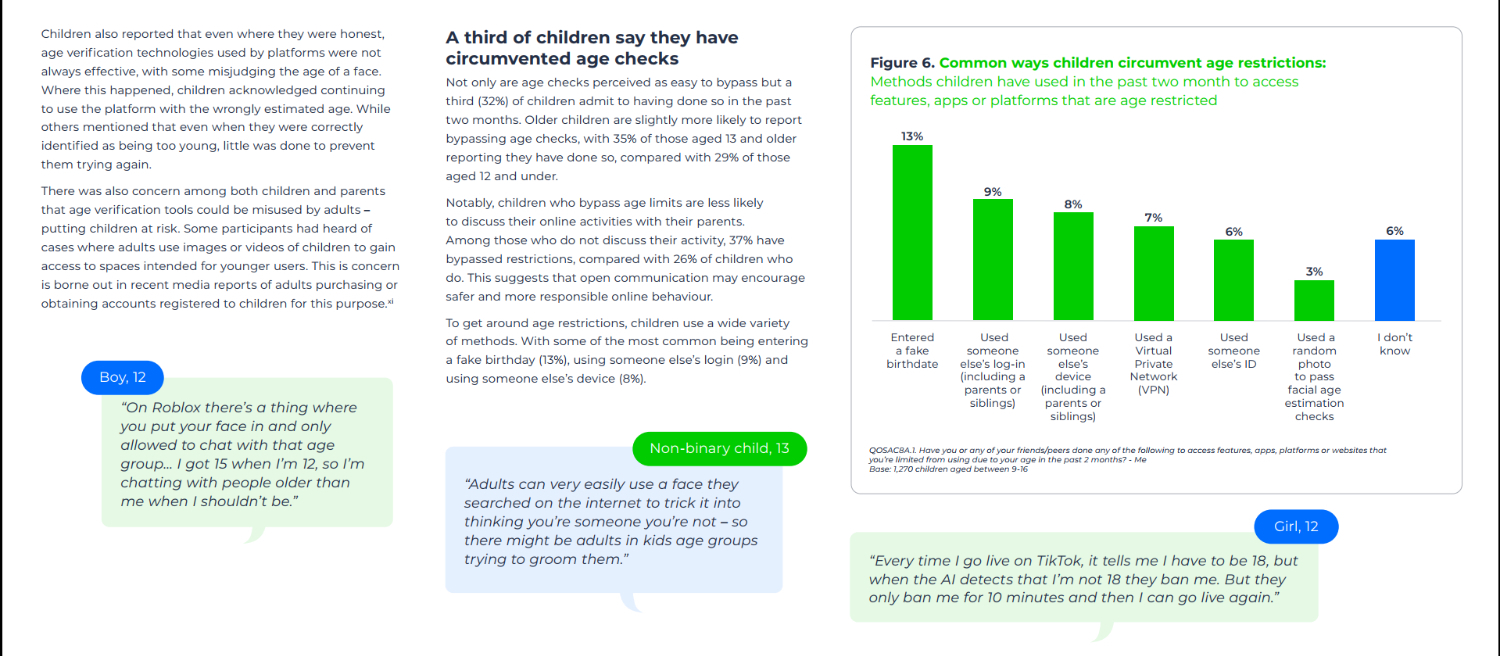
Photo: Internet Matters
The persistence of bypass methods like fake moustaches and fraudulent birthdates underscores the need for more sophisticated, reliable verification methods. Digital rights advocates suggest that if systems remain this easy to trick, the risk to minors remains effectively unchanged despite the legal mandates.
In addition to technical fixes, the report emphasises the necessity of media literacy. Internet Matters is calling for a collaborative effort between schools, the government, and tech companies to educate both parents and children on how to navigate digital risks and report inappropriate content.
Ultimately, the findings serve as a stark reminder that the Online Safety Act is merely a starting point. Without more stringent enforcement and a closing of the technical loopholes that allow children to “play dress-up” to access restricted sites, the gap between the law’s ambitions and the reality of the British internet will continue to widen.
Source: The Register, Internet Matters, Neowin
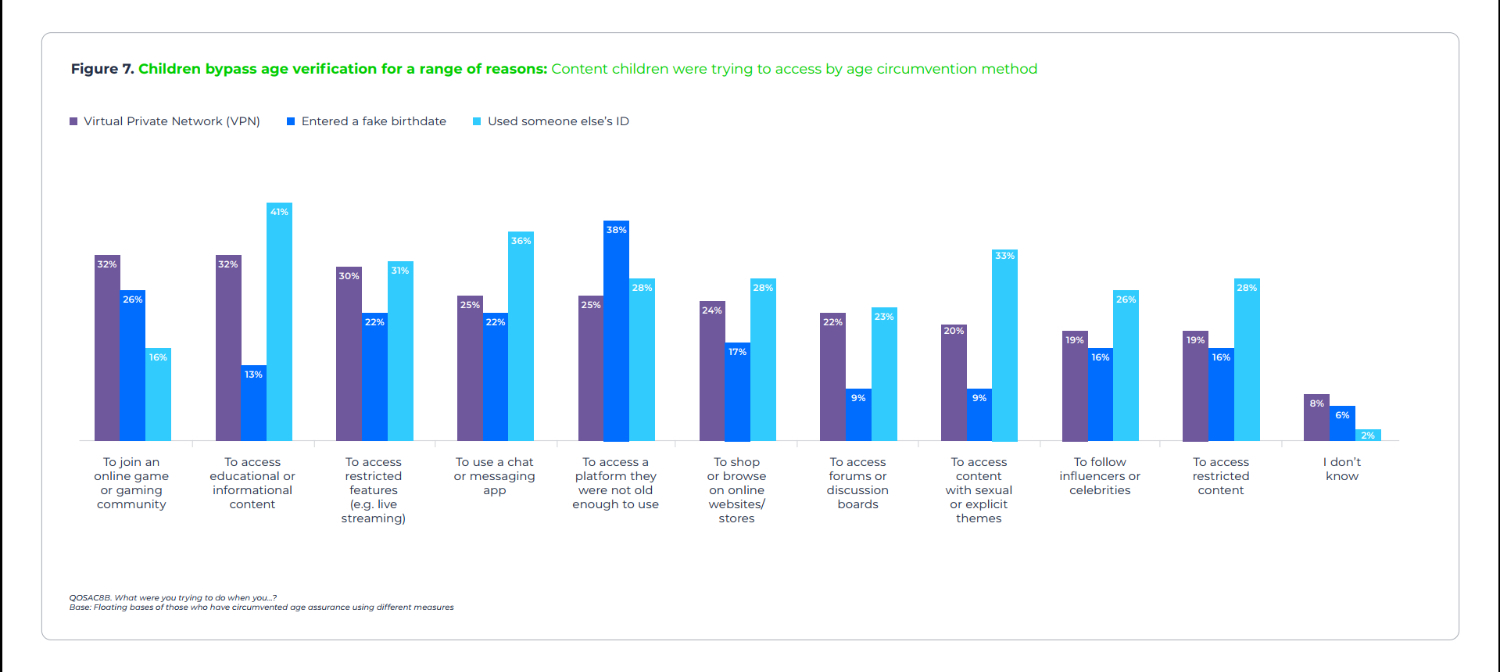
Photo: Internet Matters
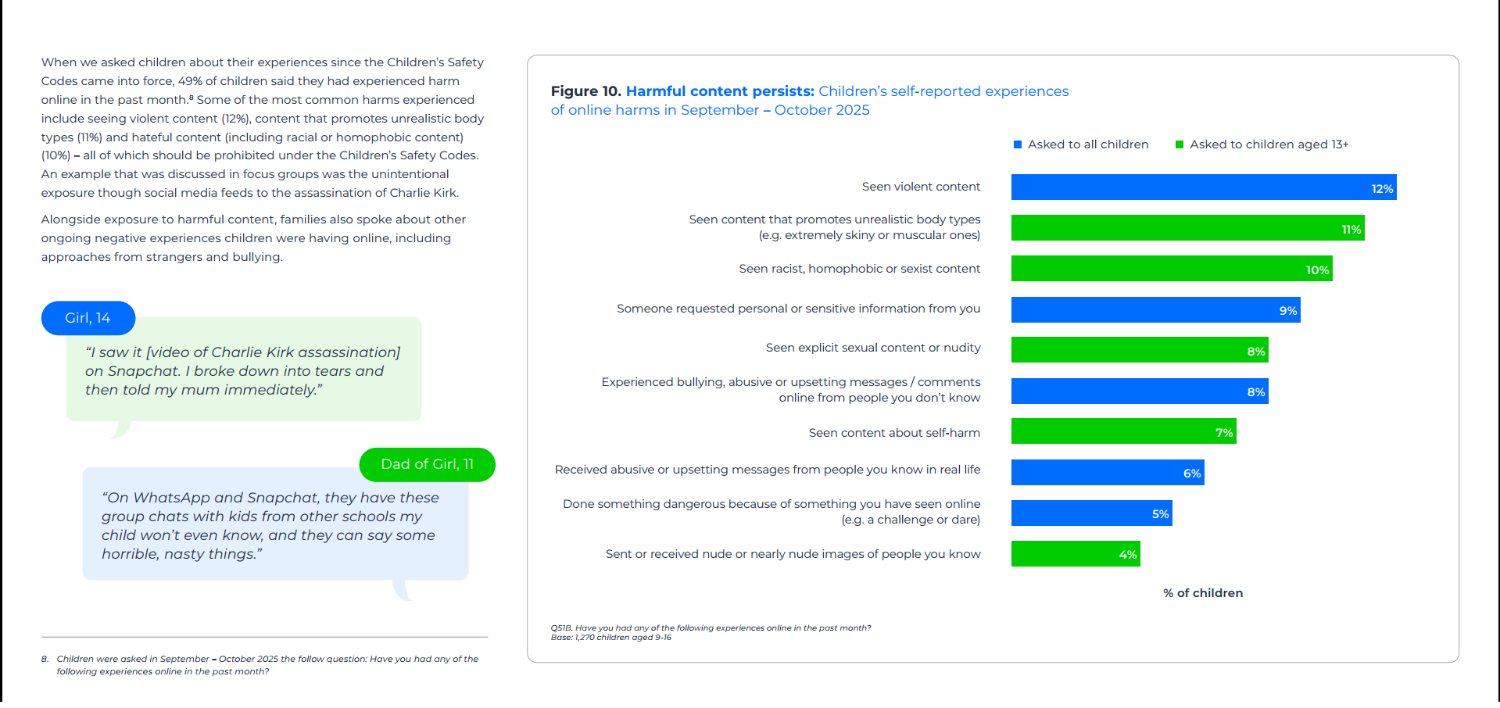
Photo: Internet Matters