My question is whether Thailand can change or will change after all.
Suvit Maesincee
Former minister of higher education, science,
research and innovation
Charting a course for a better tomorrow
Former education minister says it’s time to ditch ‘echo chamber’ mentality and focus on geopolitical big picture to effect real change, writes Mongkol Bangprapa
As the Bangkok Post celebrates its 80th anniversary this year, we turn our attention to the voices of thought leaders whose decisions today will chart the course of Thailand’s tomorrow.
Suvit Maesincee, the former minister of higher education, science, research and innovation, is one of these influential figures. His perspectives reflect not only the dynamism of Thailand’s evolving society but also the responsibility of leadership in an era of rapid change.
Looking forward to Thailand’s future directions, Mr Suvit sat down with the Bangkok Post to discuss the country’s geopolitical challenges and the changes Thailand needed for the better.
Comparing it with a global perspective, Mr Suvit summarised Thailand’s future as “Challenging World, Sickening Thailand”, a world playing from what he thought it should be: “Challenging World, Changing Thailand”.
“My question is whether Thailand can change or will change after all. We needed to focus on an understanding of the global challenge in the current context, as both world order and competition platforms have been changed at this point,” said Mr Suvit.
He said the world has shifted from a globalisation trend that prioritised global unity into at least five geological dimensions: geopolitics, leveraging geoeconomics, geostrategy, geological technology, and geoarchitectures.
“We needed to understand it all with its connections to other city dimensions, such as how geoeconomics and technologies are both determined by national infrastructures. Such understanding will go further to another point, such as how the closure of the Strait of Hormuz can leave an even bigger impact than just a physical conflict with Iran,” said Mr Suvit.
However, he also posed a question: “How much do state leaders know about such big picture perspectives, and is the public’s worldview limited to what directly impacts them, as it seemed?”
Swing States
The world today has been unsettled by a multitude of challenges. According to Mr Suvit, one action can “unplug” global mobility and leave the world in chaos, such as how the closure of the Strait of Hormuz disrupts energy distribution, global finance, and even data transfers.
The other challenges included how the world is weaponising everything, such as the financial system and the tax wall, and the growing polarisation of public consciousness driven by the rise of artificial intelligence (AI).
“Living in an echo chamber will inevitably lead to drastic conflicts within society — from national political disputes fuelled by information operations [IO] to rifts between former allies such as Europe and the United States,” said Mr Suvit.
Such conflicts have led some countries, such as India, to adopt the role of swing states, aligning with different global powers as circumstances demand, while ultimately prioritising their own national interests. Such moves, Mr Suvit explained, would help polarise global powers, but solely for the purpose of competition, leaving the world in a trust crisis.
Mr Suvit said that today’s global challenges are no longer defined by access to natural resources, but by control over financial systems, energy networks, and digital infrastructures.
“The other concern is the existence of multiple sets of truth in today’s world. From the rule of law to ideology, narratives are now shaped by algorithms on social media platforms. Ideological sovereignty is dictated by the owners of these algorithms, while innovation is rendered ineffective as platforms can be manipulated through the flow of data,” said Mr Suvit.
New Rule, Still Standing
As a swing state with the potential to emerge as a middle-power nation, Thailand benefits from its strategic advantages, particularly its location between two oceans, Mr Suvit noted.
However, the kingdom remains stuck in an old mindset despite the emergence of new legal frameworks. Mr Suvit said the country’s politics continue to focus narrowly on immediate domestic issues rather than on the future and the country’s global connections.
“This is concerning, as Thailand is now focusing on policies that help people for the short term, such as energy savings and price surplus, and then we are calling it a day. Thailand should look to its future, especially its involvement with global issues and mitigating long-term issues, including its Asean cooperation, human resources, and innovation,” said Mr Suvit.
He added “the question remains how Thailand can play with global investments, as industrial and exploration revolutions are rated as outdated approaches on the matter”.
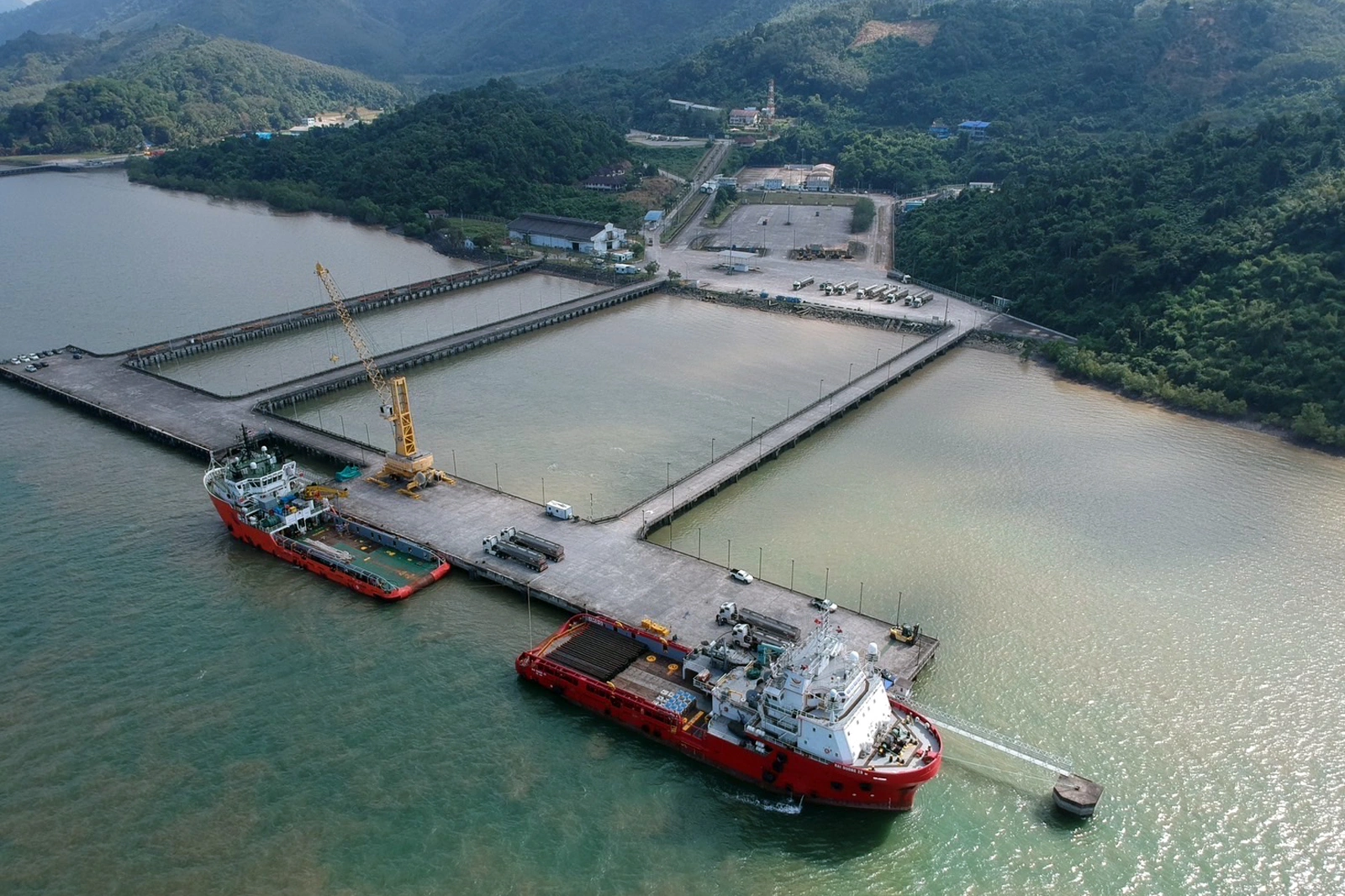
Building on the country’s strategic advantages, Mr Suvit suggested it pursue more proactive strategies, such as the Land Bridge megaproject, which could prove beneficial if the Strait of Malacca were ever fully closed for a prolonged period.
“Thailand’s strategy, however, has focused tentatively on the domestic power game, with the deep state and the opposition’s immediate issues halting its development. The world wants a more off-state game now, which means that Thailand has to be more proactive in planning strategy,” said Mr Suvit.
Thailand Imagineering
He suggested the country adopt a new operational framework called “Thailand Imagineering”, a fusion of the words “imagine” and “engineering”, to align the nation with emerging geopolitical currents.
Thailand needs to engineer three primary skills to pursue development, in his opinion: the ability to rapidly self-align, mechanisms for consensus between the private sector and society in times of declining trust in government, and a forward-looking framework jointly designed by the public and private sectors.
Regarding what Thailand can take from the current world crisis, Mr Suvit also suggested three pieces of advice to make the nation more capable.
One is creating energy sovereignty, rather than relying on imported energy, as much as possible. Yet “there is a deep state issue inside the Energy Ministry, which limited the initiative and may drag the country down even more,” Mr Suvit said.
Other priorities, he added, include the development of new logistics systems, such as the Land Bridge project and railway connections across Asean, moving beyond a singular focus on China; and the adoption of middle-power policies to strengthen Thailand’s role in the Indo-Pacific region.
As the nation’s development is currently in a “no pain, no gain” state, Mr Suvit summarised the situation by saying Thailand should transition from a production base into an active connector. Given the good standing it enjoys with many nations, such as Russia, the US, and China, Thailand ought to strengthen its geopolitical ecosystem while sustaining its position in the global arena.
“We must ride the wave to restore balance in today’s geopolitical landscape. Our sustainable economic system, together with the Buddhist way of life, should serve as the core values driving us toward our ultimate goal,” Mr Suvit added.