
Data centres and computing power will become as critical to national competitiveness as transport and energy infrastructure.
Suphachai Chearavanont
Senior vice-chairman, Charoen Pokphand
Group
Telecom sector spearheads AI transition
Suphachai Chearavanont believes telecom companies of the future will evolve into integrated digital infrastructure providers, writes Komsan Tortermvasana
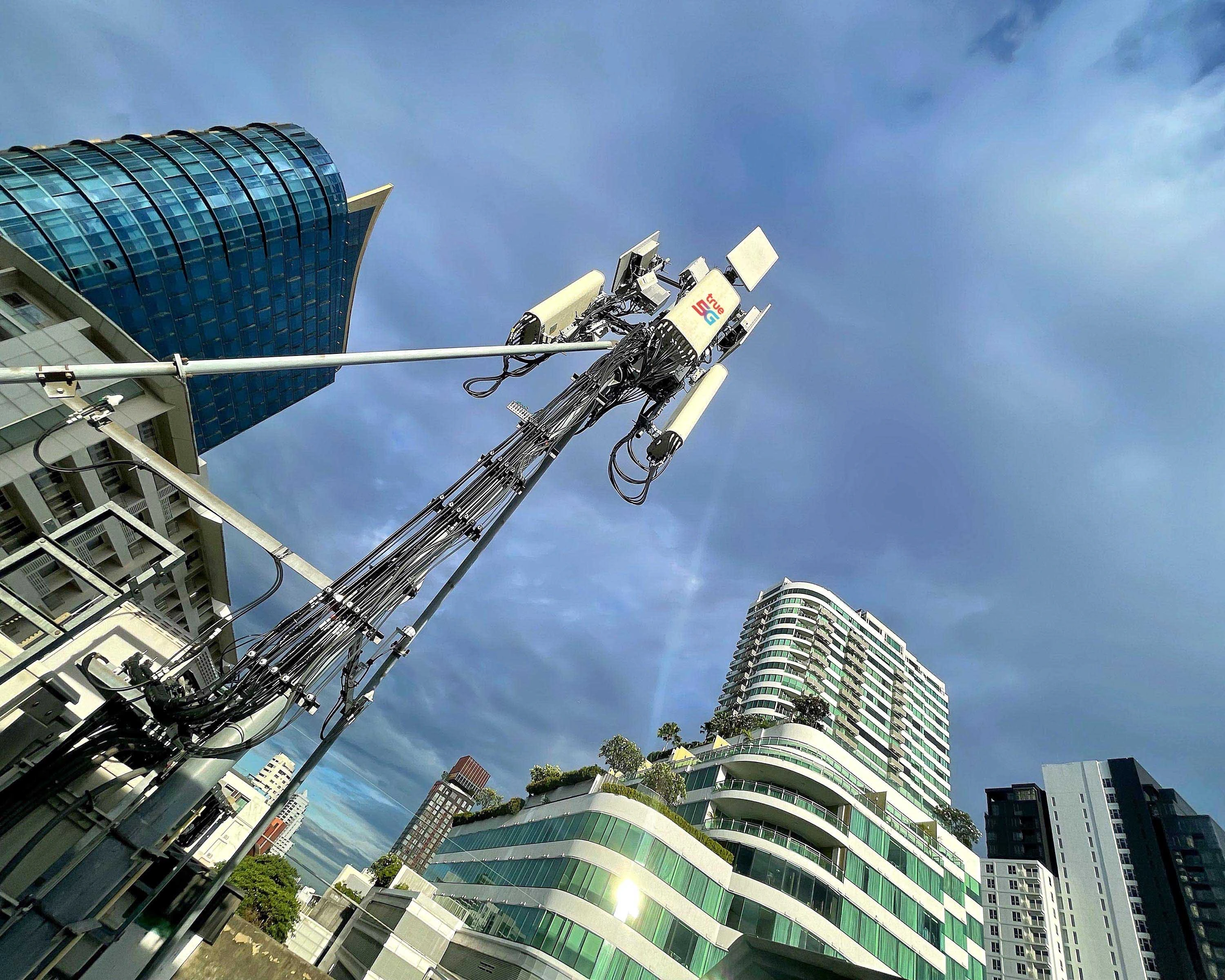
Evolving from providing connectivity to an intelligence infrastructure, Thailand’s telecom industry is reinventing itself for the artificial intelligence (AI) era, says Suphachai Chearavanont, senior vice-chairman of Charoen Pokphand Group and board chairman of True Corporation.
Few industries have transformed as dramatically over the past three decades as telecom, he noted. What began as a business centred on voice calls and text messaging has evolved into the digital backbone of modern economies, powering everything from cloud computing and financial services to AI and smart industries.
According to Mr Suphachai, the industry is now entering its most significant transition yet — a shift from providing connectivity to becoming the intelligent infrastructure underpinning the global AI economy.
Telecom Evolution
Thailand’s telecom sector has undergone several transformative phases, beginning with fixed-line services and basic voice communications before progressing through the broadband and mobile internet revolutions.
The introduction of 3G, followed by 4G and 5G networks, fundamentally changed how businesses and consumers interact, enabling the rise of digital platforms, e-commerce, mobile banking, streaming services and cloud-based applications.
Mr Suphachai noted the competitive landscape today bears little resemblance to the industry of the past.
Historically, telecom operators competed primarily on network coverage, subscriber growth and pricing strategies. Today, they operate within a vast and more complex ecosystem, where global technology giants increasingly shape consumer behaviour and digital consumption patterns.
Companies such as Netflix, YouTube, TikTok, Line, cloud service providers and AI platform developers have become powerful forces influencing the telecommunications value chain.
As a result, telecom operators no longer solely compete against one another but also against global digital platforms as all of them are operating within broader digital ecosystems.
“The boundaries between telecom companies and technology companies are steadily disappearing,” Mr Suphachai said.
Entering the age of AI infrastructure, the next phase of competition will not be defined by network coverage or subscriber base alone, but by the telecom operators’ capacity to build complete ecosystems, covering telecommunications, AI, cloud computing, cybersecurity, financial technology and various digital platforms.
Mr Suphachai believes telecom companies of the future will evolve into integrated digital infrastructure providers, supporting AI-driven economies through advanced computing capabilities, data centres and cloud platforms.
In this emerging landscape, the digital infrastructure will become as strategically important as roads, ports and electricity grids were during previous industrial eras.
“Data centres and computing power will become as critical to national competitiveness as transportation and energy infrastructure,” he said.
Countries capable of building their own digital infrastructure ecosystem will gain significant economic advantages, while those dependent on foreign technology platforms may face challenges relating to costs, competitiveness and long-term technological sovereignty, he added.
He said Thailand possesses several structural advantages that could position it as a leading digital hub in Southeast Asia.
Among the structural advantages are its strategic location at the heart of the region, combined with expanding digital infrastructure and the readiness of the business sector to adapt.
Thailand’s Future
Mr Suphachai said in the future countries’ competitiveness will be defined by technology, data and human qualities.
The countries with strong competitiveness are the ones that can build robust digital infrastructure and quickly equip human capital with digital and AI skills.
Mr Suphachai said Thailand should create stronger linkages between foreign investors, local universities and domestic innovation ecosystems.
He said that as Thailand is transitioning into the AI era, the factors that will shape up its future direction are its ability to adapt, the speed of its human capital development and the utilisation of technology to boost productivity and upgrade peoples’ living quality.
AI is not only about technology companies but a tool to uplift the country’s educational system, public health system, and bolster the economy, he said.
He added that all these highlight the increasingly important roles of the telecom sector as it is the main pillar of the digital economy and a key mechanism in supporting the country’s competitiveness in the long run.
Regarding global increasing uncertainties, including the impact of geopolitical conflict, Mr Suphachai said Thailand has to speed up development of human, technology and infrastructure to boost its competitiveness in the long term.
Thailand must accelerate drawing investment worldwide, especially investment in next-generation industries, to create economic growth.
Moreover, human capital will determine Thailand’s future competitiveness. The country must accelerate educational reforms by integrating AI, computing science and digital technologies into curricula from primary education through higher education.
He said Thailand currently has more than 9 million students in basic education and over 2 million university students. Developing future-ready digital skills across all these students could significantly enhance the nation’s long-term productivity and competitive edge.
Mr Suphachai said policymakers should introduce incentives that can encourage world-class researchers, engineers and technology specialists to live and work in Thailand through competitive tax policies, supportive visa programmes and innovation-friendly ecosystems.
He added that global data centre and hyperscalers companies are parading to invest in Thailand, especially those from the US and China. Thailand should capitalise on this trend to create its strategic benefit.
Thailand should require these companies to set up R&D centres here, establish linkages with local universities, and join with Thailand in developing advanced industries such as AI, robotics and semiconductors.
He also suggested Thailand maintain its balancing position between powerful countries amid intensifying geopolitical conflict in order to convert crisis into opportunity.
Next Chapter
Mr Suphachai said the recent emergence of Arise Ventures Group Company Limited as the major shareholder of True Corporation reflects growing confidence in the True Group and in Thailand’s digital future.
Mr Suphachai, who is also chairman and chief executive of Arise Ventures Group, said True’s strategic direction will place a greater focus on transforming from a traditional telecom operator into a telco-tech and AI-first organisation.
The company will achieve these goals by leveraging its nationwide connectivity infrastructure, extensive customer base and digital assets while integrating capabilities across the broader CP system.
The broader system includes financial technology services through Ascend Money, data centre operations via True IDC, cloud services, digital platforms and emerging AI businesses.
The objective is to create a comprehensive digital ecosystem that combines connectivity, financial services, cloud infrastructure, data analytics and AI into a unified platform serving both consumers and enterprises.
“Such integration could position True to capture growth opportunities, not only as the telecom operator but also as the digital ecosystem platform that can bring new experiences to customers and the business sector.”
He added that Thailand and Southeast Asia have high growth potential in the AI era. Therefore, True Group’s direction from now on will focus on building growth through its businesses of AI, digital services, cloud and data centres as all of these will play increasingly crucial roles in the Thai economy and people’s lives in the future.