
When customers trust a brand, they are likely to bring emotions to their spending decisions.
Atchara Burarak
Founder, Iberry Group
Thai food industry urged to raise standards and focus on quality
Iberry Group suggests the government and entrepreneurs should coordinate to add value to 2 sectors, writes Kuakul Mornkum
Thailand possesses strong and distinctive raw materials and cultural assets, but relying on them without adding value could be a mistake, says Atchara Burarak, founder and creative director of Iberry Group, one of Thailand’s leading restaurant chains.
The value added to Thai products must come from deep knowledge, advanced technology, strong branding and consumer trust, she noted. These elements will elevate Thai products, particularly in the food sector, enabling them to expand beyond Thailand’s borders.
The food industry is a crucial economic driver for Thailand, and represents more than just restaurants and food products. It is connected through a long supply chain that includes agriculture, food processing, packaging, logistics, wholesale and retail trade, and tourism, said Mrs Atchara.
Thailand’s food service industry alone was estimated to be worth 675 billion baht in 2025, according to a report published by Siam Commercial Bank Economic Intelligence Center (EIC) in November 2025.
Mrs Atchara questioned whether Thailand’s economy has focused too heavily on volume, and believes the country should instead place greater emphasis on quality.
“In the past, one of Thailand’s strengths may have been low-cost labour, which attracted investment and promoted affordable tourism. However, I believe Thailand now needs to shift its competitive advantage from low-cost production to delivering greater value to consumers,” said Mrs Atchara.
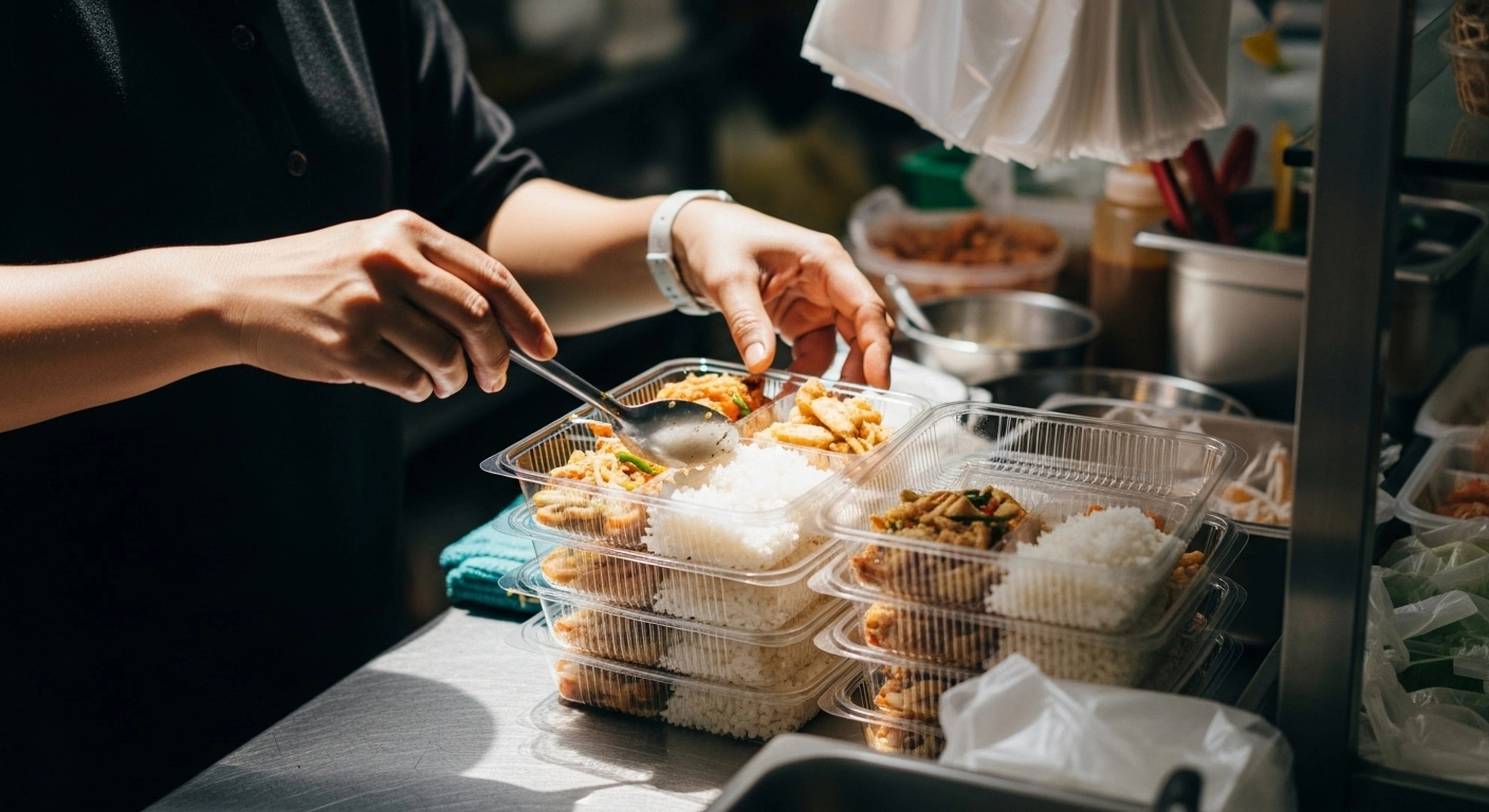
She said that Thailand must focus on developing quality products and selling them effectively. All stakeholders should focus on building strong branding.
“If Thailand were a brand, its strengths would be its food and culture, tourism, hospitality, and wellness sectors. Thais are well-known for their creativity. We possess a unique charm and selling points unlike anywhere else in the world,” she said.
In terms of cuisine, Thailand has one of the world’s strongest culinary identities. The country offers a diverse range of food that has gained recognition around the globe.
However, she believes Thailand could do more to promote its gastronomy and hospitality sectors globally.
“Brand building is fundamentally based on trust,” she emphasised, adding that creating value for Thai products, both domestically and internationally, begins with trust.

WORKING IN HARMONY
“When customers trust a brand, they are likely to bring emotions to their spending decisions,” she said.
Building trust begins with stronger synchronisation between the government and the private sector, she says.
She believes there is a lack of coordination between the two sectors. If both worked in harmony, it would foster prosperity and strengthen confidence among both domestic and international investors.
Mrs Atchara cited Japan as an example of stakeholders working in synchronicity. The country is renowned for its tourism, supported by high-quality infrastructure, public safety, and clean cities.
Visitors also recognise the quality of Japan’s agricultural products, with distinctive regional produce that is widely regarded as exceptional. Achieving this level of excellence requires consistent government support and coordination.
For Thailand’s food industry, she believes the government could provide greater support in many ways, beginning with improvements in food quality.
On the agricultural front, the quality of fruits and vegetables is crucial. Every step is important, from cultivation and soil quality to packaging and distribution.
Addressing pollution and reducing the use of harmful substances such as pesticides would also improve the overall quality of Thailand’s food products, she added.
This requires a deeper understanding of the root causes. Such efforts require close coordination among all stakeholders. Thailand could leverage the expertise and knowledge of specialists across sectors to develop high-quality cultivation processes and products and build trust with customers.
Mrs Atchara pointed out that obtaining licences for restaurants remains difficult and time-consuming. Restaurant permits can take months to secure, while trademark registrations often take years.
She suggested establishing a one-stop service to streamline procedures, from construction permits to utility approvals, and recommended greater adoption of artificial intelligence technology within government systems.
“If there were speed and efficiency, the country would move forward much faster,” she said.
Developing a restaurant business from a small operation into a large enterprise is not easy, as it requires significant investment in costly infrastructure, she explained.
She said the government should provide shared food-production facilities or centralised preparation hubs where small businesses could lease space at affordable rates, helping them scale more efficiently.
“If the private sector and the government work together and pursue policies in the same direction, there will be a strong force to move the country forward,” she said.
Furthermore, she emphasised that strong cultural elements, collaborative efforts, attention to detail and compelling storytelling are essential for success. These factors would help to foster the success of “Product of Thailand”.
Mrs Atchara also noted that political instability can undermine investor confidence. Frequent changes in government may cause policies to stall or be abandoned. As a result, policy continuity is critical.
In the long term, she believes Thailand should focus on educational reform. The knowledge taught in schools must be modern and relevant to global developments.
“To build a successful branding for the country, we need good raw materials, knowledge, innovation, synchronised efforts between the government and private sectors, investor confidence, and above all, trust,” she said.