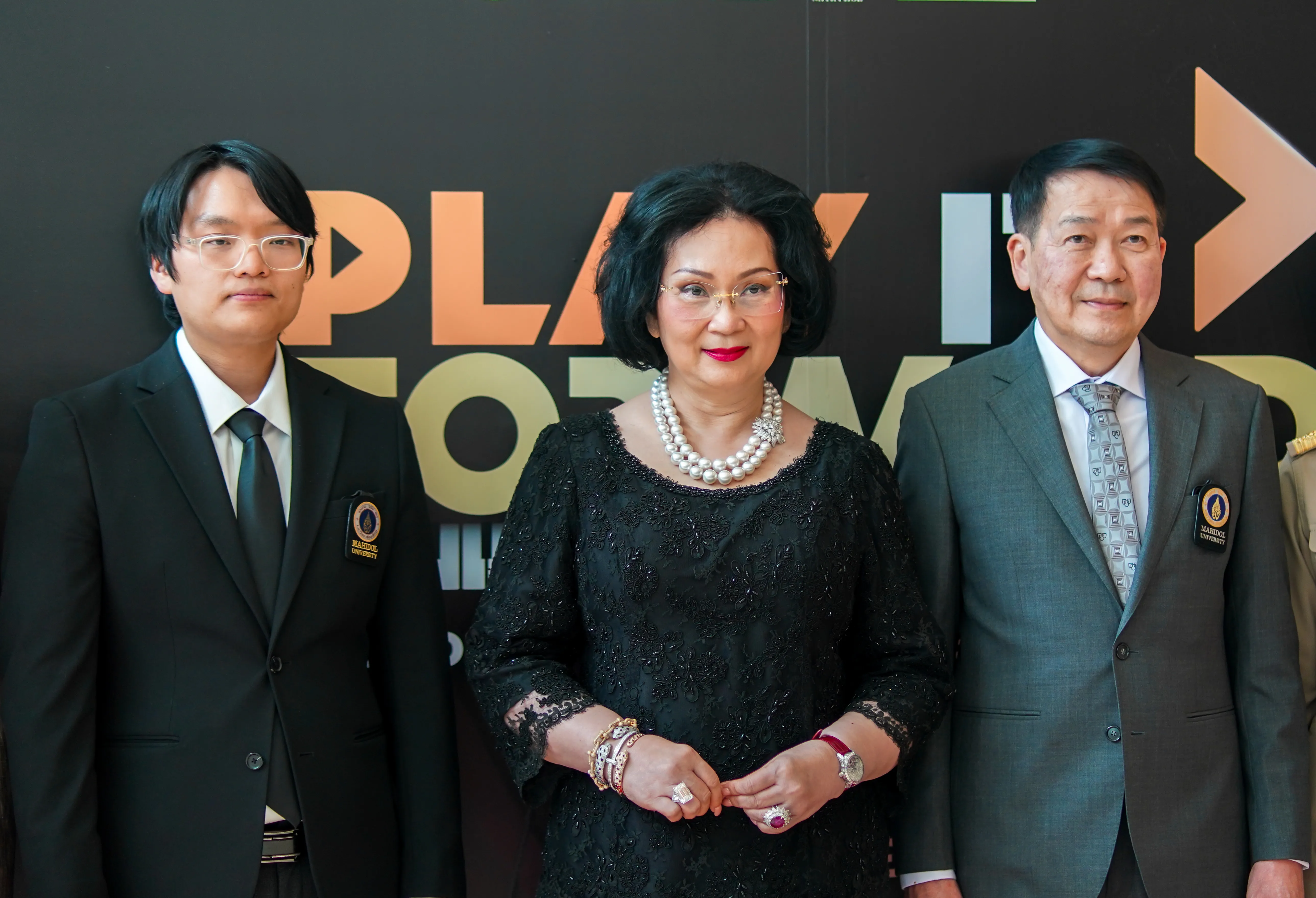
In the future, the greatest competitive advantage of any nation will not be technology itself, but the quality of its people.
Khunying Patama Leeswadtrakul
Member of the International
Olympic Committee (IOC), chair of the IOC Culture and Olympic
Heritage Commission, and president of the Badminton World
Federation
Investing in People, Building Thailand’s Future
Khunying Patama argues character, resilience and opportunity will determine long-term success in an AI-driven era
Khunying Patama Leeswadtrakul is one of Thailand’s most accomplished business figures and philanthropists. Having achieved success across a range of business ventures, she now devotes much of her time to public service, with a particular focus on sport, education, culture and youth development. Her long-standing commitment to these fields reflects a belief that investing in people is the foundation of national progress.
A passionate advocate of sport, Khunying Patama has played a pivotal role in advancing Thai and international badminton. She served as president of the Badminton Association of Thailand before being elected a member of the International Olympic Committee (IOC) and later president of the Badminton World Federation (BWF).
In 2017, Khunying Patama was nominated by the IOC Members Election Commission, then chaired by Princess Anne of the United Kingdom, and subsequently approved by the IOC Executive Board, becoming the first Thai woman elected as an individual member of the IOC.
Beyond sport, she has also supported numerous initiatives in education, music, arts, culture and heritage, making significant contributions to youth development and Thai society. Khunying Patama is married to Dr Somsak Leeswadtrakul, a low-profile steel magnate and philanthropist.
Drawing on decades of leadership experience in business, sport and public service, she shares her vision of how Thailand can build a stronger future by investing in its people.
For many years, the success of nations has often been measured through economic indicators such as GDP, investment and productivity. While these remain important, Khunying Patama believes the true strength of a country lies elsewhere — in the quality of its people, the resilience of its communities and the values that hold society together.
As a member of the IOC and BWF president, she has spent decades working with athletes, educators, administrators and young people from around the world. That experience has reinforced a conviction that the future success of nations will depend not only on economic performance or technological advancement, but on their ability to develop capable, ethical and resilient citizens.
“In the future, the greatest competitive advantage of any nation will not be technology itself, but the quality of its people,” she says.
That belief shapes her view of sport, education and national development.
While many people associate sport with medals, records and international recognition, she argues that its greatest contribution is not the champions it produces, but the people it helps shape.
Sport teaches discipline, responsibility, perseverance, respect, integrity and teamwork. It helps young people learn how to deal with disappointment, recover from setbacks and continue moving forward when circumstances are difficult. These are not merely sporting qualities, but life skills and leadership qualities that every society needs.
In an age increasingly influenced by technology and artificial intelligence, knowledge alone will not be enough. Technology can provide information, but it cannot replace character. Sport remains one of the most effective environments in which values such as fairness, respect, accountability and ethical behaviour are learned through experience.
Beyond individual development, sport also strengthens communities and promotes national unity. It brings together people from different generations, cultures and backgrounds while creating opportunities for young people to discover their potential, build confidence and pursue aspirations that might otherwise seem beyond reach. As a universal language, sport also helps build bridges between nations and cultures, reflecting the Olympic Movement’s long-standing ideals of friendship, understanding and peace.
Sport’s contribution extends beyond the playing field. It supports tourism, creates employment and has become an increasingly important source of soft power, enabling countries to project their values, strengthen partnerships and enhance their international reputation.
“Medals may inspire a nation for a moment, but people of character strengthen a nation for generations,” she says.

The same principle applies to education.
In a world shaped by artificial intelligence, digital innovation and rapid social change, technical knowledge will remain essential, but Khunying Patama believes qualities such as integrity, responsibility, honesty, compassion and sound judgement will become even more valuable. Artificial intelligence can process vast amounts of information, but it cannot replace conscience or moral judgement.
“AI can give people extraordinary capabilities, but ethics determines how those capabilities are used.”
She believes young people must learn to think critically, distinguish facts from misinformation and understand both the opportunities and ethical responsibilities that accompany new technologies. Lifelong learning, adaptability and resilience will become indispensable, while communication, collaboration, emotional intelligence and the confidence to engage with different cultures will remain qualities that technology cannot replace.
Drawing on her international experience, Khunying Patama says countries that succeed over the long term share a common philosophy: they invest consistently in people. They create opportunities regardless of background, integrate education with sport, culture and community engagement, and recognise that young people learn not only in classrooms but also through experience. They also invest in teachers, coaches and mentors who help shape character and inspire future generations.
Looking ahead, she hopes Thailand will become a nation that places people at the centre of development. Economic growth remains important, she says, but it must be accompanied by stronger education, greater opportunity, innovation that improves quality of life and a commitment to sustainability. Thailand should continue to build on its cultural heritage, creativity and talented young people while contributing ideas and expertise to the international community.
“The strongest national image is built not on what a country says about itself, but on what it contributes to others.”
For that reason, she believes sport, culture and youth should be viewed not simply as assets to showcase, but as strategic strengths that enhance Thailand’s contribution to the world. Achieving that vision will require long-term thinking, collaboration across sectors and sustained investment in future generations.
Despite the challenges ahead, she remains optimistic. Thailand possesses talented people, strong cultural foundations and enormous potential. If the country continues to invest in people, uphold strong values and expand opportunities for future generations, she believes it can become not only a more prosperous nation, but also a more respected and admired one.
“Ultimately, the most important investment any country can make is not in technology alone, but in developing better human beings.”