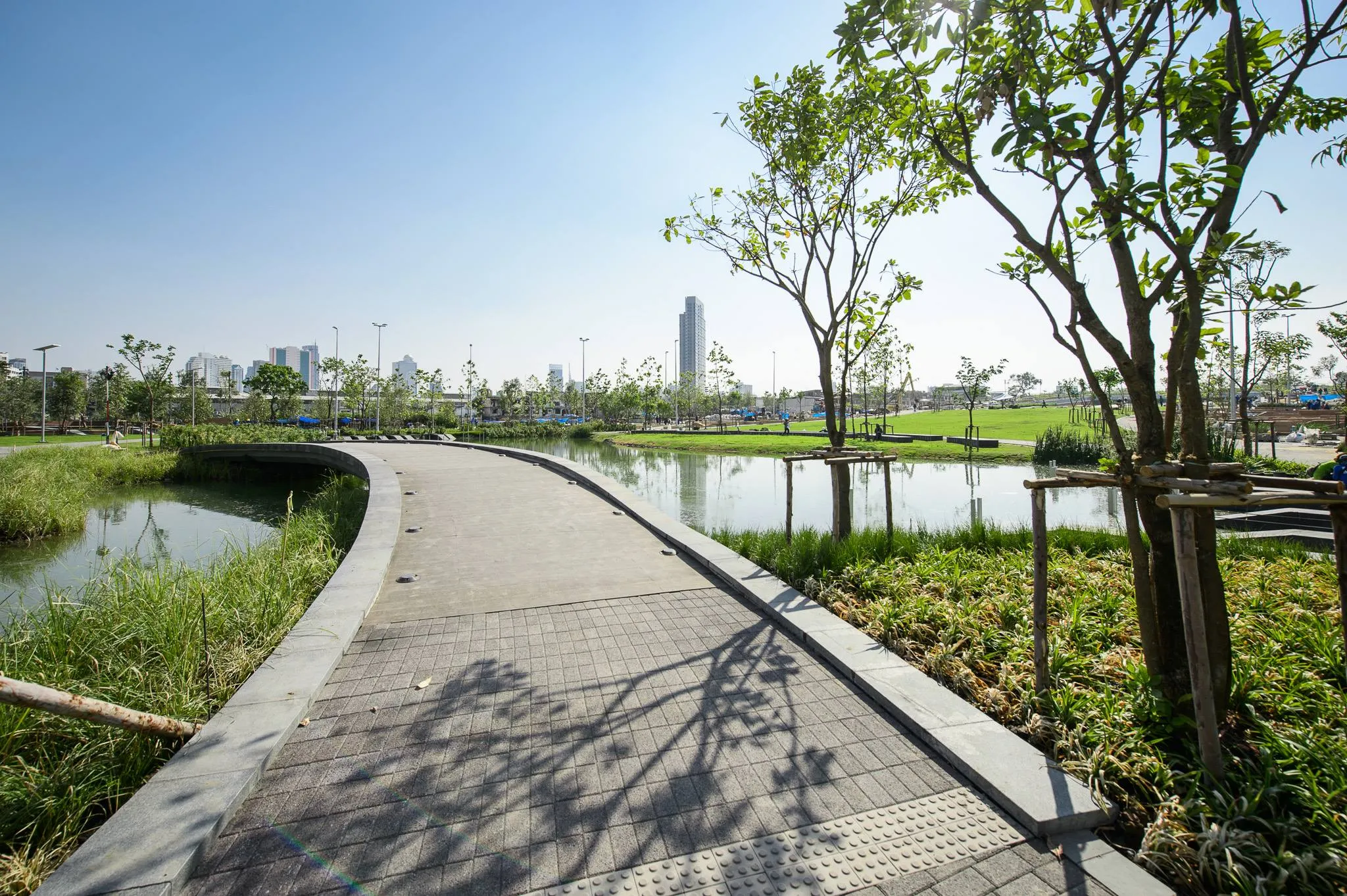
Nature is not optional. It is as important as electricity or water systems because our lives depend on it.
Kotchakorn Voraakhom
Landscape architect and environmental
advocate
Learning to live with nature
To prevent climate disasters, Thailand must shift its development mindset from trying to control the environment to coexistence, writes Tatat Bunnag
For much of the past two decades, Thailand pursued development with little regard for the environment. Urban expansion, mega-projects and rapid economic growth often took priority over sustainability, while climate change remained a distant concept for many people.
According to landscape architect and environmental advocate Kotchakorn Voraakhom, that mindset is now colliding with reality.
“Twenty years ago, environmental protection did not feel important to most people,” she said. “People focused entirely on urban planning and development without considering what it means to survive or live well in the city.”
Ms Kotchakorn, founder and CEO of Landprocess and the Porous City Network, has become internationally recognised for her work on climate resilience and nature-based urban design. Her projects, including Chulalongkorn University Centenary Park and Thammasat University Rooftop Farm, have gained global attention for reimagining how cities can coexist with water rather than constantly fighting against it.
Her work is relevant in Thailand, where recurring floods, worsening PM2.5 pollution and climate-related disasters have exposed the limitations of conventional development models.
Looking back, Ms Kotchakorn believes Thailand spent too many years treating environmental concerns as secondary issues.
“The term ‘climate change’ only started being seriously discussed in the last ten years,” she said. “For a long time, people thought everything was fine and there was nothing to worry about.”
Although public awareness has improved, she argues that Thailand still struggles to translate environmental policy into meaningful action.
“There is always a missing link between top-down policy and what actually happens on the ground,” she explained. “We can announce climate goals or net-zero targets, but when you look at reality, it often feels like a completely different world.”
For Ms Kotchakorn, the issue is not the absence of policy itself, but the slow pace of implementation and the disconnect between national ambitions and local realities.
“We are still debating policy while people are already suffering from problems like PM2.5 every day,” she said. “The consequences have already caught up with us.”
Much of her criticism focuses on the country’s long-standing dependence on engineering-heavy approaches to development, particularly in flood management. Thailand, she argues, has spent decades trying to control nature instead of adapting to it.
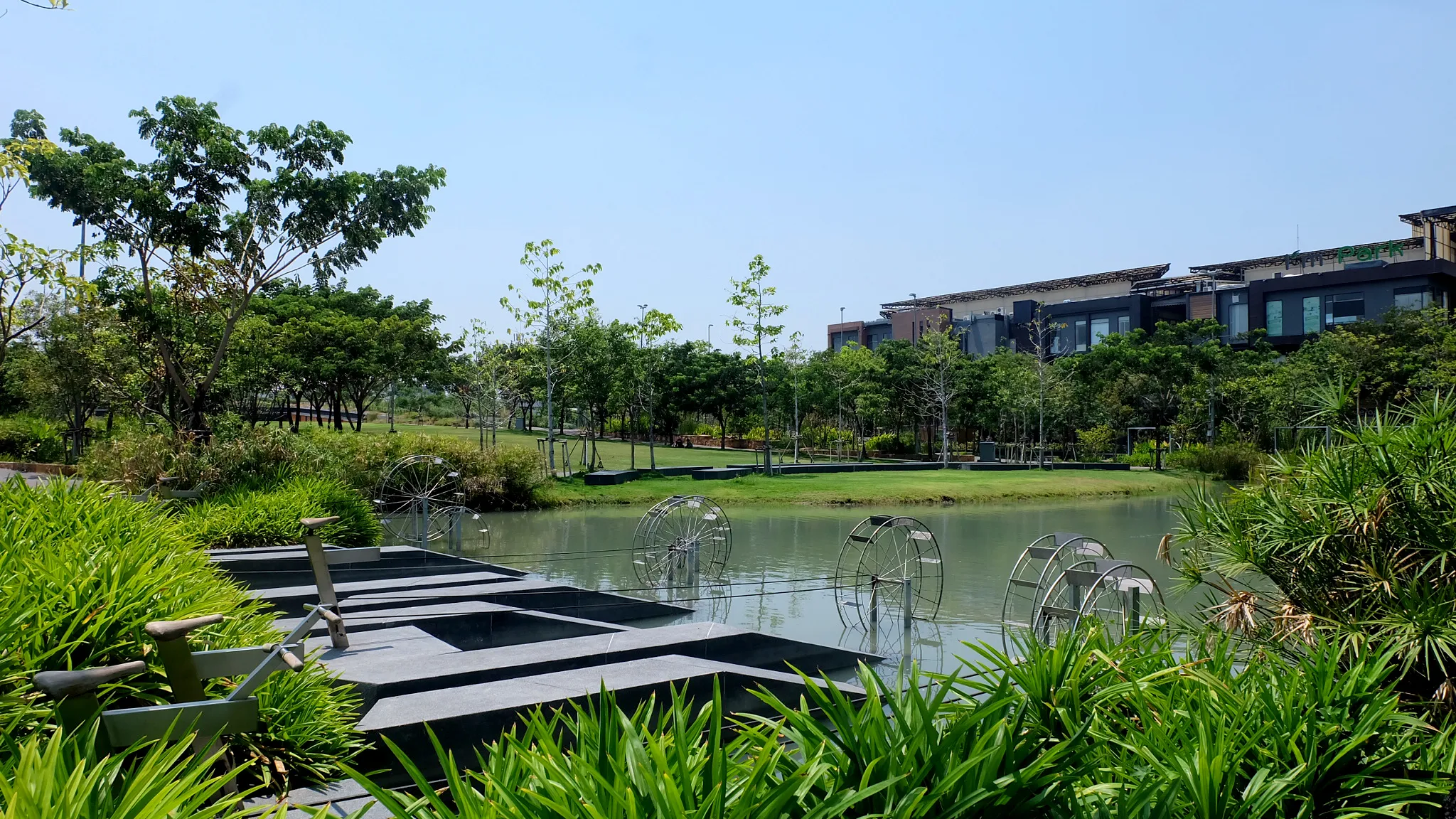
“We are a delta city. Flooding used to be part of how Bangkok existed,” she said. “But now we try to avoid water completely and build dams around everything. We think we can control nature again and again, but climate change has shown that we cannot.”
Rather than relying solely on built infrastructure, Ms Kotchakorn advocates for what she calls “nature-based solutions” — approaches that restore natural systems and allow cities to function alongside environmental realities.
“We need to see nature as infrastructure,” she said. “Nature is not optional. It is as important as electricity or water systems because our lives depend on it.”
She believes many of Thailand’s environmental problems stem from decades of urban planning that ignored natural waterways, drainage systems and landscape conditions.
“We cut roads and build cities without thinking about topography or waterways,” she pointed out. “That has been one of the biggest mistakes in the development of our country.”
Ms Kotchakorn also expressed concern that environmental policy in Thailand remains tied to short-term political and economic priorities. Mega-projects that were debated decades ago continue to reappear, often with little reflection on their long-term environmental consequences.
“We are still operating under the same development mindset,” she said. “The question is how we protect the assets we all share today and pass them on to the next generation without destroying them through politics.”
When asked whether Thailand has reached a genuine turning point on environmental issues, Ms Kotchakorn said the country still tends to react to disasters instead of preparing for them.
“We are not proactive,” she said. “We only react after something has already happened.”
She pointed to repeated flooding events across the country as evidence that Thailand continues to address environmental crises one incident at a time, without confronting broader structural vulnerabilities.
“Bangkok is sinking, but our development is still moving in the same direction,” she said. “We keep assuming we will somehow be safe even though we are repeating the same mistakes.”
Still, despite her concerns, Ms Kotchakorn remains hopeful that future generations may choose a different path.
She points to examples such as the temporary closure of islands and national parks during the pandemic, when ecosystems quickly began to recover after human activity slowed down.
“When human activities stopped during Covid, animals and nature started coming back immediately,” she said. “It reminded us that nature can recover if we give it space.”
Ultimately, Ms Kotchakorn hopes Thailand’s future environmental direction will be guided less by fear and control and more by coexistence with the natural world.
“I hope future generations will see that some people tried to preserve canals, create parks and rethink development based on nature rather than fear,” she said. “We are still part of nature, but for the past 20 years we have behaved as though we can control it completely.”
For Ms Kotchakorn, Thailand’s environmental turning point may not lie in a single policy or project, but in a shift in mindset — from conquering nature to learning, once again, how to live with it.