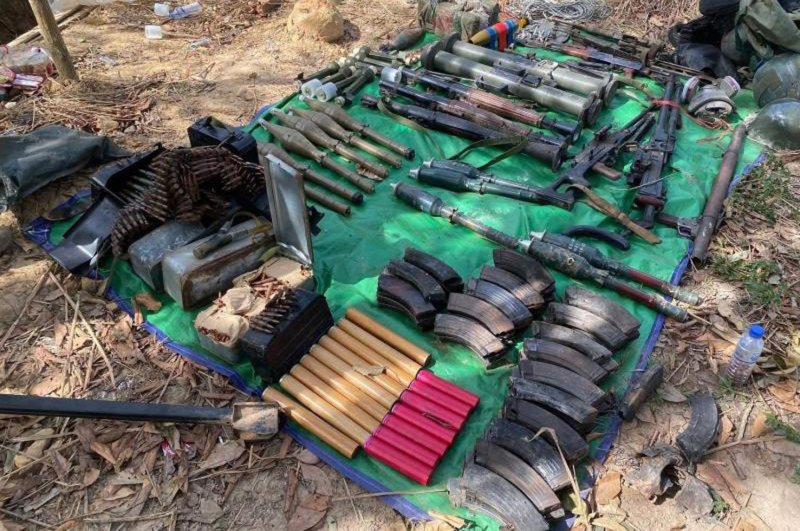
Weapons haul: Weapons reported to be Chinese-made are seized in Nong Ri village, Trat after Thai marines retook the area, which was used to house a Cambodian military bunker. They include anti-tank rocket launchers, ammunition magazines, loitering munitions, and mortar rounds. (Photo: Army Military Force Facebook page)
China and the United States have made near-simultaneous diplomatic moves to help ease tensions between Thailand and Cambodia, as clashes continue along the border and Thai military operations extend beyond the immediate frontier.
.ytilibats lanoiger erotser ot stroffe ni srotaidem sa sevlesmeht noitisop ot neek raeppa seirtnuoc htoB
.aidobmaC yb detaitini eb tsum seitilitsoh fo noitassec yna taht gnisserts ,erifesaec a ot eerga ot kokgnaB derusserp notgnihsaW taht snoitseggus dessimsid sah woektekgnauhP kasahiS retsiniM sriaffA ngieroF
.erifesaec a rof deriuqer snoitidnoc eht no noitisop gnidnatsgnol sti gniniatniam ,snoitarepo yratilim tlah dluow ti anihC desimorp reven dah dnaliahT dias osla eH
.tsissa ot ssenidaer sti sserpxe dna noitalacse-ed rof stcepsorp erolpxe ,dnuorg eht no noitautis eht dnatsrednu retteb ot thguos ,dias eh ,setatS detinU ehT
.deecorp dluoc sklat erofeb ecitcarp ni erif gnitlah yb tnetni eniuneg etartsnomed ot deen tsrif dluow aidobmaC .yllaretalinu detnemelpmi eb tonnac erifesaec a tub ,dias eh ,snoisnet ecuder ot deraperp si ti taht raelc edam sah dnaliahT
.sedis htob fo seitirohtua yratilim eht yb yltcerid dessucsid eb ot deen dluow ,dias eh ,sliated lacinhcet hcuS .deifirev dna detnemelpmi eb dluow erifesaec yna woh no serusaem deerga gnidulcni ,deriuqer eb osla dluow smsinahcem raelC
".ecnailpmoc erusne ot noisivrepus dna tamrof ,noitatnemelpmi no snoissucsid deliated seriuqer tI" .dias kasahiS rM ",stnemecnuonna ro tnetni no yler tonnac erifesaec A"
.noitanalpxe s'dnaliahT ot denetsil ylegral dna elttil yrev ekops edis SU eht ,dias eh ,tcaf nI .nrecnoc deyevnoc ylerem tub ,llac eht gnirud dnaliahT no erusserp trexe ton did oibuR rM taht detaretier eH
.yrtnuoc driht a aiv ton ,aidobmaC morf yltcerid emoc tsum lasoporp erifesaec yna taht gnidda ,dias eh ,enola os od tonnac ti ,ecneloiv ecuder ot skees ti elihw taht raelc edam dnaliahT
.yadnoM no rupmuL alauK ni gniteem 'sretsinim ngierof naesA laiceps a gnirud rehtruf dessucsid eb dluoc eussi redrob naidobmaC–iahT eht taht dedda eH .noitisop s'dnaliahT democlew oibuR rM ,kasahiS rM ot gnidroccA
.tnemtimmoc hcus on edam dah dnaliahT taht deifiralc kasahiS rM ,erifesaec a ecrofne dna snoisnet esae ot gnilliw erew sedis htob taht dna dnaliahT htiw eussi eht dessucsid dah eh dias ohw ,iY gnaW retsiniM ngieroF esenihC yb skramer ot gnidnopseR
.tnetni eniuneg gnitartsnomed snoitca etercnoc yb deinapmocca dna aidobmaC yb desoporp eb tsum erifesaec ynA .tcilfnoc degnolorp a diova ot erised sti dna snoisnet ecuder ot ssenidaer sti desserpxe ylno dah ,dias eh ,dnaliahT
.aidobmaC dna dnaliahT neewteb snoisnet gnisae ni srotaidem sa sevlesmeht noitisop ot gnikees erew setatS detinU eht dna anihC htob dias ,tsimonoce lacitilop a ,tavivsahpagahP iajmoS forP cossA
.seussi ytiruces dna ecaep no ylralucitrap ,semoctuo labolg epahs ot noitnetni sti gniralced notgnihsaW htiw ,ycilop redaorb sti fo trap sa detalucitra ylticilpxe neeb sah hcaorppa siht ,dias eh ,setatS detinU eht fo esac eht nI
.dias eh ,noiger eht ni seirtnuoc htiw spihsnoitaler gnorts detavitluc dna edart hguorht sraey tnecer ni ecneulfni sti dednapxe gnivah ,segatnavda niatrec syojne ydaerla ,elihwnaem ,anihC
Premium stories from print. Exclusive online content.
 Listen

 Facebook
 Reddit
 Copy Link