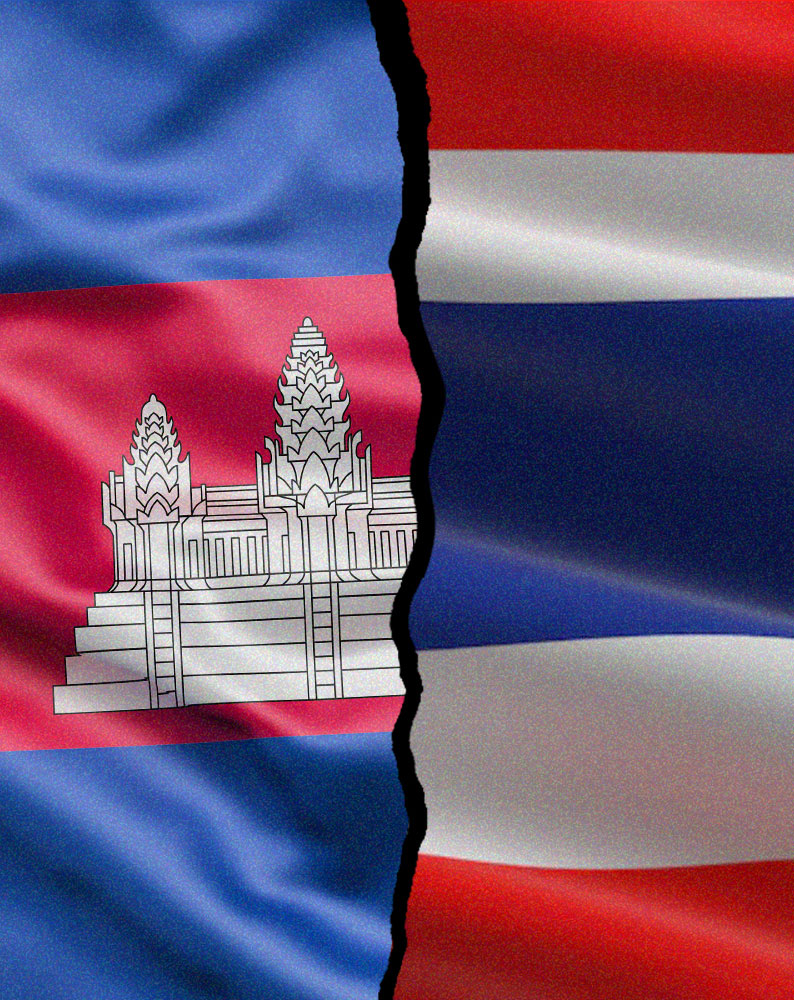
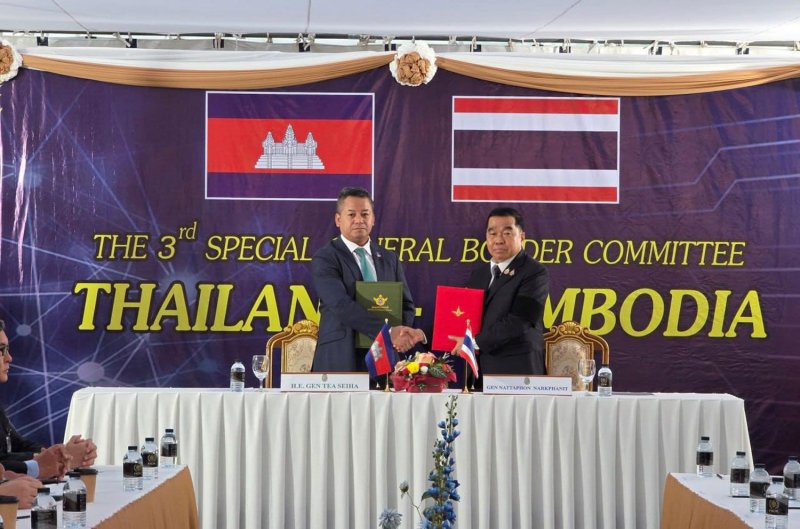
Thailand and Cambodia have again signed a ceasefire agreement in Chanthaburi province following Phnom Penh’s acceptance of previously agreed terms.
Thai Defence Minister Gen Nattaphon Narkphanit and his Cambodian counterpart Gen Tea Seiha signed a joint statement during a meeting of the Thai-Cambodian General Border Committee (GBC) at the Ban Phak Khat permanent border checkpoint in Pong Nam Ron district at 10.15am on Saturday. The ceasefire took effect at noon.
Gen Nattaphon said that the initial 72-hour ceasefire window would be an “observation period to confirm that the ceasefire is real”.
The 16-point joint statement reiterated both sides’ commitment to implementing the ceasefire agreement and working towards peace, stability and security along the border. The full text can be read here.
Both sides agreed to freeze all troop movements and allow civilians living in border areas to return home as soon as possible, the joint statement added.
They also agreed to cooperate on demining efforts and combatting cybercrime, while Thailand is to return 18 captured Cambodian soldiers if the 72-hour period passes without further incidents.
Gen Nattaphon said Cambodia had agreed to all four key points of the agreement the two countries reached in Kuala Lumpur, Malaysia, in October.
The foreign ministers of Thailand and Cambodia both said on Saturday that they would visit Yunnan on Sunday and Monday to meet with Chinese Foreign Minister Wang Yi for talks about border issues.
On Friday, Prime Minister Anutin Charnvirakul reaffirmed that Thailand would accept a 72-hour ceasefire but would not agree to resume border negotiations at positions held before the latest clashes, insisting that Thailand “cannot retreat” from secured areas.
His statement followed a rocket attack by Cambodian troops on Ban Nong Chan in Surin province, which resulted in the deaths of three Thai soldiers and injured 17 others late Friday afternoon. (Story continues below)
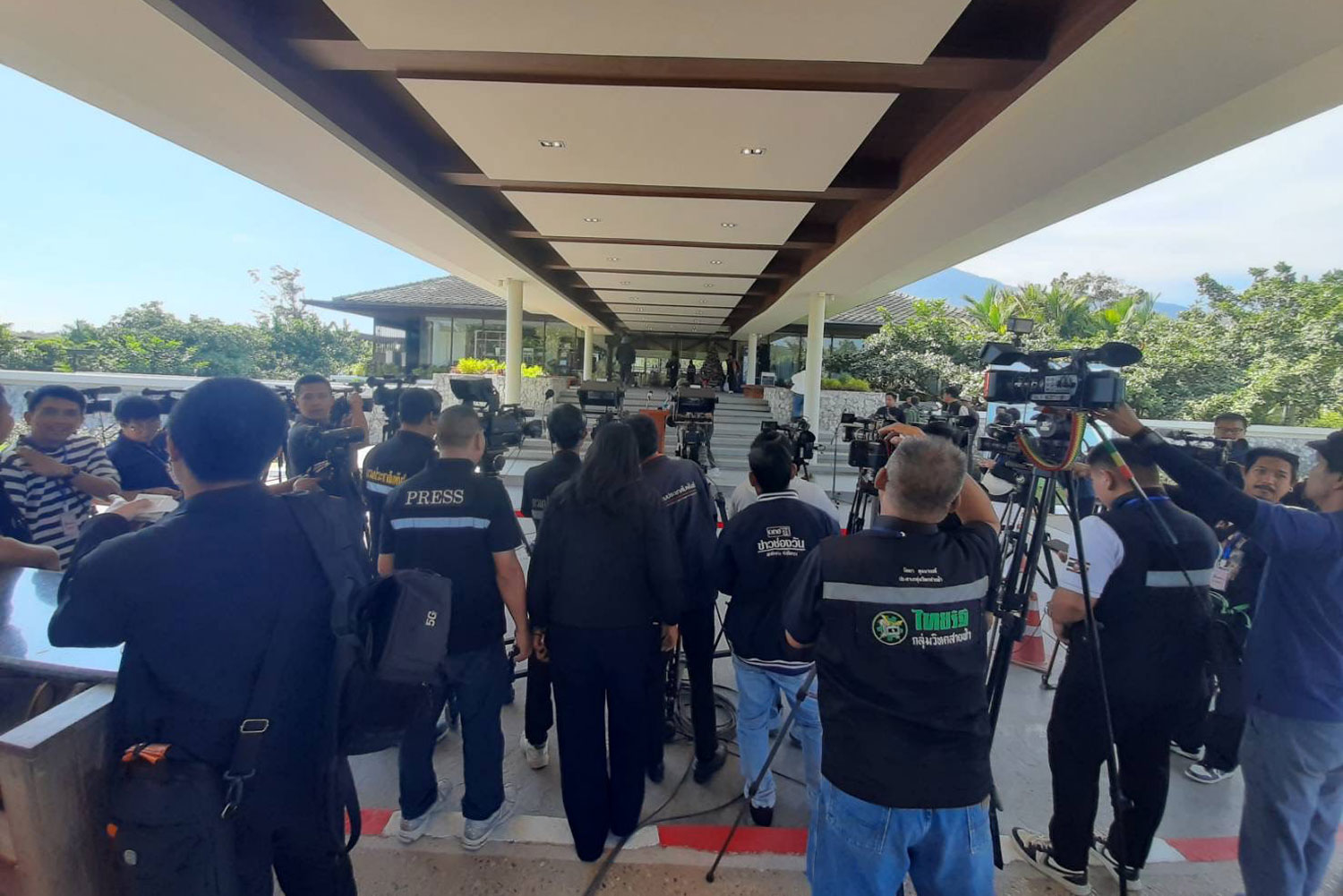
News crews gather outside the meeting venue in Chanthaburi to await statements from participants on Dec 27, 2025. (Photo: Jakkrit Waewkraihong)
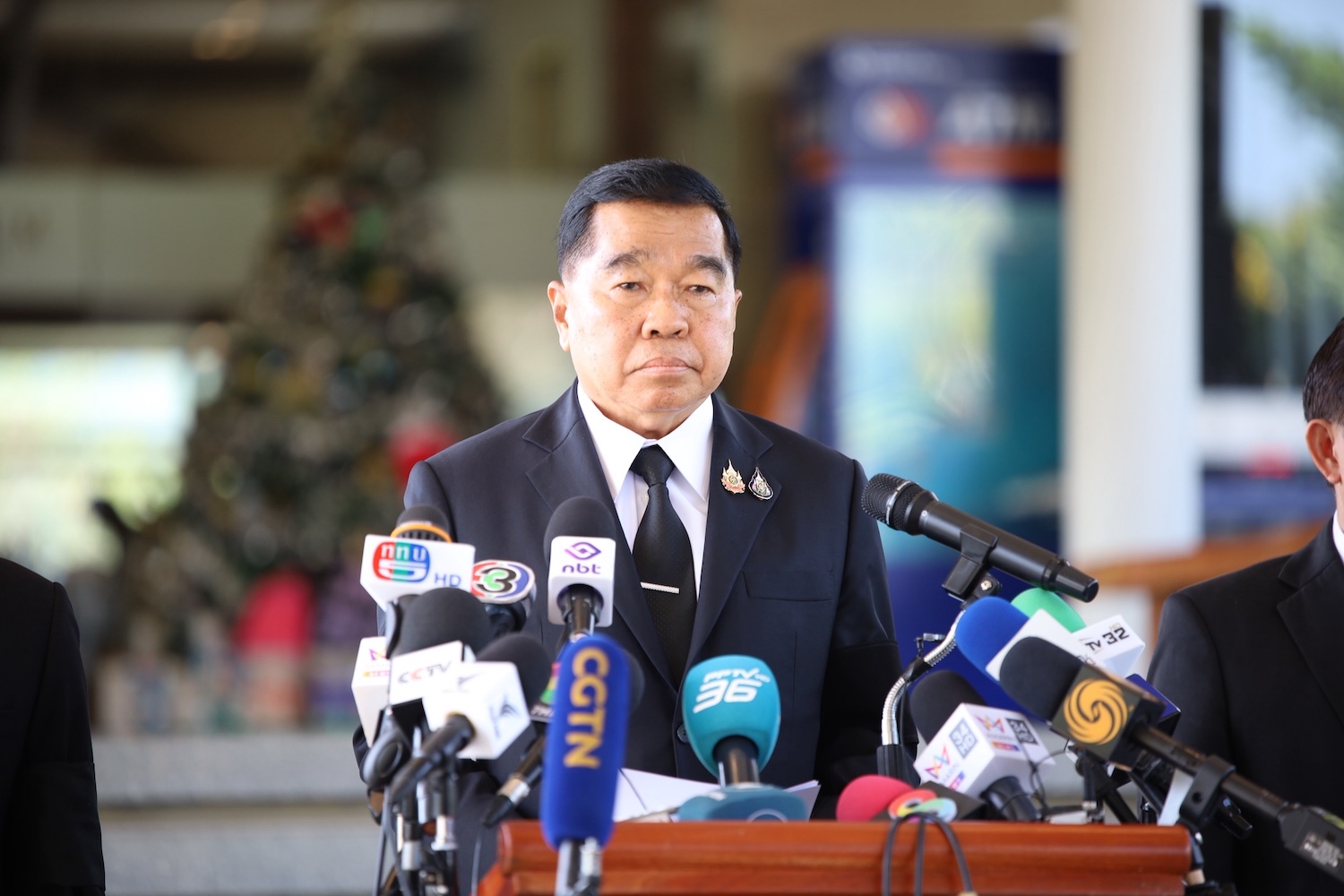
Defence Minister Nattaphon Narkphanit addresses reporters after the General Border Committee meeting in Chanthaburi on Dec 27, 2025. (Photo: Public Relations Department)
‘Territorial integrity’ restored
Mr Anutin said on Saturday that Thailand’s military had successfully established “territorial integrity” in all areas, in accordance with its plans.
The prime minister urged the public to understand that everything was still proceeding according to the objectives of both the military and the government.
Malaysian Prime Minister Anwar Ibrahim, who helped broker the Kuala Lumpur agreement in his capacity as the Asean chairman, welcomed Saturday’s agreement.
“The decision to halt fighting and to hold forces in place reflects a shared recognition that restraint is required, above all in the interest of civilians,” he said in a statement.
“The joint statement sets out practical and positive measures, including verification by the Asean Observer Team and direct communication between defence authorities. These provide a basis for stability, and I am hopeful that both sides will carry them out faithfully.”
The agreement ended 20 days of fighting that has killed at least 101 people and displaced more than half a million on both sides.
Cambodia, which is outgunned and outspent by Thailand’s military, said 21 civilians were killed but reported no military deaths — even as the wife of Prime Minister Hun Manet attended a funeral for slain troops, according to an official Facebook post.
The clashes were reignited in early December after a breakdown in the agreement that Mr Anwar and US President Donald Trump helped broker to halt a previous five-day round of fighting in July.
In effect, the ceasefire returns both sides to the terms of the follow-up agreement that Thailand and Cambodia signed in the presence of Mr Anwar and Mr Trump in October in Kuala Lumpur.
There is no guarantee that the deal will hold, however, chiefly because it does not resolve the core issue: large stretches of the two countries’ 800-kilometre border remain undefined.
Saturday’s pact will not impact border demarcation activities under way between both countries, leaving the task of resolving disputed areas to existing bilateral mechanisms, said ACM Prapas Sornjaidee, spokesman for the Joint Press Center on the Thailand–Cambodia Border Situation.
“War and clashes don’t make the two countries or the two people happy,” he said. “I want to stress that the Thai people and the Cambodian people are not in conflict with each other.”