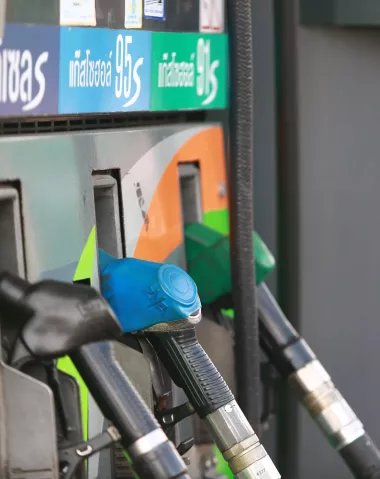
Diesel prices have surged past 50 baht per litre, pushing up costs across the transport, tourism and agriculture sectors and prompting many Thais to either cancel or scale back their Songkran travel plans.
As fuel prices reach record highs, Prime Minister Anutin Charnvirakul moved to assure the public, saying prices would ease soon as talks with oil refineries over reducing refinery margins are nearing completion.
He said operators have been cooperative but said any agreement must not undermine refinery viability, warning that supply could tighten if production becomes unprofitable.
A special cabinet meeting, set to take place following the oath-taking ceremony on Mondauy, will consider urgent measures to address the energy crisis. These include setting up a new centre to oversee fuel price controls and relief efforts.
Mr Anutin said the government is still subsidising diesel prices using the Oil Fuel Fund by about 17 baht per litre, but the subsidies can’t continue indefinitely. As such, he said, negotiations with refineries are integral to the effort to bring prices down.
Pressure on the cabinet has intensified after a series of subsidy cuts pushed retail prices higher. The latest increase followed the Oil Fuel Fund’s decision to reduce diesel subsidies by 2.61 baht per litre, cutting support for B7 from 20.71 to 18.10 baht and for B20 from 22.22 to 19.61 baht.
As a result, retail diesel B7 rose to 50.54 baht per litre, premium diesel to 70.44 baht, and B20 to 45.54 baht. The move is expected to cut the fund’s daily spending by 212 million baht, reducing outlays from around 1.77 billion to 1.49 billion baht per day amid volatile global oil markets.
Transport operators have already passed on the higher costs. In Songkhla, freight operator Mana Suntara said trucking rates from Bangkok to southern provinces have jumped from 12,000 to 17,000 baht per trip.
“If we don’t charge this, we can’t operate without taking a loss. For Pattani, Yala and Narathiwat, rates go up to 30,000 baht due to security risks. Otherwise, we may have to suspend services,” he said.
Farmers and small operators are also feeling the strain. In Nakhon Ratchasima, tractor operator Itthipol Khannok said fuel costs have risen by nearly 20 baht in just two weeks.
“I can’t afford to keep ploughing without passing on the cost, but I also can’t absorb it myself. Prices need to come down quickly, or supply chains and crop costs will keep rising,” he said.
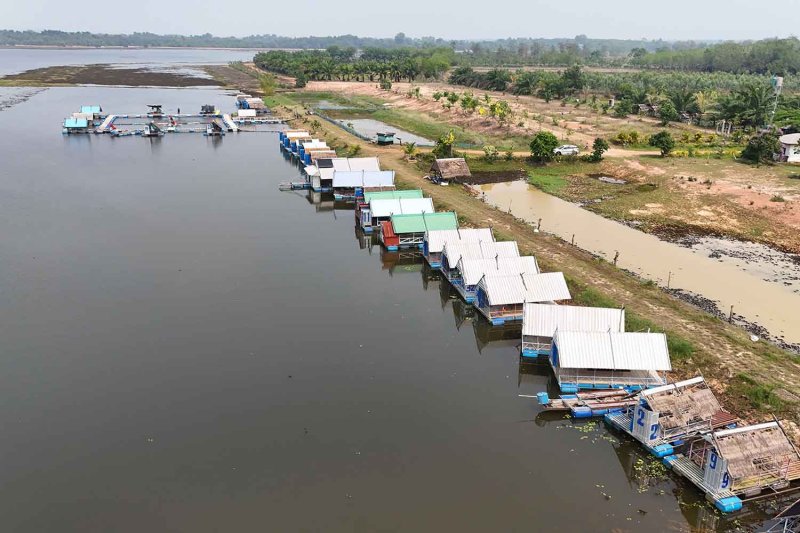
The usual holiday buzz is missing in many areas. In Nakhon Phanom, raft operator Santi Chaimaha said more than 30 rafts at Nong Han in Tha Uthen district have been sitting idle for nearly two months.
“Tourists disappeared once diesel prices spiked. Normally, we make tens of thousands of baht a day during summer, but this is the worst we’ve seen in a decade,” he said, adding operators are still preparing for Songkran despite weak demand.
A Suan Dusit Poll of 1,272 respondents, conducted between March 31 and April 3, found 61.32% are struggling with rising expenses, while 46.70% said higher oil prices have had a severe impact on daily life.
Fuel costs are also shaping holiday decisions. About 55.66% said prices will influence whether they take part in Songkran, while 51.42% plan to skip celebrations to save money. Around 39.62% intend to stay home, and 37.50% plan to travel only locally.
Poll director Pornpan Buathong said the findings show people are reaching their limit.