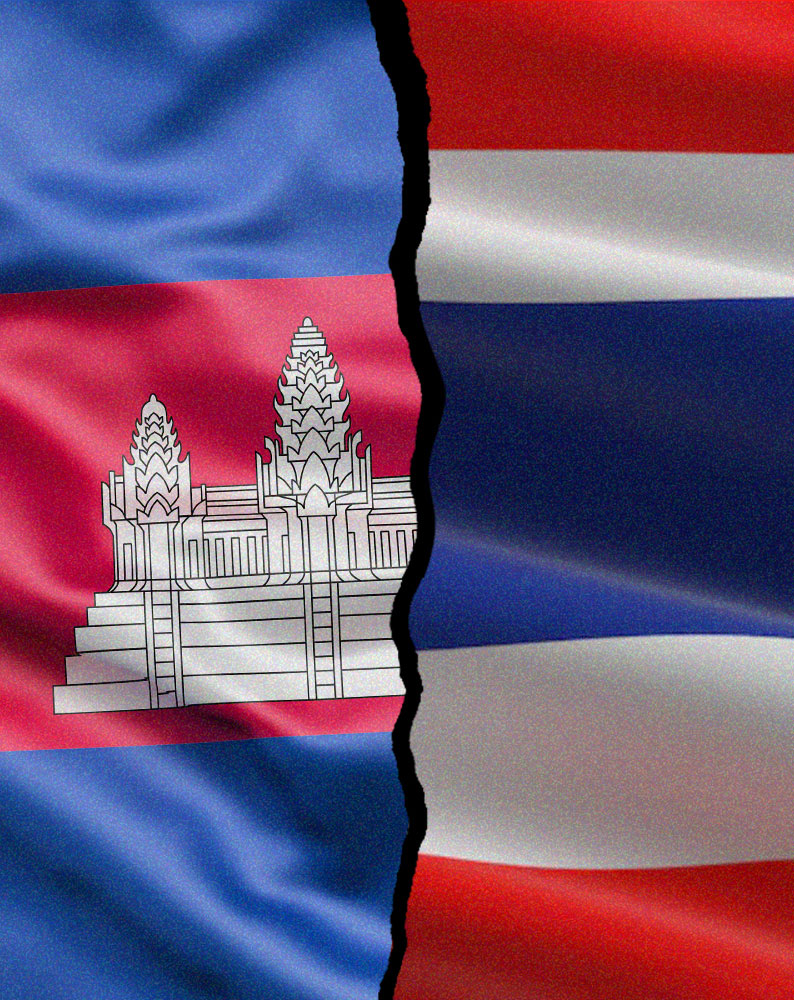
Thailand has announced a clear stance on the issue of the overlapping sea boundary with Cambodia, placing priority on bilateral negotiations under the UN framework before bringing in outsiders to help settle the dispute.
Foreign Minister Siharak Phuangketkeow said on Monday that Thailand and Cambodia should try to settle the maritime dispute themselves, using the UN Convention on the Law of the Sea (Unclos) as a framework, before moving to other processes in the UN treaty.
He was speaking after at a Cambodian news report stated that the two countries favoured the use of compulsory conciliation under Unclos to settle their maritime differences.
Cambodia's Fresh News reported on Thursday that the Thai and Cambodian prime ministers, Anutin Charnvirakul and Hun Manet, discussed "future approaches to overlapping maritime claims" during their meeting in Cebu, the Philippines, after Cambodia had notified Thailand of its intention to apply the right of compulsory conciliation.
Compulsory conciliation is one of the processes under Unclos for settling sea disputes. It requires the setting up of a panel of conciliators to help members end a dispute.
Cambodia officially notified Thailand last Wednesday that it would use this process to settle the issue of their overlapping sea boundary in the Gulf of Thailand, according to a separate Fresh News report on Saturday.
The Cambodian move seems to be a counter to Thailand's decision to unilaterally scrap the 2001 memorandum of understanding on maritime claims.
Mr Sihasak, also a deputy prime minister, said the two countries must rebuild mutual trust and be open-minded before starting border negotiations, and he questioned Cambodia's sincerity about settling land and sea boundary issues.
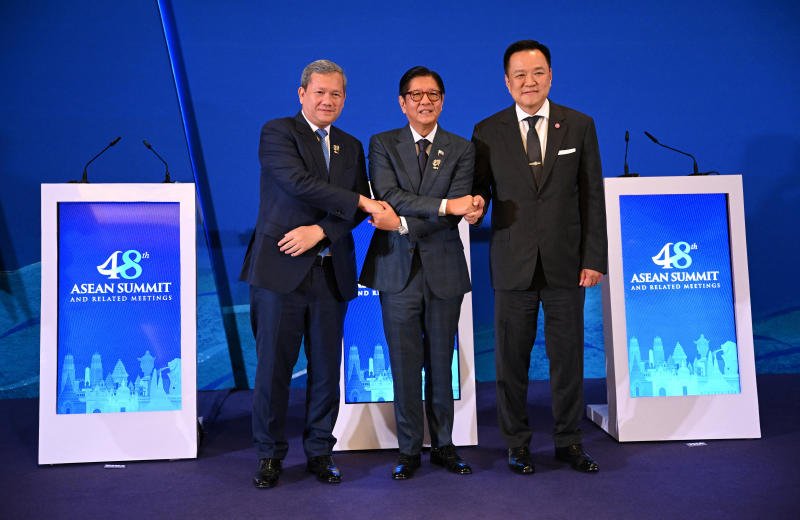
The maritime issue was raised in talks between the two leaders on Thursday on the sidelines of the Association of Southeast Asian Nations summit in Cebu.
The foreign minister said the two leaders did not make any decisions on border matters during the trilateral meeting, which was arranged by Philippines President Ferdinand Marcos Jr, who chairs Asean this year.