The president of the Constitutional Court said on Monday that all facts and evidence related to ballot design must be submitted to the court, insisting that any ruling will be strictly based on the constitution.
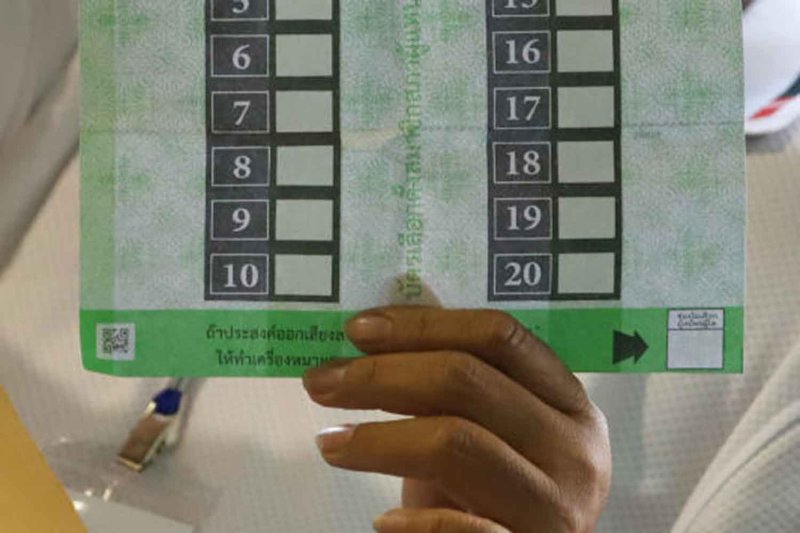
Prof Nakharin Mektrairat said the court is awaiting clarifications from both sides after accepting a petition questioning whether ballot papers containing barcodes and QR codes might violate constitutional principles.
Both the Election Commission and the Office of the Ombudsman are required to submit statements along with lists of evidence and how it was obtained, so the court can properly examine the material, he said.
However, he said that whether hearings will be held depends on whether the judges find the facts and evidence sufficient.
The Constitutional Court recently voted 6-3 to consider the petition forwarded by the Ombudsman, who relayed public complaints seeking a constitutional ruling on whether the conduct of the general election complied with Sections 83 and 85 of the charter.
One key issue under scrutiny is the inclusion of barcodes and QR codes on the ballot papers, which petitioners argue may raise constitutional concerns. The court instructed all relevant agencies and individuals to submit written clarifications within 15 days.
On whether the ballots remain secret, Prof Nakharin said the issue depends on legal interpretation and will be decided collectively by all nine judges, not by any sole individual.
He also addressed reports of civil groups conducting mock elections to test whether barcodes on ballots could be traced back to voters.
He said such information has not yet been submitted to the court, and facts outside the court should be brought into the judicial process.
Prof Nakharin also addressed public perception of the court and criticism that it may be used as a political tool during a "Meet the Press" event in Krabi.
He said the issue is not unique to Thailand, citing examples from the United States and South Korea where courts have also ruled on politically sensitive matters.
The Constitutional Court was established to resolve constitutional disputes, and they are highly complex, he said, noting that once a dispute reaches the court, it must ultimately be decided one way or the other, and its decisions will not satisfy everyone.