
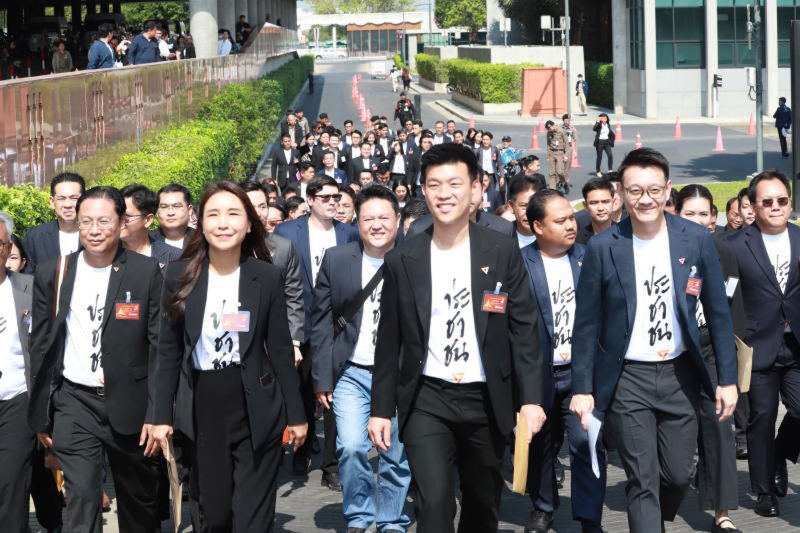
The People's Party (PP) insists it has a right to propose laws, even if they turn out to be unpopular.
The party, under attack for supporting reform of the lese majeste law changes, says proposing legal amendments is a core duty of MPs, insisting efforts to amend Section 112 of the Criminal Code, as the law is also known, should not be treated as an ethical violation.
Natthaphong Ruengpanyawut, a party-list MP and party leader, was commenting following the National Anti-Corruption Commission's decision to petition the Supreme Court in a case involving 44 former MPs of the now-dissolved Move Forward Party over their joint proposal to amend Section 112, or the lese majeste law.
He said submitting legislative amendments is a fundamental power of elected representatives and a key mechanism of parliamentary work. "Regardless of whether people agree with the content of a bill, performing our duty by proposing legal amendments should not lead to prosecution for a serious ethical violation," he said.
Mr Natthaphong also described the development as a sign that "entrenched elites" were willing to use state mechanisms to preserve their power and interests through what he called "lawfare".
Meanwhile, Parit Wacharasindhu, a party-list MP and PP spokesman, said the party was ready to "fight to the end" at every stage of the legal process. "The most worrying aspect of this case is not the future or fate of the People's Party, but the future of the political system and democracy if members of parliament are forced to fear carrying out their legislative duties," he said.
Mr Parit said that if the Supreme Court accepts the case, the defendants could be ordered to suspend their duties unless the court rules otherwise.
He added Wayo Assawarungruang, a party-list MP and deputy leader for legal affairs, has prepared legal arguments to oppose any such suspension.
He warned against prematurely assuming the 44 MPs would be disqualified, saying no ruling has been made and that the case could take some time to conclude. Piyabutr Saengkanokkul, secretary-general of the Progressive Movement, said the 44 MPs had demonstrated the proper conduct expected of lawmakers. He said the legal actions were forms of "lawfare" used to deter politicians from pursuing such reforms.