
A life rebuilt, a legacy of Paralympic gold
Saysunee Jana
Wheelchair fencing icon Saysunee Jana, honoured as one of the Women of the Year 2026, stands as a living testament to resilience and possibility. Her journey reminds us that setbacks need not define destiny, and her triumphs embody the belief that with determination, anything is achievable.
At just 17, a traffic accident left the Chiang Mai native paralysed from the waist down. Yet from that life‑altering moment, she rose to become one of Thailand’s most decorated para athletes, amassing five Paralympic gold medals among a glittering collection of honours.
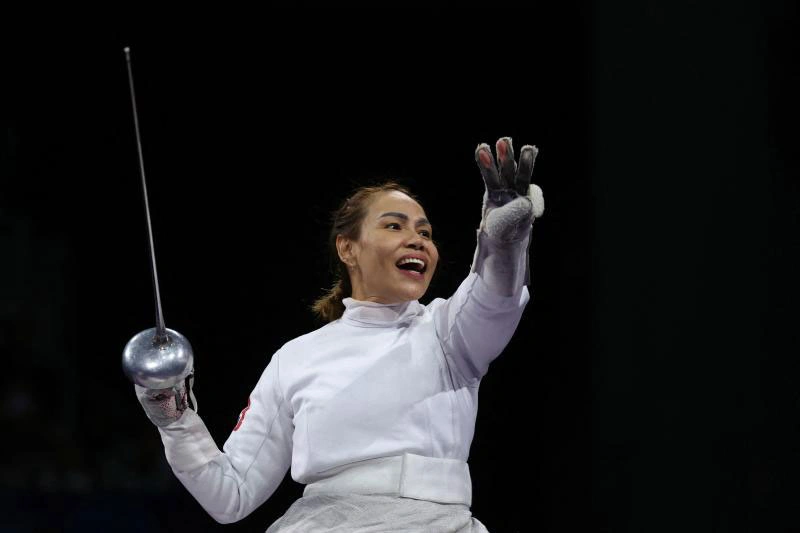
Saysunee’s story is not only about medals and victories — it is about perseverance, self‑belief, and the courage to keep pushing boundaries. She has become a role model for countless others striving to defy expectations despite physical limitations, proving that strength of spirit can carry one far beyond physical setbacks.
Her turning point came at the Yadfon Vocational Rehabilitation Center for Persons with Disabilities in Chiang Mai, where she rebuilt her life and discovered para sports.
Surrounded by peers navigating similar challenges, she learned to adapt to her new reality. A conversation with a senior friend — himself a national athlete — sparked her ambition to pursue sport, initially as a way to support her family financially. That moment of encouragement planted the seed for a career that would later inspire a nation.
She began with wheelchair basketball, quickly earning a place on the Thai national team. But it was a coach’s keen eye that changed her trajectory: noticing her long arms and powerful upper body, he encouraged her to try wheelchair fencing. Saysunee embraced the challenge, and her discipline and rapid progress soon earned her a spot on the national fencing team.
Her international debut came at the 1999 Fespic Games in Thailand, where she won two gold medals. The cash award from that tournament helped her family clear debts and improve their quality of life — a victory beyond the podium.
From there, her career soared.
In Athens 2004, she became the first Thai woman to win a Paralympic gold medal in epee B, a breakthrough moment that placed Thailand firmly on the global para fencing map. She repeated the feat in London 2012, before reaching her pinnacle at Paris 2024.
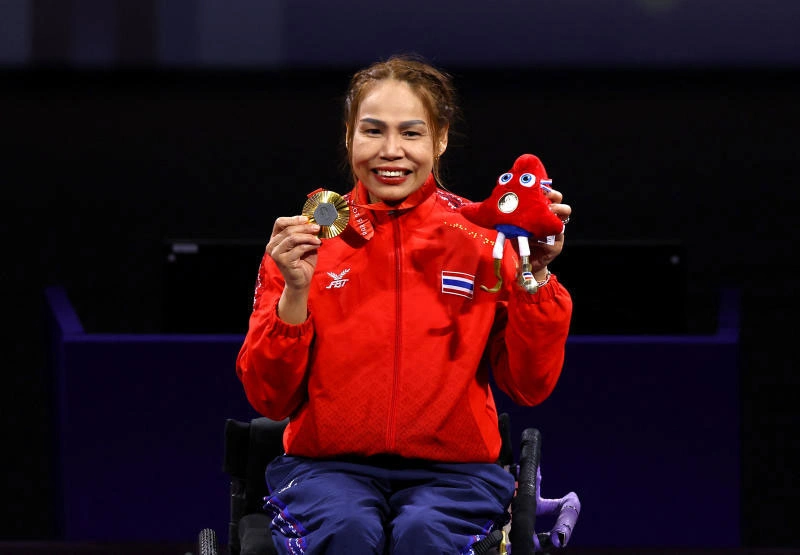
At 50, she became the first female wheelchair fencer to win three gold medals — foil, sabre, and epee — at a single Paralympics, a performance hailed as one of the greatest in the sport’s history.
“I never thought I would win three gold medals in a single Paralympics. My goal was just to win epee B, my favourite event. To win three was beyond my expectations,” she reflected after Paris Games.
Across six Paralympic Games, Saysunee has collected five golds, one silver, and four bronzes. Her achievements extend further: six World Cup golds, three silvers, four bronzes, three Asian Para Games golds, and two Asean Para Games golds in sabre and foil B at her debut in Nakhon Ratchasima.
Behind the glory lies relentless effort. Her training demands 2,000-3,000 thrusts daily, a punishing routine that often leaves her battling hand, arm, and muscle injuries. Yet she endures, driven by passion and purpose, and supported by a mindset that views pain as part of progress.
Now 51, Saysunee shows no signs of slowing down. Fierce as ever, her journey of recovery, resilience, strength, and self‑acceptance continues to inspire. More than an athlete, she is a symbol of hope — proof that courage can turn adversity into achievement, and that her story will keep changing lives for years to come.