


An oil shortage at some petrol stations over the past week raised doubts as it contradicts the government's assurances of a stable fuel supply.
Motorists are bracing for higher oil prices following the crude price surge as oil and gas cannot be shipped through the Strait of Hormuz to countries, including Thailand, during the Israeli-US war on Iran.
The Explainer looks into the reasons behind the shortage, exploring issues with oil transport, the work of overlooked "jobbers", and a suspicion of oil hoarding.
Why are there long queues at some filling stations?
The problem has nothing to do with the country's oil reserves, which are sufficient, but is partly due to oil transport from storage to petrol stations being unable to keep pace with a rapid increase in demand.
Deliveries from depots to service stations have struggled to match a sharp rise in consumption driven by public anxiety, said caretaker transport minister Phiphat Ratchakitprakarn.
As a result, he said some stations have been forced to close temporarily or ration certain types of fuel.
According to energy officials, Thailand has more than 26,000 petrol stations nationwide, with 6,000 of them run by major brands and the remainder independent, small filling stations.
As oil demand soared, several thousand small, unbranded or rural stations ran dry, forcing motorists to converge on larger outlets and overwhelming supply chains, said Mr Phiphat.
An inspection by caretaker energy minister Auttapol Rerkpiboon at a Bangchak filling station in Pathum Thani on Thursday found it had a diesel shortage for a few days.
He also led his entourage to inspect a major oil depot in the same province. The depot supplies fuel to roughly 200 service stations across the central region.
The surge in demand caused fuel delivery trips from the depot to double from 200 to 400 trips per day, increasing the supply from 4 million litres to 8 million litres per day.
Distribution is around 20% higher than average, according to officials, yet some filling stations still report shortages.
To address this problem, authorities asked refiners to increase their capacity.
Permission was sought from the police and the Bangkok Metropolitan Administration to extend the number of hours tanker trucks are allowed to operate in order to ensure sufficient supplies at service stations.
Who are jobbers and what role do they play?
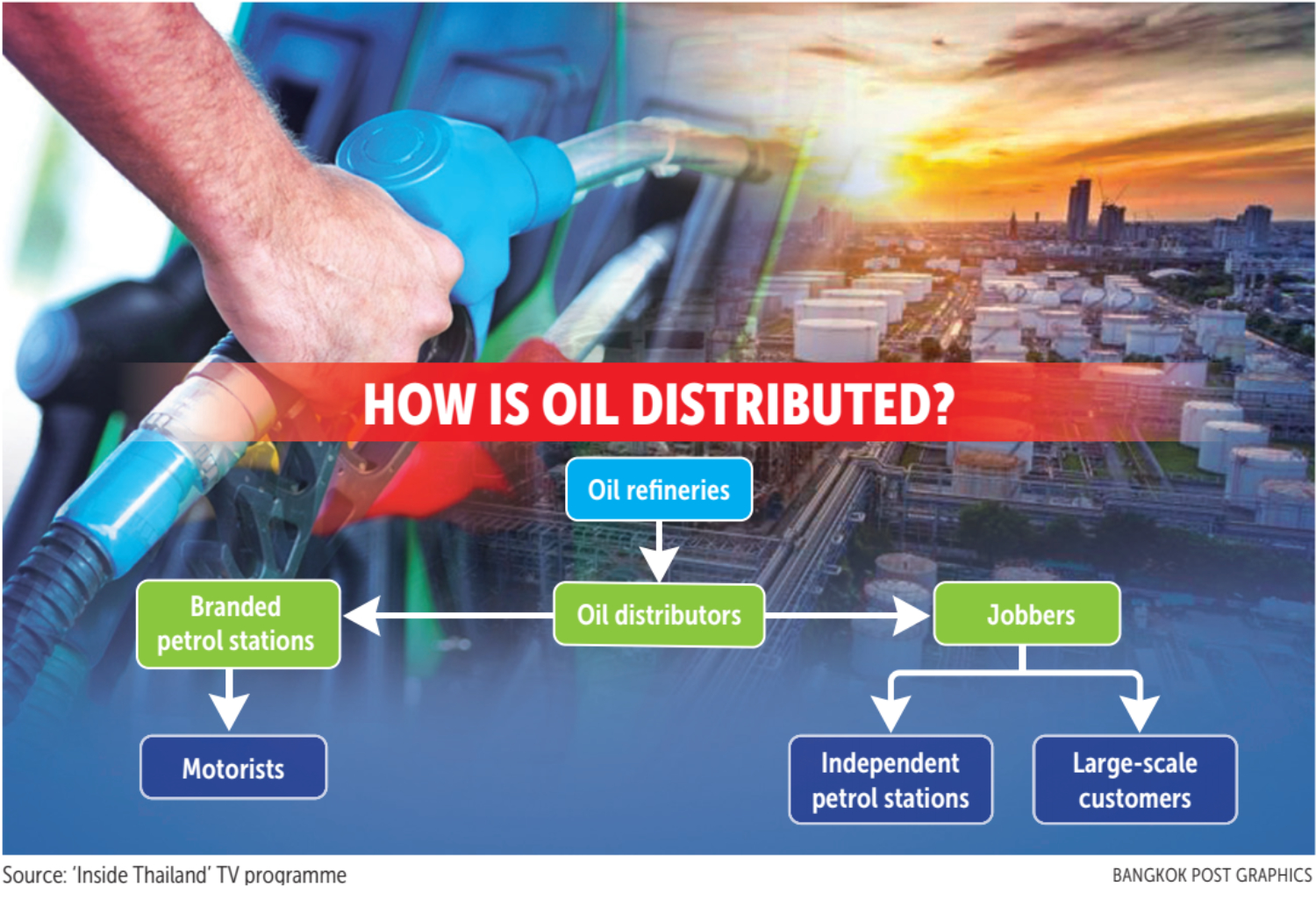
Jobbers are oil middlemen or wholesalers who buy oil from refineries and sell it to customers in the manufacturing and agricultural sectors, as well as small filling stations not affiliated with major retail brands.
The intermediaries who purchase fuel from a major refiner and sell it under that refinery's brand to retail stations, commercial users or farmers are called branded jobbers.
Wholesalers who do not sell oil under the refinery's brand are dubbed unbranded jobbers.
Refineries sell most of their products to major distributors and sometimes to jobbers, according to Sarawut Kaewtathip, director-general of the Department of Energy Business.
The major distributors mostly deliver to their own branded service stations. They also sell to jobbers, who in turn supply independent petrol stations as well as industrial and other customers.
When the conflict in the Middle East broke out, Mr Sarawut said, the major distributors reduced supply to jobbers to concentrate on supplying their own brands.
As a result, many independent service stations ran short of fuel and motorists converged at branded stations, resulting in long queues.
Some jobbers have halted sales to industrial customers, forcing trucks to refuel at service stations and causing shortages that affect the public.
To deal with this issue, authorities told major distributors to supply more fuel to jobbers.
The Federation of Thai Industries (FTI) supports the government intervening to support oil middlemen who are struggling to secure supplies from refineries.
Authorities should negotiate with refinery operators to ensure jobbers receive sufficient oil, as they supply villages and smaller communities, said Kriengkrai Thiennukul, chairman of the FTI.
The federation noted many jobbers are facing liquidity problems, as the oil sold to them is priced higher than the fuel available at subsidised petrol stations.
The Oil Fuel Fund offsets costs for branded stations, creating a price gap of 11-12 baht per litre. This disparity has reduced supply for the manufacturing and farming sectors, raising concerns about broader economic impacts.
Are people hoarding oil?
While the police is investigating alleged hoarding of 331,000 litres of oil in Ang Thong, there is no official report of oil hoarding, according to authorities.
"We should not accuse jobbers of being hoarders. The problem stems from a surge in demand and a shortage of supply from jobbers to unbranded filling stations," said Chatchai Kunlohit, deputy director-general of the Department of Energy Business.
However, energy permanent secretary Prasert Sinsukprasert ordered urgent inspections into suspected oil hoarding, warning that violators will face legal action.
Mr Prasert said laws would be strictly enforced if stockpiling is found by operators or consumers, as hoarding fuel is illegal because it is a controlled commodity. Resale at inflated prices is also prohibited.
Earlier this week, the department reported Thailand had 101 days of oil reserves when all scheduled deliveries are included.
The country has six oil refineries that can refine 175 million litres of fuel daily, including 32-33 million litres of benzine, 75-80 million litres of diesel, 25 million litres of jet fuel, 13 million litres of heavy fuel oil, and 6-7 million kilogrammes of liquefied petroleum gas.


