


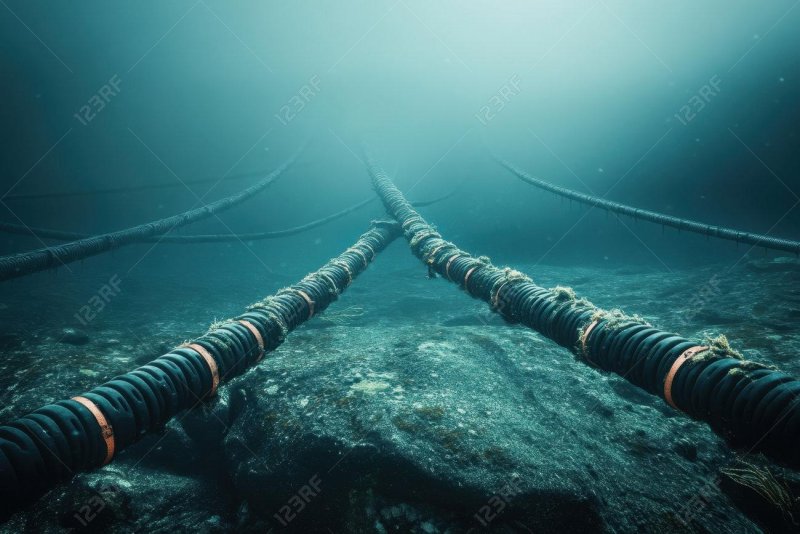
State authorities and telecom operators are alert to potential risks to undersea cable systems stemming from the conflict in the Middle East, aiming to ensure their international connections in Thailand remain stable and unaffected.
Major telecom operators previously allayed consumer concerns about the potential impact of the war on services, noting their network architecture was designed with high resiliency.
Subsea cables are the fastest and most popular way to transmit internet data, with hundreds of lines accounting for more than 95% of global internet traffic.
How are authorities responding to the risk?
The Digital Economy and Society (DES) Ministry issued an urgent directive to Thai internet service providers to raise their preparedness to the highest level, reinforcing network readiness measures to assuage the public and business sectors.
Amid growing concerns the Mideast war may impact international communications networks, caretaker DES minister Chaichanok Chidchob ordered agencies under the ministry's supervision to assess the situation and prepare contingency plans.
"We instructed all relevant agencies to heighten their surveillance of this situation, and ordered preparation of backup plans that can be executed immediately in the event of a crisis," he said.
All operators are required to submit risk assessments regarding the potential impact in the event of a disruption to Middle East submarine cable systems, along with business continuity plans covering various levels of severity, said Mr Chaichanok.
The National Broadcasting and Telecommunications Commission (NBTC) assured the public that potential damage to submarine cables in the Middle East would not lead to a communications crisis in Thailand.
While regional conflicts could affect underwater internet gateways, any disruption is expected to be limited to connection latency and minor speed reductions rather than a total loss of connectivity, said Trairat Viriyasirikul, acting secretary-general of the NBTC.
"Complete disconnection from international gateways is highly unlikely due to the diversity of available submarine routes," he said.
How are major telecom operators preparing to deal with the risk?
Col Sanpachai Huvanandana, president of state enterprise National Telecom Plc (NT), said the provider of international internet gateway services assessed the situation and established countermeasures to prevent any impact on NT services.
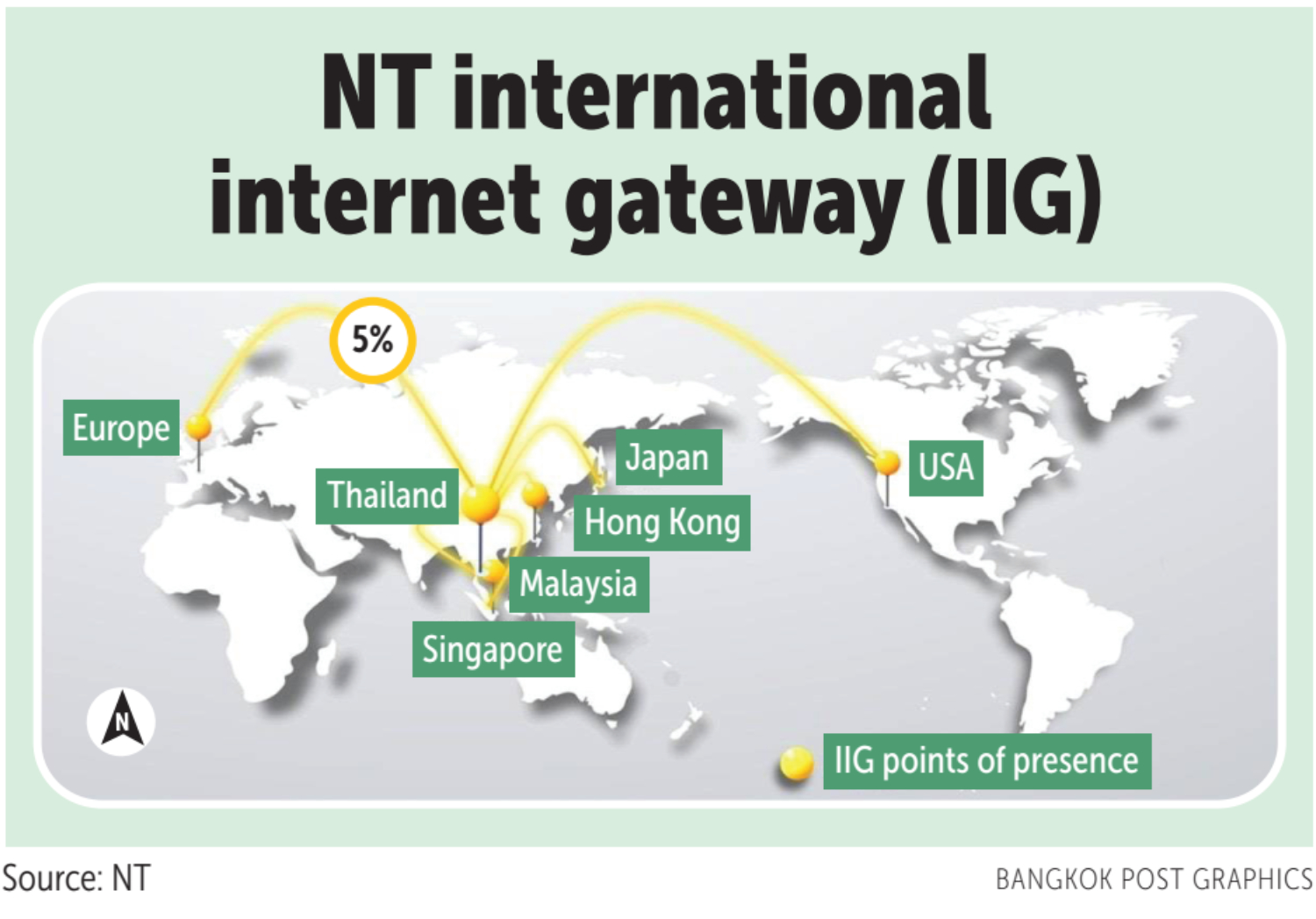
He said NT uses international submarine cable systems passing through the Middle East to connect to the internet gateway point of presence in Europe -- namely SEA-ME-WE-4 and AAE-1, which connect directly from Thailand, and PEACE and SEA-ME-WE-5, which connect via Singapore.
These account for only 5% of total internet gateway traffic, a small proportion, because major content providers already have nodes and servers distributed worldwide, including in Thailand, to deliver data to users from the nearest node.
There are no direct leased circuits connecting Thailand to the high-risk area around the Strait of Hormuz, said Col Sanpachai.
"NT developed contingency measures to address any indirect impact to Thailand from a disruption causing increased global internet traffic congestion," he said.
The company is monitoring the situation through its 24-hour Network Operations Center and has a business continuity plan, as well as a war room managing emergency situations and maintaining service standards, said Col Sanpachai.
In addition, a dedicated helpdesk was created to inform and advise users during a crisis.
NT has internet gateway points of presence in multiple regions, including Singapore, Hong Kong, the US and Europe -- in both transit and peering arrangements -- connected from Thailand via both terrestrial and submarine cable routes through six submarine cable systems in which NT is a consortium member.
The company secured additional back-up capacity through leading service provider partners across various countries to ensure diversity and resilience against potential risks, he said.
"In the event of a Middle East submarine cable disruption, traffic can be rerouted to other paths that have been pre-negotiated to ensure continuity of service," said Col Sanpachai.
Major content providers already have nodes and edge servers distributed worldwide, including in Thailand, to deliver data to users from the nearest server.
As a result, the majority of Thailand's internet traffic flows within the country and the Asia-Pacific region, meaning users of major content providers will not be affected, he said.
Considering the volume of traffic routed directly to the Europe node via the Indian Ocean/Red Sea/Middle East corridor, NT is confident it can manage this by rerouting data through alternative paths to minimise user impact while maintaining continuous service quality, said Col Sanpachai.
Latency in certain destinations will be reduced through automatic path rerouting and intelligent network management, ensuring users experience seamless connectivity, he said.
According to True Corporation, while developments in the Middle East may pose potential risks to undersea cable systems, such scenarios are not expected to affect True's international connectivity services in Thailand because of its resilient network architecture.
Khurrum Ashfaque, chief network officer at True, said the company's network is designed with diversified routing across multiple layers and does not rely on any single international path.
"This allows us to dynamically manage and reroute traffic based on real-time conditions. In addition, our global network partners have confirmed sufficient bandwidth capacity and diverse routing options to support continued service delivery," he said.
True's international connectivity is supported by the Southeast Asia-Japan Cable 2 system, which operates on routes between Singapore and Japan.
This infrastructure is geographically independent of the affected regions and remains fully operational.
True operates a highly resilient and diversified network, with multiple transit and peering partnerships at major internet exchange hubs such as Singapore and Hong Kong, enabling diverse routing paths across Asia, Europe and other regions, said Mr Ashfaque.
The company maintains connections with more than 30 peering partners and nine transit partners, all of which are Tier 1 global providers with extensive international reach.
In September 2025, multiple undersea cable systems in the Persian Gulf region, including SMW4, IMEWE, FALCON and EIG, experienced significant disruptions. Despite the scale of the incident, True's services remained unaffected, demonstrating the effectiveness of its network design and redundancy strategy, noted the company.
Advanced Info Service insisted it is prepared to address unrest in the Middle East, ensuring continuous domestic and international network connectivity.


