


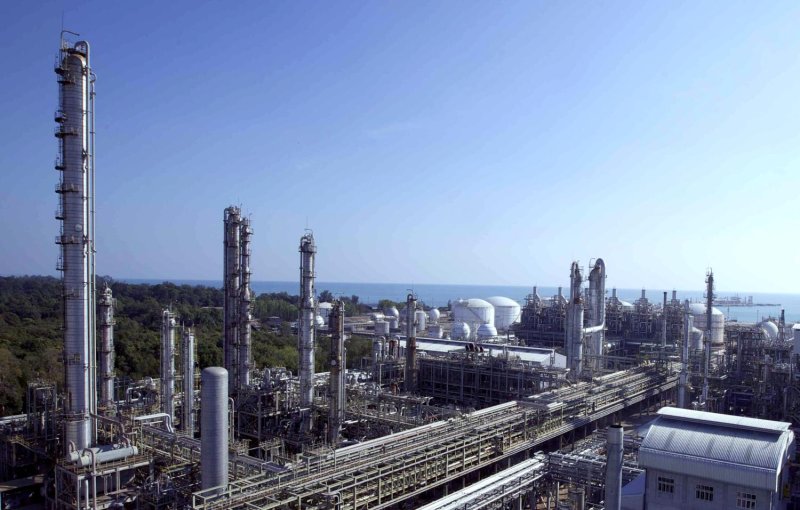
A proposal for the government to intervene in oil refinery costs and profits was not included as one of the seven measures recently unveiled to ease the consumer impact of surging global crude oil prices.
Though the government is considering a reduction of the excise tax on fuel, increasing money for state welfare cardholders, offering soft loans for small and medium-sized enterprises, and offering help to farming, fishing, construction and transport businesses, it held off on regulating the gross refining margin (GRM), which determines the retail price of oil.
The Explainer explores the controversial proposal, considering oil companies' gains from GRM, Thailand's ex-refinery prices that are based on refined oil prices in Singapore, and a debate on state intervention in GRM to address expensive fuel prices in the country.
Do companies reap profits from the GRM during an energy crisis?
The Petroleum and Energy Institute of Thailand (PTIT) insists firms are not making higher profits, though a high GRM should mean more money for refineries.
GRM is the difference between prices of crude oil and refined oil, referring to costs added during the refining process.
Media reports note that when crude prices rise sharply, the gap between crude and refined oil prices widens, lifting refinery profits.
"GRM is not the net profit for oil refineries," said Kurujit Nakornthap, executive director of PTIT.
In addition to the refinery cost, there are other implicit costs that are needed for the GRM calculation, he said. These costs are usually not high, but they have increased significantly during the Israel-US war on Iran.
These costs include insurance premiums and shipping costs, which rose because oil tankers cannot pass through the Strait of Hormuz during the crisis.
Once these costs are taken into consideration, oil refineries have the ability to set ex-refinery prices, which are based upon the reference price of refined oil in Singapore, known as the Mean of Platts Singapore (MOPS) -- the key benchmark for oil products in Asia.
These costs, estimated at 3-6 baht a litre, will eventually become part of retail oil prices, said Mr Kurujit.
Can Thai refined oil prices be set independently from MOPS?
MOPS is an acceptable benchmark and the Thai refined oil market may face a problem if it uses different pricing from Singapore, he said.
Six oil refineries in Thailand have a combined production capacity of 1.1-1.2 million barrels per day (BPD), exceeding domestic demand of 750,000 BPD.
Singapore refines 1.5 million BPD, but consumes less than 200,000 BPD. This massive surplus and a high volume of traders created the region's physical and futures oil market, accurately reflecting daily regional supply and demand.
If Thailand's ex-refinery prices are lower than Singapore's, oil traders who buy oil from refineries will export oil to Singapore to benefit from the price difference, said Mr Kurujit.
Yet if Thailand's ex-refinery prices are higher, oil traders will import refined oil from Singapore to compete with Thai refineries.
Is it possible to intervene in the GRM?
The government is barred by law from intervening in the GRM, but it can issue an executive decree if a solution is deemed necessary and urgent, said industry analysts.
New Energy Minister Akanat Promphan proposed setting a ceiling on GRM for when it soars, making retail oil prices more affordable for consumers, adding the government must help refiners if refined oil prices fell below normal levels.
Transport Minister Phiphat Ratchakitprakarn expressed concern that intervention could undermine free trade principles.
Democrat list-MP Korn Chatikavanij, also a former finance minister, wants the government to step in and regulate the GRM, arguing intervention is necessary to ease financial pressure on households and businesses as global crude prices soar.
He said authorities should require refineries to allocate part of their profits to the Oil Fuel Fund, which acts as a buffer against oil price volatility.
The fund is being quickly depleted, affecting the government's efforts to subsidise fuel prices.
Mr Korn said relying solely on MOPS is insufficient because during the Gulf war Dubai crude prices doubled, while refined oil prices on MOPS jumped fivefold -- an abnormal disparity.
Refined oil prices in Singapore have risen sharply, driven by supply shocks, strong demand growth and a tight market structure across Asia, said Mr Kurujit.
Several refineries are undergoing maintenance, while unexpected shutdowns have reduced output. Exports from China and India have also slowed, leaving diesel and gasoline supplies tight in the Singapore spot market.
Heavy congestion along shipping routes such as the Strait of Malacca has disrupted logistics, pushing freight rates higher and adding to costs, he said.
Demand growth, particularly for diesel, has intensified the pressure. With economies in Asia recovering, diesel consumption has surged, noted Mr Kurujit.
The combination of rising demand and constrained supply has created a sharp imbalance, causing spot market prices to spike.
Mr Korn said in the long run, Thailand should consider a windfall tax on refineries profiting from crude price volatility.
However, Mr Kurujit said this proposal is not easily translated into action as the GRM is sometimes at a moderate level.
Thailand's refining industry has recorded sharp volatility in GRM since 2024, with margins dropping to very low levels through early 2026.
GRM fluctuates with market cycles. At times, margins have fallen so low they barely cover operating costs, he said.


