
According to Save the Children, a global leading children's organisation, employment opportunities for people with disabilities in Thailand remain extremely limited, with only 8% accepted for employment in the labour market.
To enhance job readiness and elevate employment outcomes for visually impaired youths in Thailand to align with labour market demands, Save the Children Thailand, with support from CapitaLand Hope Foundation, is running "Dots to Dreams: Empowering Visually Impaired Youth". In this project, research shows what can be done to enhance employment opportunities for youth with visual impairments and help individuals transition into the workforce.
To obtain information, researchers conducted in-depth interviews and focus-group discussions with 46 visually impaired youngsters, 15 employers and/or HR professionals, 10 civil society organisation (CSO) representatives, eight educational institution representatives and two government agency representatives. The research was presented as a part of the conference "Dots to Dreams Project: Pathways to Inclusive Employment for Persons with Visual Impairments" at Somerset Rama IX.
The conference brought together various stakeholders, such as representatives of people with visual impairments, representatives of the Save the Children Thailand, executives of employing organisations including Dots Coffee, Vulcan Coalition and Ascott International Management (Thailand), an educational scholar from the Office of the Basic Education Commission under the Ministry of Education, and an adviser of the Social Innovation Foundation.
Two researchers, Assoc Prof Saranya Tarat, a lecturer at the Faculty of Sociology and Anthropology, Thammasat University and Teerasan Thammayot, a research, evaluation, and learning coordinator at Save the Children Thailand, revealed that the research focused on visually impaired youths with higher education and/or with working experience. Although these youngsters have potential, they still face obstacles in finding employment.
"The research aims to develop training programmes to increase employment opportunities for visually impaired youths because compared to people with other types of disabilities, individuals with visual impairment have the lowest employment rate," explained Teerasan.
The researchers explained that most employers assumed that all people with vision impairment are blind. In reality, there are people with low vision who insist that they are able to work like others.

"If the lights go out, people with normal vision become completely helpless in the dark. This leads employers to assume that it must be difficult for people with visual impairments to work. Employers wonder how they can navigate daily life. This misconception causes companies to be reluctant to hire visually impaired applicants," said Assoc Prof Saranya.
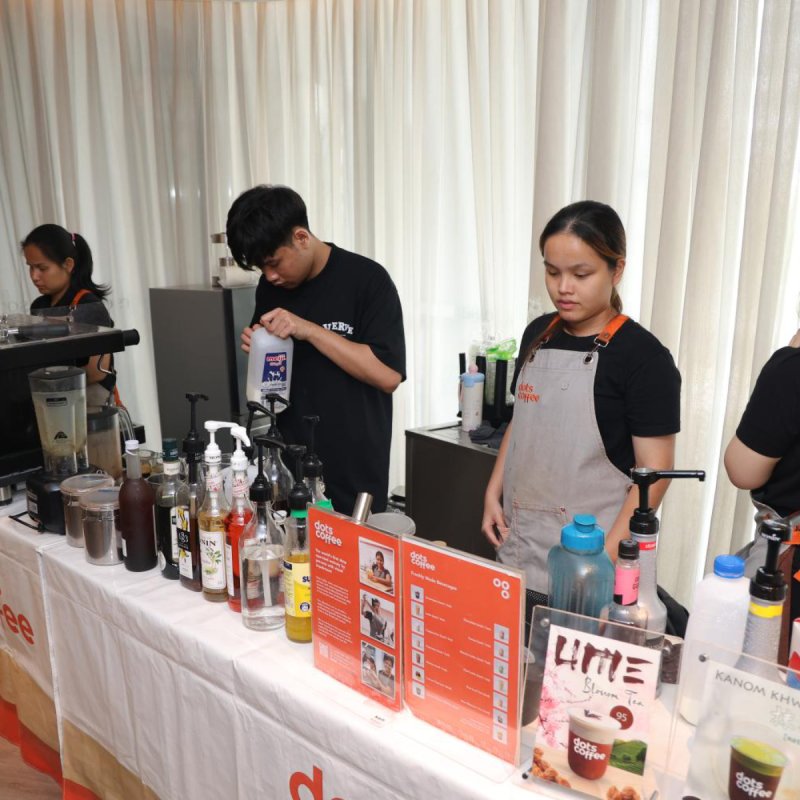
Teerasan added: "Most employers assume that if they hire people with visual impairment, they have to invest in adapting the entire work environment in order to adjust to the needs of the visually impaired. As researchers, we interviewed people at Dots Coffee, a coffee shop operated by visually impaired staff. An executive of Dots Coffee told us that it is not necessary to change the entire work environment. They focused on identifying areas that need adjustment and adapt the workflow accordingly."
"Visually impaired individuals in the research completed orientation and mobility training which taught them how to understand and adapt to their surroundings. If they can travel to the workplace for an interview on their own, employers do not have to worry about their ability to navigate the building. Although they initially need someone to guide them to be familiar with the environment, they will later be able to navigate independently," said Assoc Prof Saranya.
Through in-depth interviews, the researchers discovered that visually impaired individuals enjoy outdoor activities and nightlife like everyone else. Misconceptions regarding people with visual impairment arise because visually unimpaired people rarely interact with them.
"If visually impaired people and visually unimpaired people interact more, they can learn to co-exist in society. Besides having visually impaired individuals train with employers, Save the Children Thailand organises activities that allow people with and without disabilities to meet and connect. Additionally, educational institutions and public sector should not portray people with disabilities in a pitiful and handicapped way, but should highlight them as individuals with great potential instead," Teerasan commented.
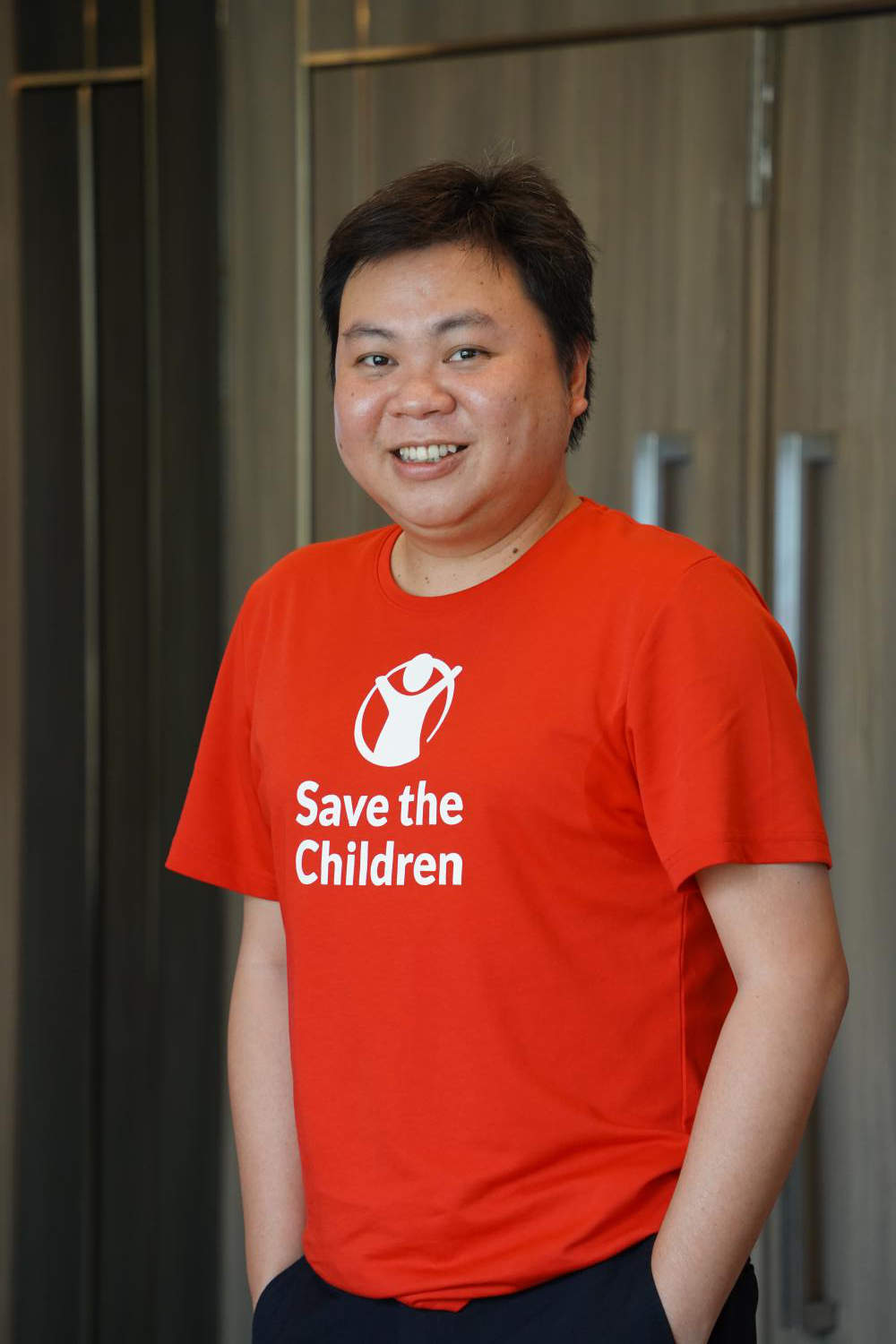
Teerasan Thammayot of Save the Children Thailand.
"When people interact with individuals with disabilities in their daily lives, they will realise that people with disabilities are like everyone else. This helps reduce the sense of alienation. Without those interactions, people tend to feel that they should give special treatment to those with disabilities, which is something those with disabilities find uncomfortable; they simply want to be treated like everyone else," explained Assoc Prof Saranya.
In addition to employers' misconceptions, another problem that discourages youths with visual impairments from pursuing higher education is the limited job opportunities available to them in the working world. Commonly known professions for them include call centre representatives, lottery vendors and massage workers. However, the researchers found that visually impaired individuals work in diverse professional fields including accounting, law, book editing and social activism.
At the conference, a co-founder of Dots Coffee, Julien Wallet Houget, shared that he operates Dine in the Dark, a non-visual fine dining concept restaurant launched in 2012 in Bangkok. Guests are guided through this unique experience by staff with visual impairments. Houget explained that this concept creates a role reversal, which is an attempt to demonstrate the professional capabilities of individuals with visual impairments. However, the restaurant is not a place where there are a lot of repeat customers.
After opening the restaurant, he joined forces with Gavin Duangparichat to establish Dots Coffee. Gavin shared that the company had never questioned whether individuals with visual impairment could make coffee. Instead, they simply asked how can they help the visually impaired to successfully make a great cup of coffee.
Vulcan Coalition is an innovative company which has over 600 employees with disabilities, who work in challenging roles such as software engineers and key account trainees. As employees at a tech company, they agree that digital platforms help them enhance skills, which they can use to compete in the job market.
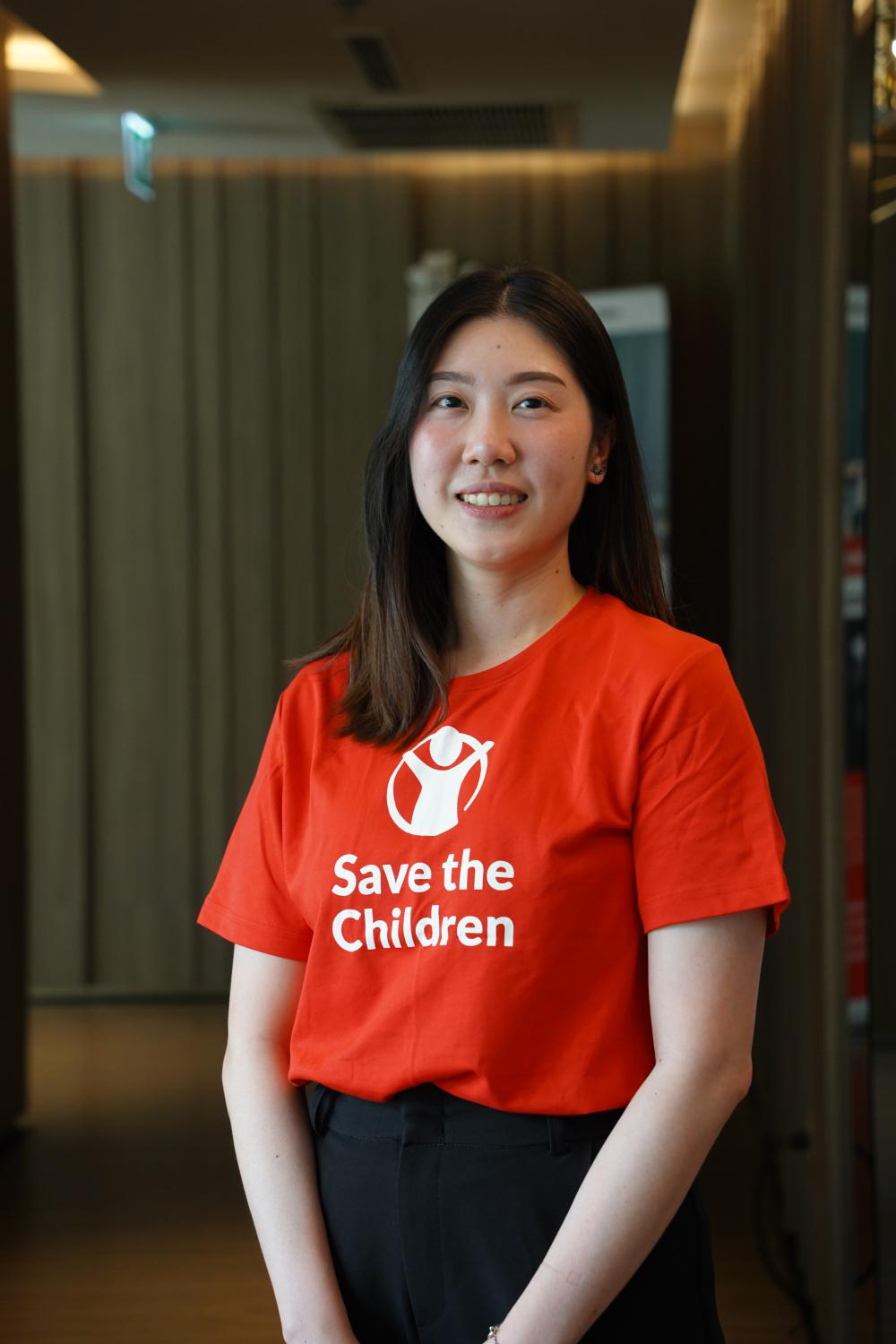
Assoc Prof Saranya Tarat of Thammasat University.
Save the Children has developed a set of Life Skills for Success to equip youths with five components of essential transferable life skills: positive self-concept, self-control, communication, social skills and higher-order thinking. These Life Skills for Success initially aim to assist underprivileged youths enhance their employability.
The researchers integrated five essential transferable skills into training workshops for youths with visual impairments. Assoc Prof Saranya explained that this phase serves as a pilot training programme involving both visually impaired youths and employment stakeholders such as HR professionals. She hopes that the participants will go on to train other employees with and without disabilities in their respective offices to foster a better understanding of inclusive collaboration.
No matter how skilled and capable visually impaired individuals are, they cannot showcase their potential unless employers become more open-minded and grant them opportunities. Kirati Yingyuen, a key account trainee at Vulcan Coalition, hopes that everyone will consider disabilities to be just different conditions.
"I hope everyone views disabilities as just a physical condition. It is a human difference like height, weight and skin colour. Despite these differences, I hope people with disabilities are recognised as individuals with potential," said Kirati.
"All we need is open-minded employers to communicate what they need and listen to what people with disabilities are capable of. When encountering obstacles, they can communicate and work together to reach a solution together. With proper communication and mutual understanding, society will become much more inclusive."