 Listen


 Facebook
 Reddit
 Copy Link


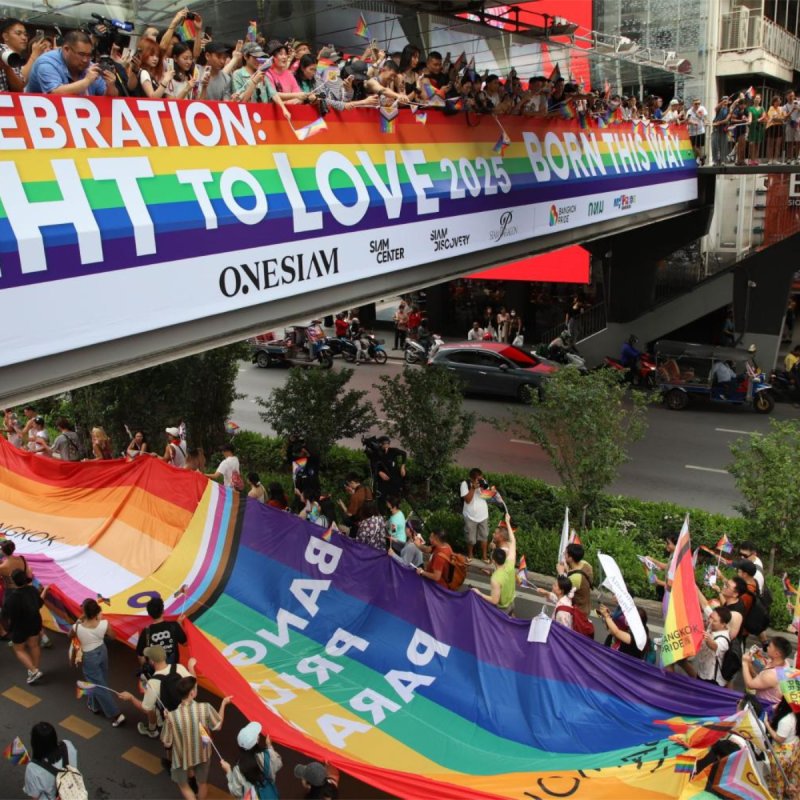
Bangkok Pride recently launched its official bidding book for WorldPride 2030. The event, which took place at the Bangkok Arts and Cultural Centre, revealed how Thailand would bid to host WorldPride.
As of now, Bangkok and Barcelona, Spain, are the two candidate cities competing to host WorldPride in 2030 and the final bidding presentation of the two cities took place this week during the InterPride General Meeting & World Conference 2026 in Phuket.
If selected, it would be the first time an Asian country and a one from the Global South hosts WorldPride since its inception.
Why Bangkok?
Detailed across the 103-page host bid document, Bangkok WorldPride's theme, "Until All Of Us Are Free", reflects Thailand's commitment to systemic change and recognises grassroots movements working to secure full freedom for every individual, both nationally and beyond.
The rationale begins with Thailand's domestic reforms and then extends to the regional and global struggles that make solidarity necessary. That commitment carries added significance as Bangkok seeks to become the first WorldPride host in Asia and the Global South.
Thailand's domestic reforms provide the foundation for that commitment. The country became the first in Southeast Asia and the third in Asia, after Taiwan and Nepal, to legalise same-sex marriage.
By 2030, Thailand will mark the fifth anniversary of marriage equality and it aims to advance further reforms, including bills on gender recognition, decriminalisation of sex work and anti-discrimination protections, to strengthen equality and inclusion.
Yet Thailand's progress also highlights how much remains unresolved beyond its borders. Sixty-six countries worldwide continue to criminalise LGBTI people, including 21 in Asia, a region that is home to 58% of the global population.
This contrast explains why the theme extends beyond Thailand's domestic reform agenda.
Against this backdrop, Bangkok has long been known as an accessible sanctuary for LGBTI people across Asia, particularly those from countries where their identities are criminalised, their voices censored or they face marginalisation.
Through WorldPride, Thailand seeks to offer a platform where they can be seen, heard and supported.
Grounded in a feminist and intersectionality framework, as the potential WorldPride host, the theme also reflects Thailand's mission to include other groups in their mission to emancipation as it unites diverse human rights struggle -- including labour dignity of sex workers, bodily autonomy, interfaith inclusion, accessibility for persons with disabilities and resistance against systematic oppression.
In terms of government and infrastructure support, the bid has been backed by a Prime Minister's Order establishing the "Steering Committee for Thailand's Bid to Host WorldPride 2030" -- a high-level body mandating cross-ministerial cooperation -- integrating state budgets, security apparatus, tourism authorities and ministerial infrastructure -- while fully respecting the independence and leadership of the LGBTI community and Bangkok Pride.
As Bangkok is the proposed venue for hosting, the bid book highlights it as the suitable venue for the event to take place. Bangkok is the first Asian city to achieve the "Gold" standard under the United Nations Development Programme Gender Equality Seal for public institutions, scoring 94.8% and satisfying 38 out of 40 international indicators in advancing gender equality.
The city also offers over 147,000 hotel rooms, two international airports (Suvarnabhumi International Airport and Don Mueang International Airport), contactless mass transit and universal accessibility standards.
Bangkok is also recognised as the global capital for Boys' Love and Girls' Love content and industries, transgender empowerment, pageantry, leadership and drag performances where a "Drag Area" was created to be a global launchpad that catapults artists into the international spotlight.
The city is also backed by an inclusive and comprehensive healthcare system that includes over 30 Bangkok Pride Clinics, world-leading gender-affirming care and community-led health models aligning with UNAIDS goal to eliminate HIV stigma.
These ambitions are brought together under five strategic pillars, or the 5Rs, which frame Bangkok's vision for WorldPride 2030 and its wider agenda for LGBTI emancipation: Roots, Reach, Rights, Resilience and Responsibility -- linking Thailand's history of LGBTI activism with regional solidarity, legal equality, human dignity and a shared commitment to inclusive development.
Roots traces the LGBTI movement to Bangkok's first Gay Pride in 1998, honouring its pioneers and Thailand's long tradition of courageous activism. Reach presents Bangkok as the gateway to Asia's first WorldPride, amplifying diverse voices and strengthening international queer solidarity.
Rights marks five years of marriage equality in 2030 and presents Thailand as a regional model for protecting and celebrating diverse families. Resilience supports the goal of ending Aids by 2030, highlighting universal healthcare and human rights as foundations for health equity and dignity.
Responsibility advances the 2030 UN goals on gender equality and reduced inequalities, affirming Thailand's commitment to leaving no one behind.
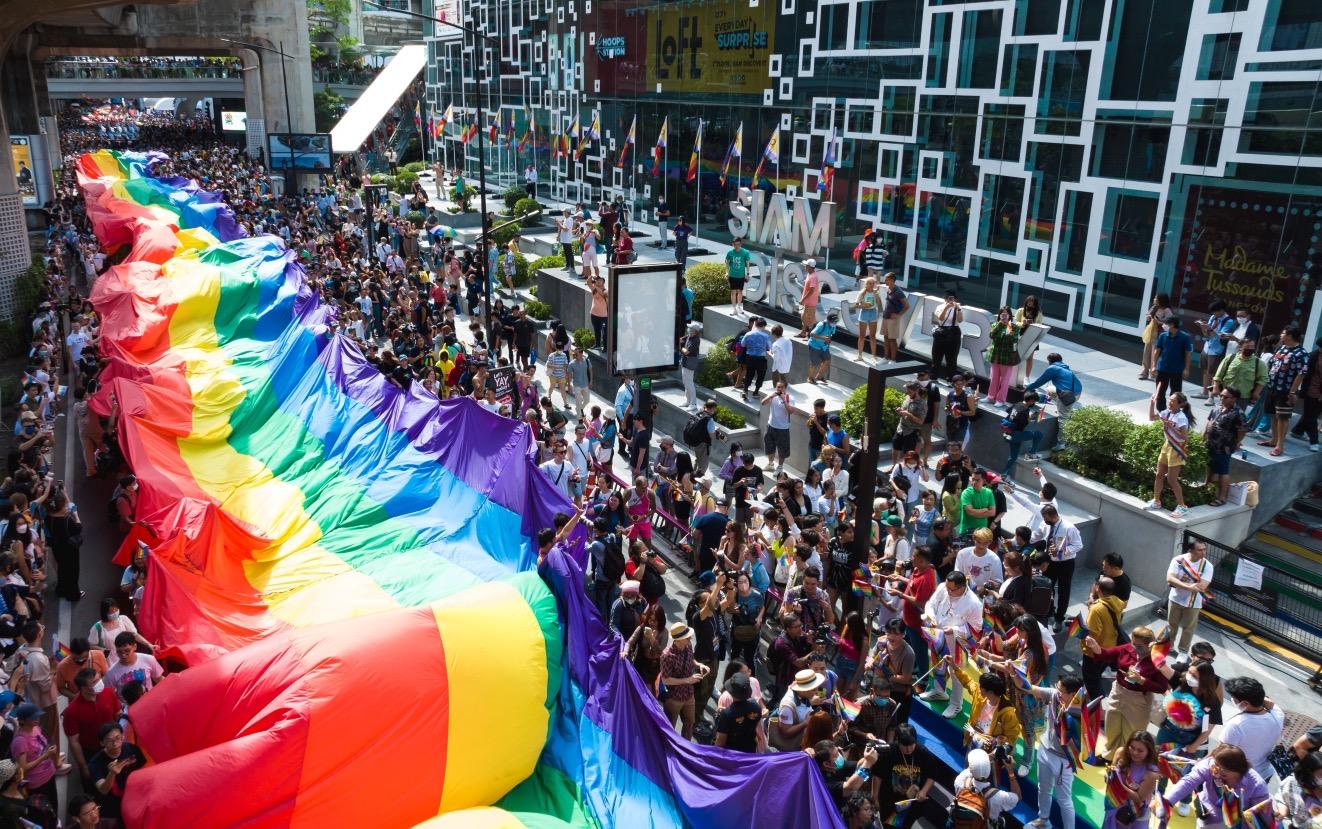
Pride Month celebrations in 2024. Photo courtesy of Siam Piwat
Legacy of Bangkok WorldPride 2030
Unlike fireworks that explode and disappear, Bangkok has promised to leave a sustainable and long-term outcome on the global LGBTI movement if it hosts WorldPride.
Bangkok aims to endorse the Bangkok Action/Declaration 2030, a multilateral agreement forged between state leaders of equal rights coalitions, city mayors, academic institutions, activists across the globe serving as the global commitment in safeguarding LGBTI in all dimensions.
Bangkok also aims to establish the Sexual Orientation, Gender Identity and Expression, and Sex Characteristic Museum serving as a permanent historical and cultural institution preserving Asian and global LGBTI history.
It also aims to establish the Pride City Network Fund from surplus cash after hosting WorldPride in 2030 to ensure the financial sustainability fuelling LGBTI enterprises and grassroot communities.
Additionally, under the concept of "Coming Home", it aims to establish an activist sanctuary to provide respite, legal defence and mental health support for frontier LGBTI defenders across Asia.
Importantly, partnering with international allies, Bangkok aims to lead the nomination of Pride Marches as the Unesco Intangible Cultural Heritage while establishing Pride City Network Asia, the formalisation of 15 founding member regional networks to organise Asian Pride in the future.
The bid book estimates 470 million baht as the budget needed to organise WorldPride 2030, with only 31% of the total budget coming from government grants. The remaining funding would be raised via community initiatives, corporate alliances, exhibitions and other commercial partnerships.
Hosting Bangkok WorldPride 2030 is expected to generate at least 12 billion baht for Thailand's economy.
However, during a press conference, Waaddao Anne Chumaporn, a co-founder of Bangkok Pride, highlighted that hosting WorldPride required extensive financial support from various sectors, especially from government, political parties and businesses.
WorldPride is not a place where these sectors come to only reap the benefits, as it also requires them to contribute back to the community.
As such, part of the budget will be allocated for fully funding 150 activist scholarships covering travel, accommodation and event access, and around 70% of the scholarships will help LGBTI advocates from the Global South.
"If businesses or political parties would like to come just for economic and political gain, they are at the wrong place. The theme reflects our determination to be a part of moving society forward. So we are going to fundraise to create impact by having us at the centre," Waaddao said.
Activities and Safety MeasureS: 360-degree protection.
Bangkok WorldPride is scheduled to run from Jan 23 to Feb 5, with an opening ceremony, group weddings, a human rights conference, sports and cultural events, and WorldPride Parade.
The parade is scheduled for Feb 2, from Sanam Luang to the United Nations building in Bangkok, with more than one million participants expected.
Safety is central to Bangkok WorldPride 2030's internationally aligned 360-degree plan, with participants protected through crowd management, emergency medical care, state security and other safeguards.
A joint task force of state agencies, city authorities and civil society will also manage crowds using Red-Amber-Green density zones. Attendees will be reroute when capacity reaches 80%, with limits of one million along the parade route and 50,000 in festival zones.
The Bangkok Metropolitan Administration Clinic and national emergency medical services will jointly coordinate medical readiness, with first-aid posts every 500m, ambulance Green Lanes to nearby trauma centres, misting stations and heat-related schedule pauses.
Security will include more than 2,000 police officers wearing rainbow armbands and community Peace Ambassadors trained in gender sensitivity and de-escalation. Counter-protest buffer zones, zero-tolerance anti-harassment teams and extended public transit hours will provide additional support.
The plan also safeguards vulnerable participants and foreign activists through strict privacy and legal protections, including bans on facial recognition and foreign data sharing, consent-based photography rules, trans-friendly immigration fast lanes and a 24-hour pro bono legal hotline.


