


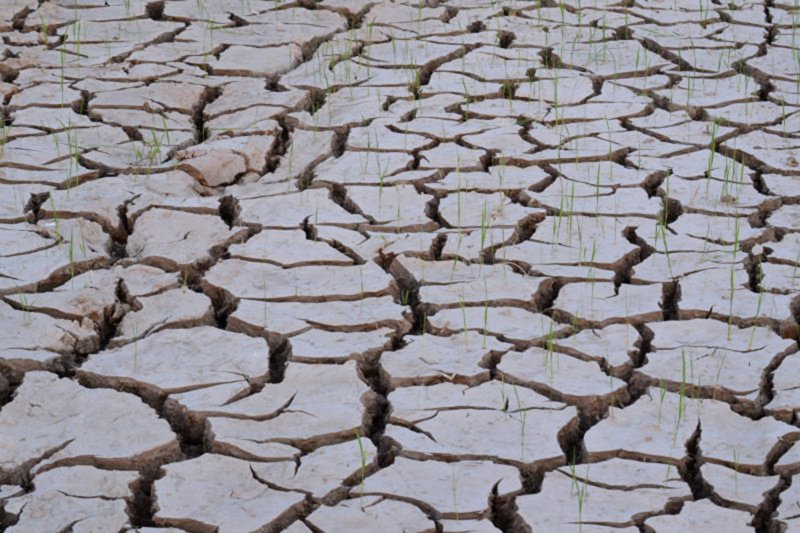
Prime Minister Anutin Charnvirakul has expressed concern about the economic impacts of the El Niño phenomenon, especially in the Eastern Economic Corridor (EEC), and called for accelerated efforts to increase water reserves in the eastern region.
According to government spokeswoman Rachada Dhnadirek, water demand in the EEC region — Chon Buri, Rayong and Chachoengsao provinces — is projected to nearly double from current levels next year.
The EEC is already home to a number of data centres, most of them modest in scale, but a handful of major projects are in the pipeline, which is pushing up demand for uninterrupted, industrial-grade water for cooling systems.
Climate variability and recurring weather patterns like El Niño can strain water supplies, with reservoir capacity in the region sometimes falling below 50%.
Ms Rachada said forecasts indicate the El Nino phenomenon will lead to less rainfall than usual, affecting water availability in many areas, especially key economic zones such as the EEC.
“Mr Anutin emphasised the need for proactive water management, including the use of forecasting data to plan water allocation in advance rather than waiting until shortages occur before taking action,” she said.
In the EEC, residential communities, agriculture, industry and tourism all rely on shared water resources, not to mention the need to ensure that natural ecosystems are not compromised.
The government has assigned the Office of National Water Resources to coordinate with relevant agencies and develop area-specific water management plans.
Reservoirs only 44% full
According to Ms Rachada, the EEC has 16 large and medium-sized reservoirs holding a combined 534 million cubic metres of water, representing 44% of their total storage capacity of 1.46 billion cu m.
During the 2026 rainy season (May 1 to Oct 31), authorities plan to allocate 1.06 billion cubic metres of water, including 526 million for agriculture, 217 million for industry, 169 million for domestic consumption and tourism, as well as water reserved for ecosystem preservation and system losses.
“Mr Anutin stressed that water management must prioritise the needs of the public,” she said. “Planning must ensure that agriculture, industry and other key economic sectors can continue operating without conflicts over water use or negative impacts on people’s quality of life.”
The Meteorological Department’s six-month rainfall forecasts are being used to assess water inflows into reservoirs and prepare to utilise the Eastern Water Grid for water pumping and diversion.
These measures are intended to meet water demand in 2027, when water consumption in the EEC is projected to reach 2.9 billion cubic metres.
In addition, the government is accelerating work on 39 water resource development projects in the EEC.
Once completed, these projects are expected to increase water reserves by 909 million cubic metres. Of the 39 projects, 23 have already received budget allocations.
Nineteen projects have been completed, adding 258 million cubic metres of water storage capacity, while four projects under construction are expected to add another 109 million.
The administration is calling on all sectors to use water more efficiently. Industrial operators are encouraged to transition towards smart factories to reduce water consumption, while the agricultural sector is urged to follow planting schedules and water allocation plans to minimise risks to crop yields and farmers’ incomes.
Thon Thamrongnawasawat, a marine and environmental scientist, recently predicted a super El Niño event could occur this year, with the most severe impacts beginning in the fourth quarter and continuing into the first quarter of next year.
The phenomenon is expected to bring drier conditions, reduced rainfall and more intense heat, while also disrupting ecosystems by raising sea temperatures and causing widespread coral bleaching.


