 Listen


 Facebook
 Reddit
 Copy Link


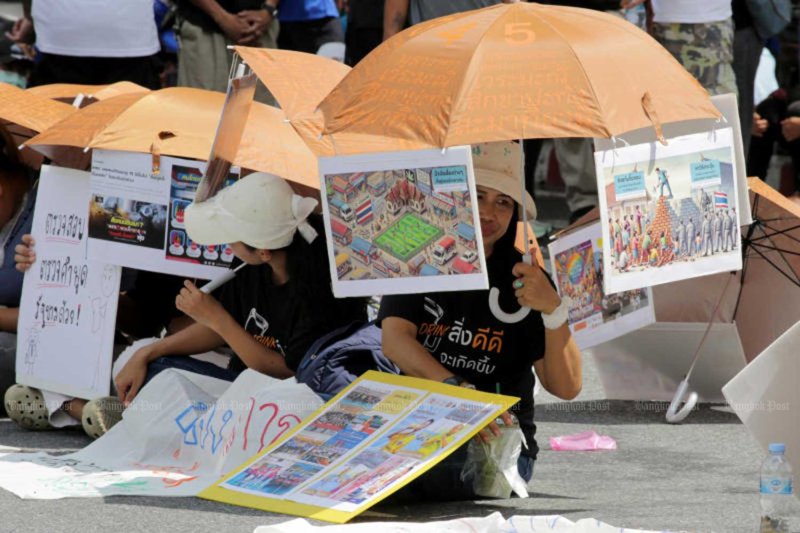
Four proposed legal amendments could put about 14 billion baht a year in funding for health promotion, public broadcasting, elderly welfare and sports development at the government's discretion, prompting public opposition to plans to end their automatic share of alcohol and tobacco tax revenue.
The proposals, put forward by the governing Bhumjaithai Party, would require the four organisations to rely on annual budget allocations instead of receiving earmarked excise tax revenue.
Supporters say the changes would strengthen fiscal discipline and parliamentary oversight. Opponents fear they could make funding less predictable, expose programmes to political pressure and threaten the independence of public institutions.
Parliamentary public consultations reflect this concern, with opposition to each of the four draft amendments exceeding 67%. The results raise key questions: why do so many consultation participants want the proposals scrapped, and what could be at stake if the amendments become law?
What the hearings found
The proposed amendments concern the Thai Health Promotion Foundation (ThaiHealth), Thai Public Broadcasting Service (Thai PBS), the Older Persons Fund and the National Sports Development Fund.
The organisations receive a combined 14 billion baht a year from earmarked alcohol and tobacco excise tax revenue.
ThaiHealth receives about 4-4.5 billion baht annually, Thai PBS up to 2 billion baht, the Older Persons Fund around 4-5 billion baht, and the National Sports Development Fund approximately 3.9-4.2 billion baht.
Public hearings through parliament's online consultation system showed that 89.5% of 85,727 respondents opposed the ThaiHealth amendment.
For Thai PBS, 72.4% of 124,602 respondents opposed the bill, the largest consultation turnout among the four proposals.
The Older Persons Fund amendment was opposed by 73.1% of 17,324 respondents, while 67.9% of 15,543 respondents opposed the National Sports Development Fund amendment.
Who took part in the hearings?
Parliamentary reports say the four consultations attracted different groups of respondents.
ThaiHealth's draft drew 85,727 respondents, mainly from public health networks, village health volunteers and civil society groups concerned with alcohol, tobacco and accident prevention.
The Thai PBS amendment attracted 124,602 respondents, including viewers, media professionals, academics and members of the public concerned about media freedom and editorial independence.
The Older Persons Fund consultation drew 17,324 respondents, including social welfare workers, local government personnel and networks representing older people.
The National Sports Development Fund attracted 15,543 respondents, mainly from sports associations, athletes, coaches and others involved in the sporting community, who raised concerns about long-term funding for athlete development and international competitions.
Why are critics concerned?
One major concern is that annual budget allocations could expose the organisations to political pressure.
The issue is particularly sensitive for Thai PBS, a public broadcaster established to operate independently of government and commercial interests.
Critics fear that seeking funding approval each year could give political leaders leverage over its operations and editorial decisions, potentially encouraging self-censorship.
Similar concerns have been raised about ThaiHealth's ability to sustain health campaigns and community programmes if its funding becomes more dependent on annual government priorities.
Who should pay?
Opponents also argue that the proposed changes could weaken the principle that industries contributing to social and health problems should help pay for the resulting costs.
Alcohol and tobacco taxes generate revenue partly in response to the harmful effects associated with these products. Earmarking part of that revenue for health promotion and related social programmes helps fund efforts to address those risks.
Critics say removing the dedicated funding could shift more of the financial burden to general taxpayers, rather than maintaining a direct link between the products taxed and the programmes intended to mitigate their harm.
Uncertainty over funding
Another concern is that annual budget allocations could make funding less predictable, potentially delaying programmes or disrupting their continuity.
ThaiHealth supports campaigns to reduce health risks, while the Older Persons Fund supports welfare and quality-of-life initiatives for older people. The National Sports Development Fund finances athlete development, sports science and preparations for international competitions.
Critics said that such programmes require sustained planning. In particular, preparing national athletes for major events can take four to eight years, making them vulnerable to delays or budget cuts.
What supporters say
Supporters of the amendments argue that bringing the revenue into the central budget would strengthen fiscal discipline and allow the government to allocate public money according to national priorities.
They say that the changes would improve consistency in public financial management. They say requiring organisations to submit annual budgets for parliamentary scrutiny could also improve transparency and accountability.
What happens next?
Civil society networks and groups representing older people, public health and media interests have called for all four bills to be withdrawn.
The central debate is whether greater government oversight of public spending would outweigh the risks of less predictable funding and reduced institutional independence. For opponents, the existing system provides a safeguard that should not be removed without addressing those concerns.


