The Central Criminal Court for Corruption and Misconduct has scheduled March 17 to decide whether to formally accept a case against Election Commission (EC) chairman Narong Klanwarin and seven other senior officials over the poll ballot controversy.
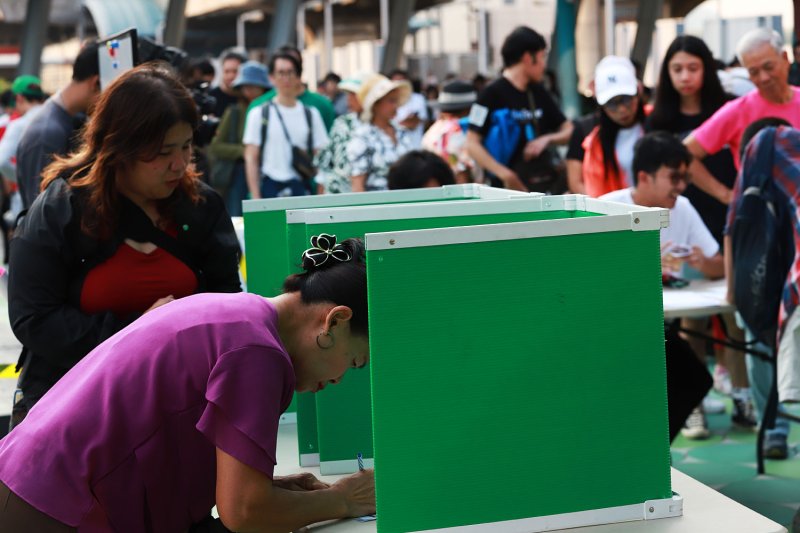
The case concerns the printing and use of ballot papers containing QR codes and barcodes, a controversy that has stoked concerns about voting secrecy and election integrity in the Feb 8 general election.
The court set 9.30am on March 17 to deliver its decision following a complaint filed by lawyer Lt Yongyut Saokaewsatit, who accused the eight officials of misconduct and malfeasance under Section 157 of the Criminal Code and relevant election and anti-corruption laws.
The complaint alleges that the EC chairman, six commissioners, and the EC secretary-general jointly authorised the printing of constituency ballots with QR codes and party-list ballots with barcodes, and later ordered their use in the Feb 8 election.
The complainant argued that the inclusion of such codes could enable tracking or verification of ballots, potentially compromising the secrecy of voting and violating constitutional protections.
According to the filing, the complainant observed the QR code and barcode on ballots while casting his vote at a polling station in Min Buri district of Bangkok, and election officials were unable to provide a clear explanation as to why.
He claimed the decision to include such codes reflected dishonest intent, unnecessarily increased printing costs, and undermined public trust in the confidentiality of the ballot.
Amid the controversy, Pakorn Nilprapunt, secretary-general of the Council of State, urged caution in interpreting the legal meaning of secret voting, saying that premature conclusions could create confusion and damage confidence in Thailand's political and economic systems.
He said the matter falls within the EC's authority and should be addressed through the proper legal channels.
"Under official secrecy regulations, confidential information can be shared only between an authorised sender and recipient and cannot be disclosed more broadly,'' Mr Pakorn said.
The principle of secrecy remains intact unless improperly accessed or revealed by unauthorised parties, he said, suggesting the focus should be on the potential misuse of information rather than the act of voting itself.
The ballot controversy has also drawn criticism from former election commissioner Somchai Srisutthiyakorn, who said some ballots used in recent re-run voting in Bangkok lacked serial numbers on their stubs, contrary to EC regulations.
He said that the absence of serial numbering could create opportunities for fraud, including the printing of excess ballots.
Meanwhile, Senator Nantana Nantavaropas said efforts are underway to submit a petition to the Constitutional Court seeking a ruling on whether the Feb 8 election process complied with constitutional principles.
Sen Nantana said ballot papers used in the re-vote on Feb 22 differed from those used on Feb 8 because some lacked serial numbers that were present on earlier ballots.