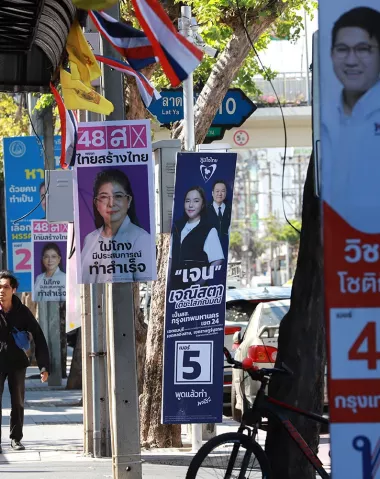
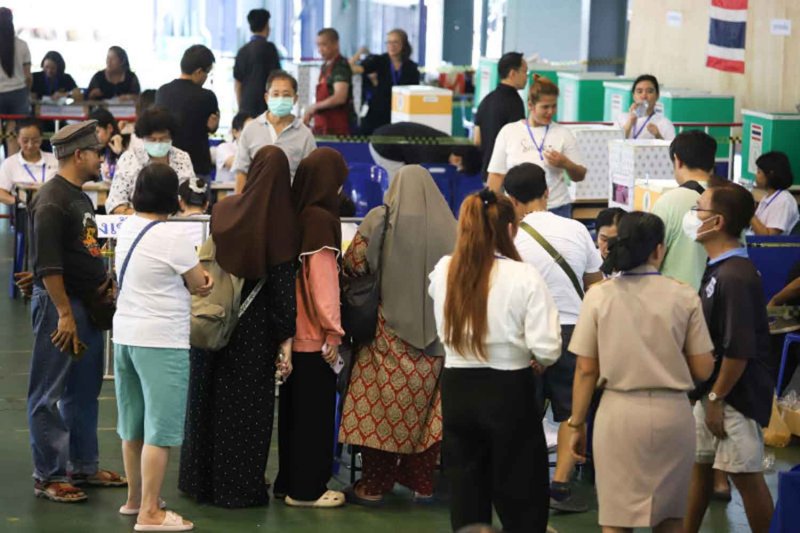
A survey by King Prajadhipok's Institute (KPI) shows that nearly 75% of respondents would accept a new election in the event of a "political accident".
The term refers to the unseating of a government after an election due to a political controversy.
The poll, conducted between Feb 27 and March 2, asked whether respondents would accept a new election if an unforeseen political accident occurred.
About 74.4% of respondents said they would accept such a scenario, while 25.6% said they would not.
By region, respondents in the South showed the highest acceptance at 75.7%, while 24.3% said they would not accept it.
In the Northeast, 72.2% said they would accept a new election and 27.8% said they would not. As for the North, 68% said they would accept it while 32% said they would not.
In Bangkok, 66.3% said they would accept a new election compared with 33.7% who disagreed, while the Eastern region showed 64.4% acceptance and 35.6% rejection.
However, the Central region was the only area where a majority opposed the idea, with 56.3% of respondents saying they would not accept a new election and 43.7% saying they would.
The respondents were also asked in the survey about what issues they wanted the next cabinet to address most urgently.
About 25.8% said the government should prioritise solving short-term economic problems and increasing people's incomes, followed by 21.7% who said the government should focus on long-term economic development and improving the country's competitiveness.
Respondents aged 28–43, 44–59 and those over 60 all ranked short-term economic solutions and income increases as the top priority, whereas those aged 18–27 demanded long-term economic reforms and improving the country's competitiveness.