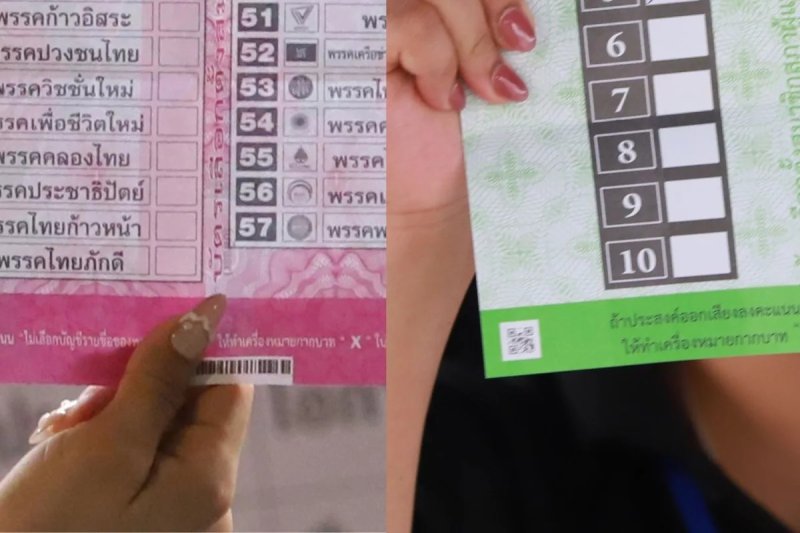
The Election Commission (EC) has defended the use of barcodes and QR codes on ballot papers, saying the features are lawful security measures used to combat forgery, manage ballot stocks and prevent mismatches between voter numbers and ballots used.
The secrecy of the vote remains protected, deputy secretary‑general Phasakorn Siriphakayaporn said at a news conference on Friday.
The clarification came amid public concerns that the barcodes and QR codes could be used to trace who voted for whom and compromise ballot secrecy, in breach of the constitution and election law.
The outcry over the ballots is the latest in a series of complaints about the handling of the Feb 8 poll. Voters and political parties have flagged thousands of instances nationwide, ranging from mishandling of ballots and ballot boxes to discrepancies in vote totals and online updates, and misbehaviour by polling officials.
Five days after the vote, the unofficial count is stalled at 94% of total ballots cast. The EC has given no indication of when an update can be expected, only saying it has 60 days to release an official result.
At Friday’s news conference, Mr Phasakorn reaffirmed that the voting process follows clearly defined procedures outlined under Election Commission regulations.
He outlined the voting process: eligible voters check in at their polling unit, have their names verified and sign the voters’ list, then sign the ballot’s counterfoil before receiving a ballot and voting in a booth.
“Marking the ballot in the booth is an individual right and remains secret,” he declared.
Mr Phasakorn acknowledged that scanning a ballot’s barcode can identify the ballot paper and the booklet it came in for internal control and anti-fraud purposes. However, it cannot disclose a voter’s choice.
“Even if the barcode is scanned, it is not possible to know whom anyone voted for, because other components would also be needed — namely the counterfoils that have already been consolidated and the voters’ list already sent to the Central Registration Office,” he said.
He insisted that the use of barcodes and QR codes is part of security measures and complies with Section 85 of the 2017 Constitution, which requires elections to be conducted directly and in secret.
Worapong Anancharoenkij, director of the election support division, said Regulation No. 129 on the election of MPs empowers the commission to add codes, marks or symbols to ballots without prior notice to deter counterfeiting.
He said barcodes and QR codes on ballots serve two main purposes: anti‑forgery protection and operational control. Printing records allow auditors to confirm how many ballots were produced and to detect any over‑printing.
Each ballot booklet contains 20 ballots, with codes used to verify complete quantities and prevent ballot discrepancy — mismatches between the number of voters and ballots used. Coded tracking also assists distribution to responsible officers and can identify accountability if any ballots leak outside the system.
“The system helps detect fraud, such as the use of counterfeit ballots or ballots being used outside their designated constituencies,” Mr Worapong added.
Barcode traceability
Reporters pressed the EC officials on whether barcodes on ballots could be matched with counterfoils to identify how an individual voted, in the event the counterfoils were somehow accessed.
Mr Worapong replied that such matching would be “highly impracticable” given the volumes involved and the way ballot boxes are stored across entire constituencies.
When asked if “highly impracticable” meant impossible, he said only that anyone attempting it would be acting with intent to commit fraud.
Asked again whether matching would be possible if attempted, Mr Worapong did not answer.
The EC said it has strict custody procedures, insisting no one can access the counterfoils, and that doing so would constitute a criminal offence.

Election Commission members hold a news conference on Friday to explain the use of barcodes and QR codes on ballots. The poll body says they are legal security features designed to prevent forgery, track ballot stocks and avoid mismatches between voters and ballots. (Screenshot from EC briefing)