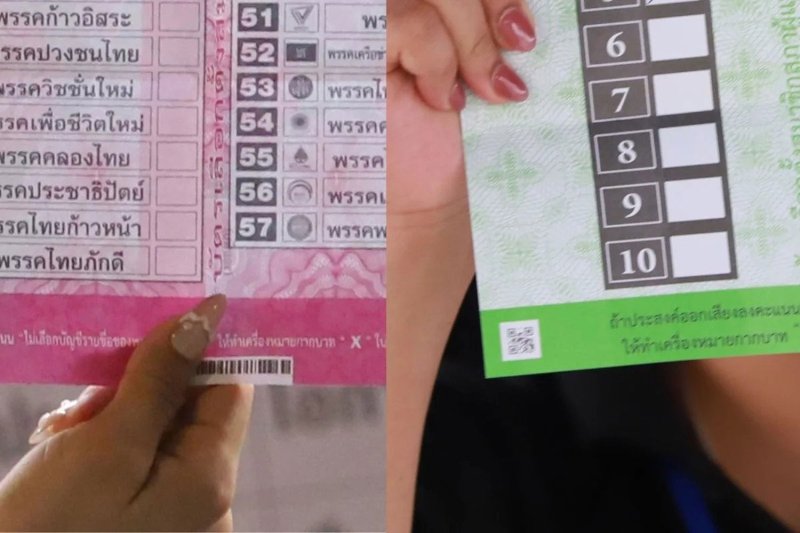
The Ombudsman has resolved to petition the Constitutional Court to rule on whether the use of barcodes and QR codes on ballot papers in Thailand’s Feb 8 general election violated the constitutional requirement that voting be conducted directly and by secret ballot.
The move followed complaints that the system could allow voters’ identities and choices to be traced, potentially undermining the secrecy of the vote.
A court ruling that ballot secrecy was compromised could lead to the Feb 8 election results being annulled and a new poll called, at a cost to taxpayers of 7 billion baht or more.
The petitioners have argued that the design and printing of ballot papers containing barcodes and QR codes meant that the codes “could be traced or backtracked to the voter”, raising concerns that the secrecy of the vote was “not preserved as intended by the constitution”.
The Office of the Ombudsman on Friday said it had received 21 complaints from citizens asking the body to submit a petition to the Constitutional Court under Section 213 of the charter.
Section 213 grants individuals the right to petition the court directly if they believe their constitutional rights or liberties have been violated.
After reviewing the information gathered, the Ombudsman concluded there were sufficient grounds to question whether the Election Commission (EC), its secretary-general and related officials had acted in a way that contravened the constitution.
The office said the petition had “weight and reasonable grounds” to proceed.
The design and printing of ballot papers containing barcodes and QR codes could reasonably be believed to allow links to be made back to individual voters, it said.
This raised concerns that voting may not have been conducted by secret ballot as intended under Sections 83 and 85 of the constitution.
Other complaints pending
The Office of the Ombudsman said it is also examining other complaints related to the conduct of the election.
These include questions over whether a 2023 EC regulation on the election of MPs — which allows the commission to add codes, symbols or other marks to ballot papers in special cases — is consistent with Section 85 of the constitution and provisions of the organic law on the election of MPs.
The Ombudsman is also reviewing complaints concerning the number of constituency and party-list ballot papers, which were reportedly not equal, and whether the use of barcodes and QR codes on ballot papers violated the Personal Data Protection Act.
In a related development, the Central Criminal Court for Corruption and Misconduct is scheduled to announce on Tuesday whether it will accept a case against EC chairman Narong Klanwarin and seven other senior officials over the ballot controversy.
The complaint filed by lawyer Yongyut Saokaewsatit accuses the eight officials of misconduct and malfeasance under Section 157 of the Criminal Code and relevant election and anti-corruption laws.
The People’s Party has also filed a criminal misconduct complaint against the EC. The party says it is seeking legal clarity on the exact uses of “identifying marks” on ballot papers, an issue that it said could possibly reach the Supreme Court.